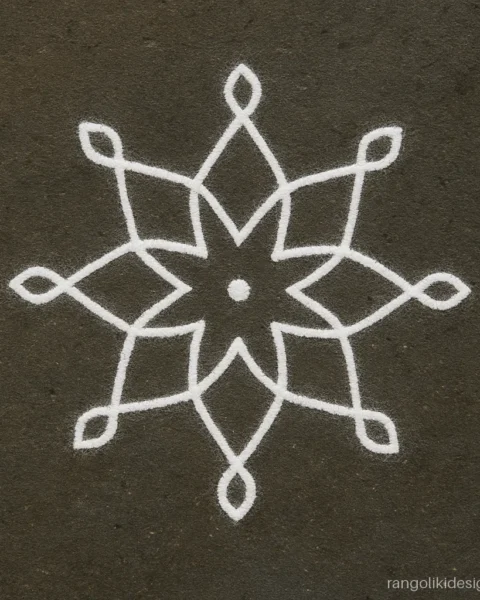
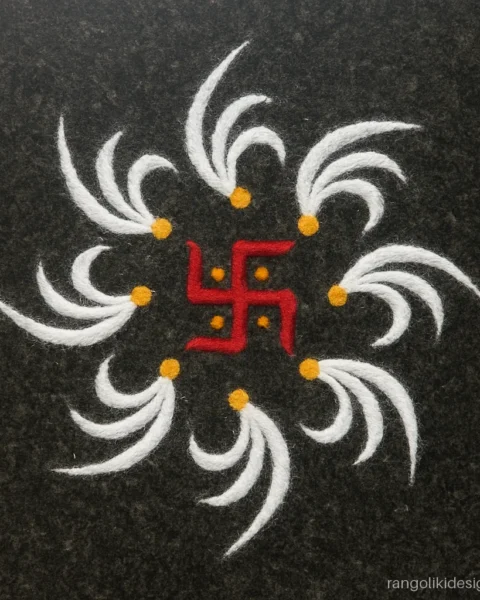
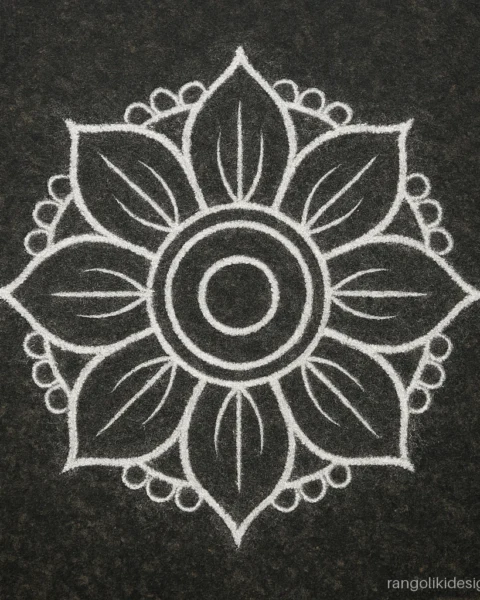
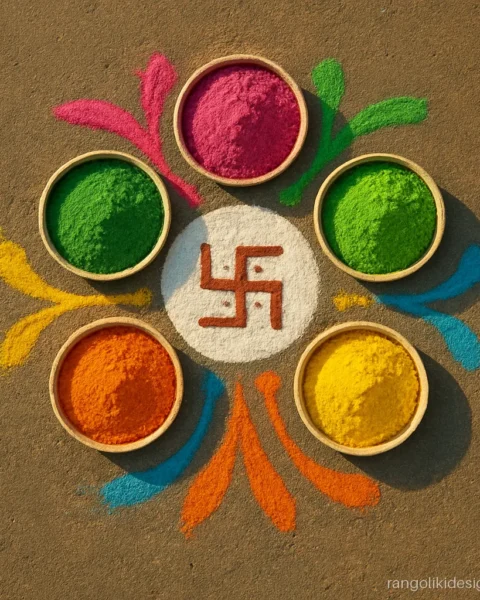
Traditional rangoli designs carry the oldest art of the Indian home: a few lines of rice flour or chalk at the door to welcome luck. This gallery shows 16 designs from eight regions, from Bengal’s alpana to Kerala’s pookalam.
If you want easy traditional simple unique rangoli designs, start with the swastik hexagon or the aripan fish. For a festival, try the big kalash or chowk purana. For daily South Indian styles see our kolam designs and for free strokes see Sanskar Bharti rangoli designs.
Alpana and Aripan: Traditional Rangoli Designs of the East
In Bengal, alpana is painted with rice paste and a fingertip. In Bihar, aripan uses the same rice paste with bold shapes. Both are old rangoli designs passed from mother to daughter.
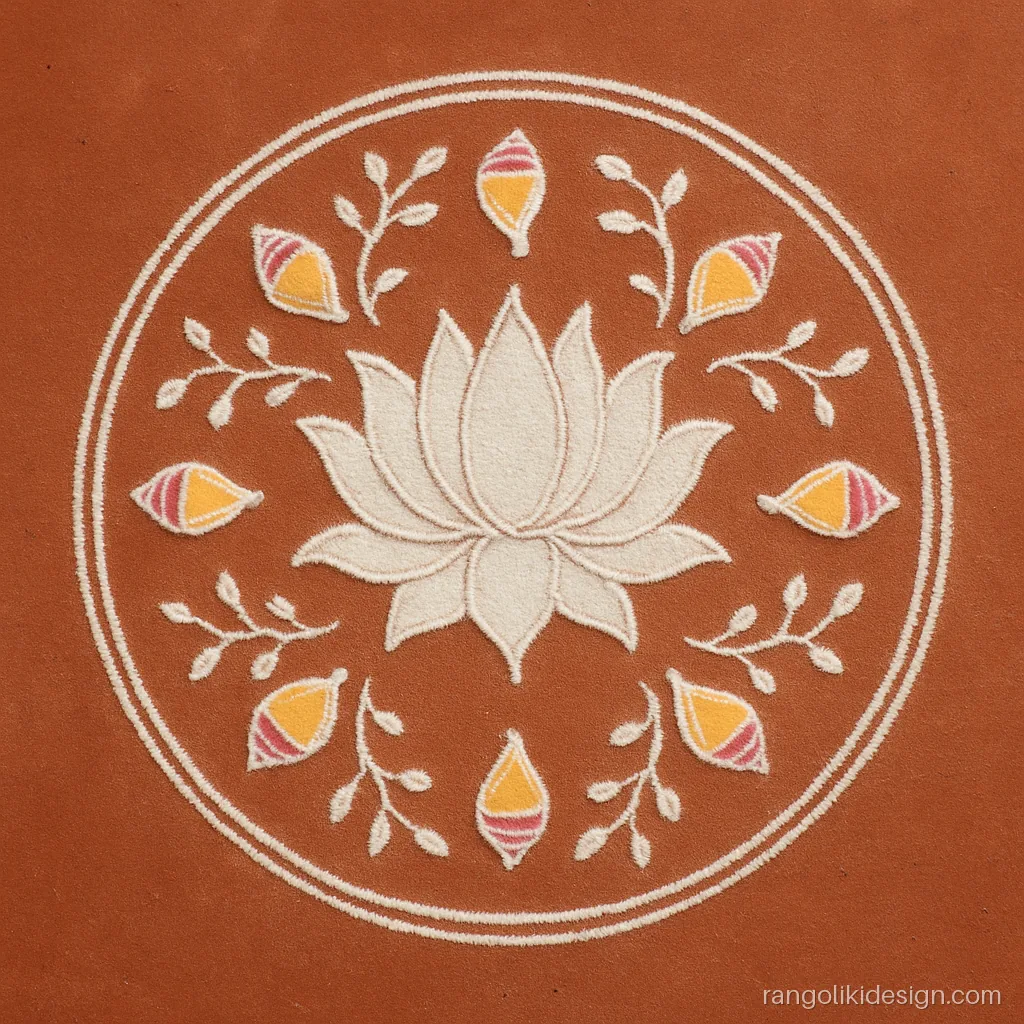
1. Bengali Alpana with Lotus and Conch Border
A Bengali alpana with a big lotus and a ring of shankh shells. Painted with rice paste for Lakshmi Puja, about 40 minutes.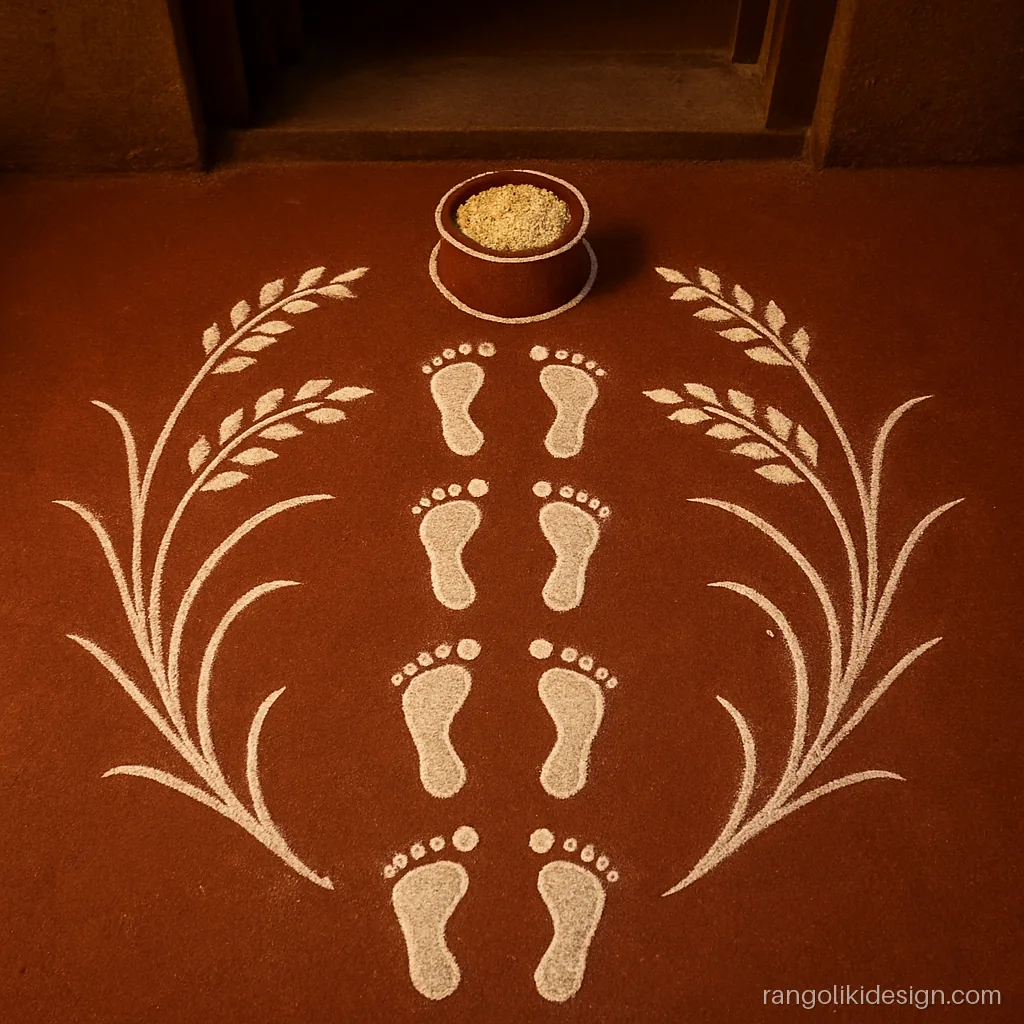
2. Alpana Laxmi Footprints between Paddy Stalks
Small Laxmi footprints walk toward the door between paddy stalks. Made on Kojagari Lakshmi Puja night in Bengal.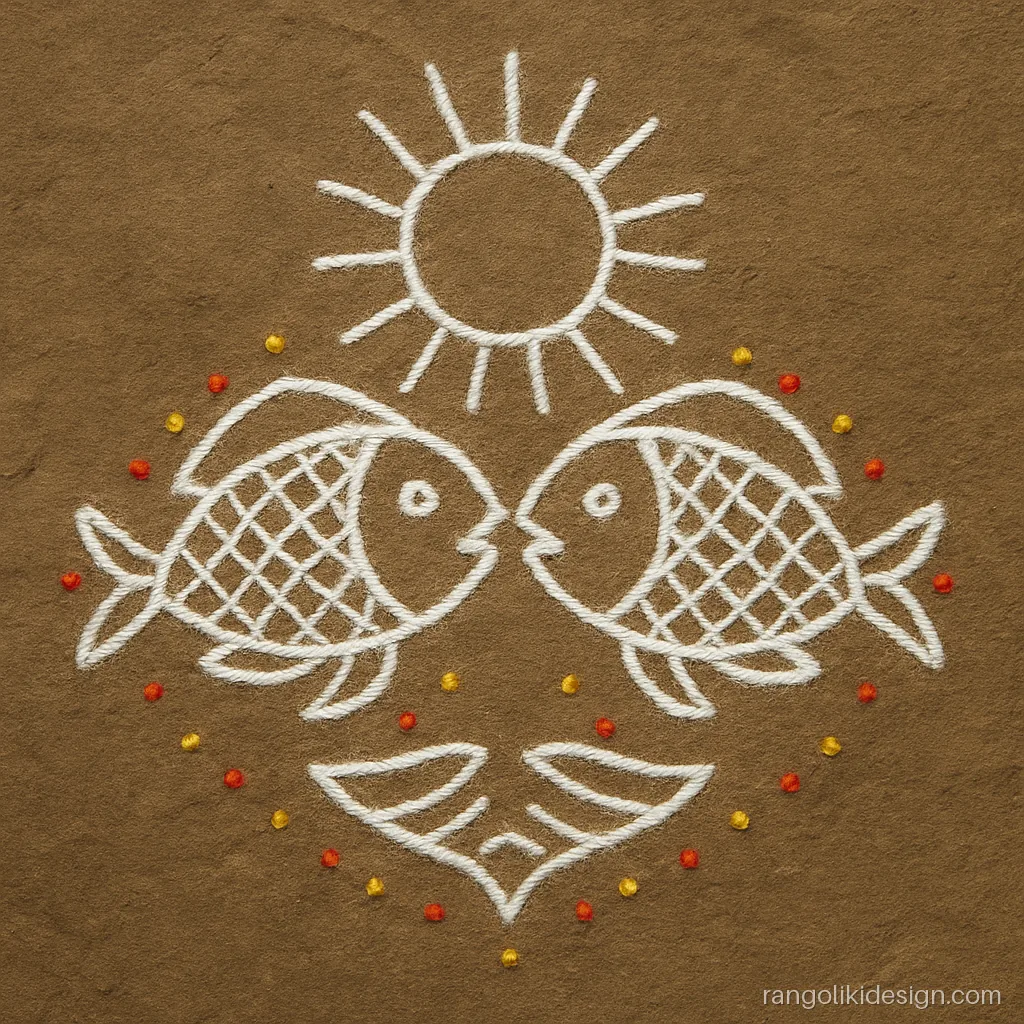
3. Aripan Rangoli with Two Fish and a Sun
Two fish and a sun, classic aripan symbols for luck. Thick rice paste lines with small red and yellow dots.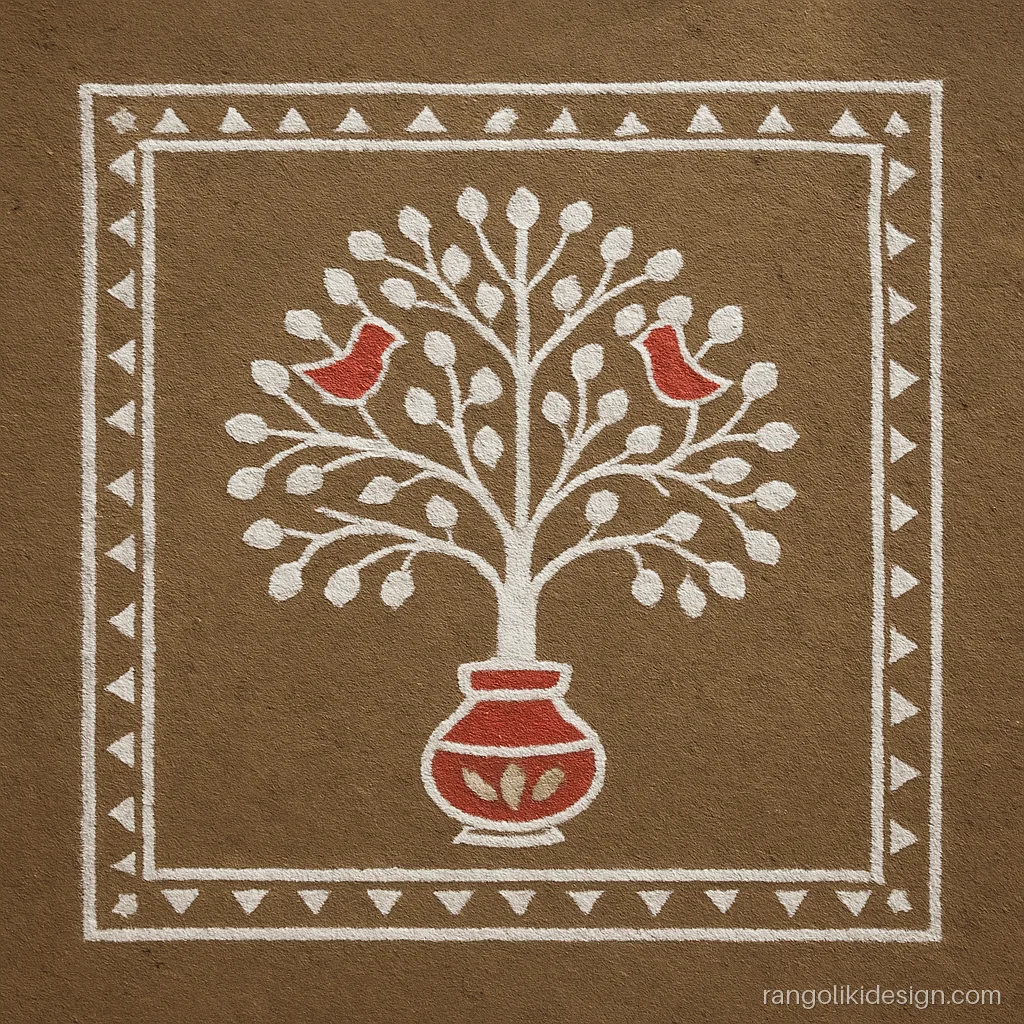
4. Aripan Tree of Life in a Square
A tree of life with birds inside a square frame. Simple tools, but very rich to look at, about 45 minutes.Mandana, Gujarati and Marathi Rangoli Designs of the West
Rajasthan’s mandana is drawn in white chalk on red gerua. Gujarati rangoli designs love bright dots and diyas, and marathi rangoli designs bring the free stroke Sanskar Bharti style.
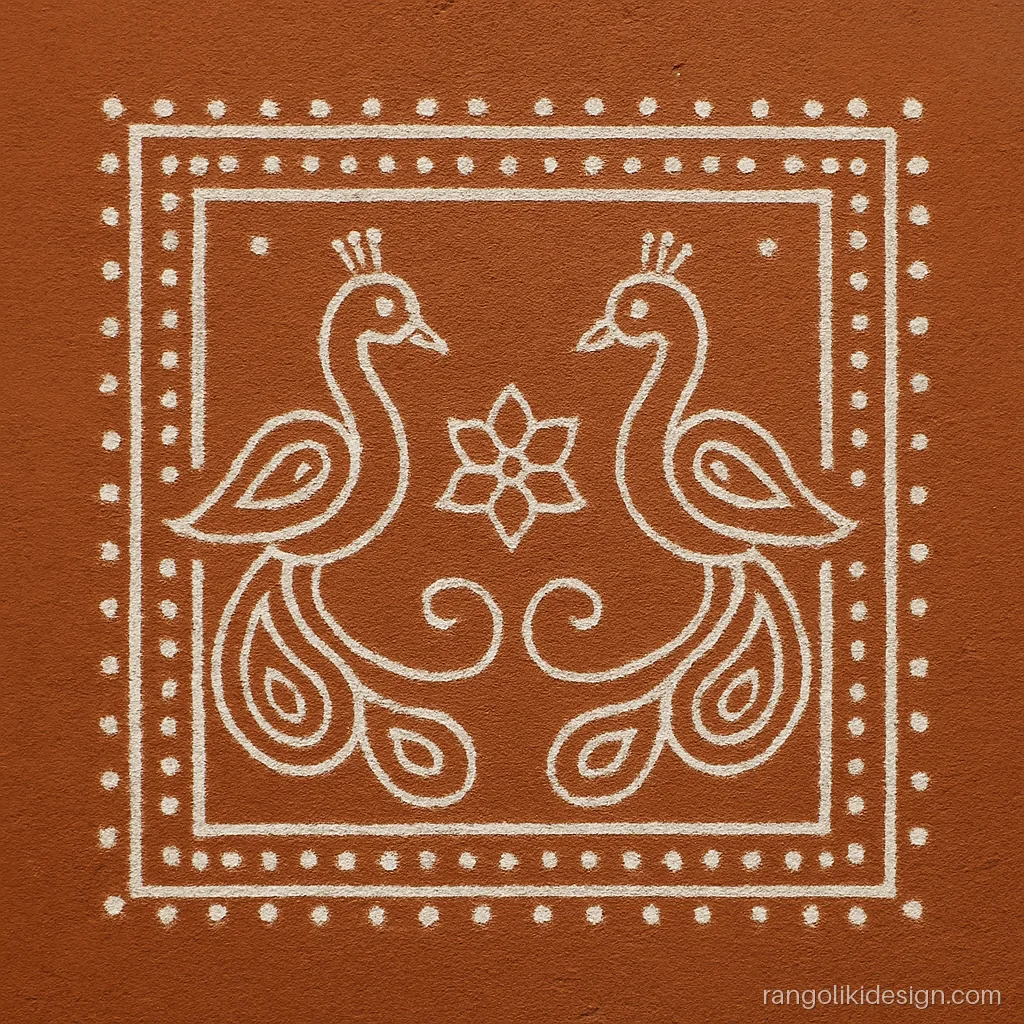
5. Mandana Peacocks in White on Red Gerua
Two peacocks in a mandana square, drawn with khadiya chalk on red gerua. Mud floors in Rajasthan still carry this every Diwali.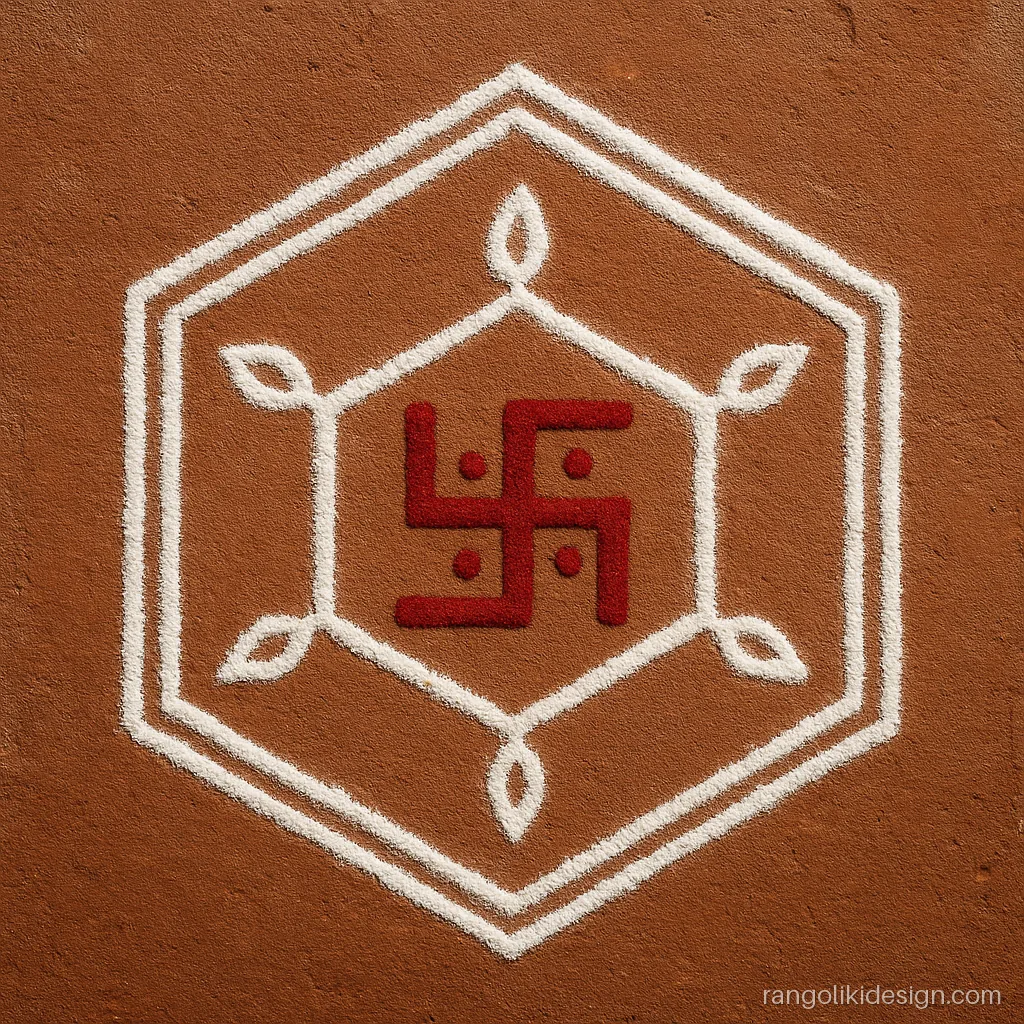
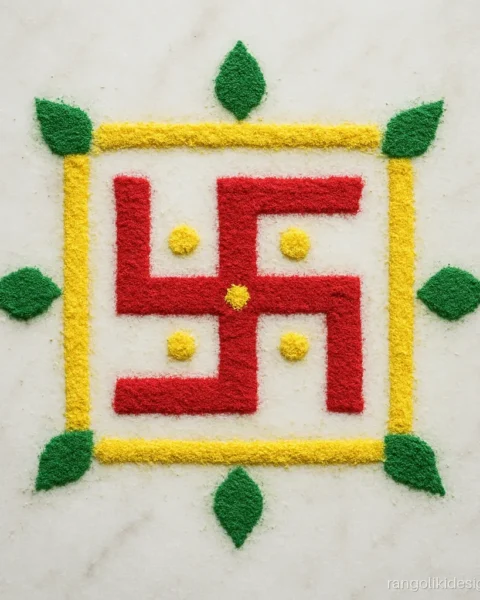
6. Mandana Swastik Rangoli in a Hexagon
A swastik inside a hexagon of fine lines. Clean and strong, one of the best traditional rangoli designs for Diwali doorways.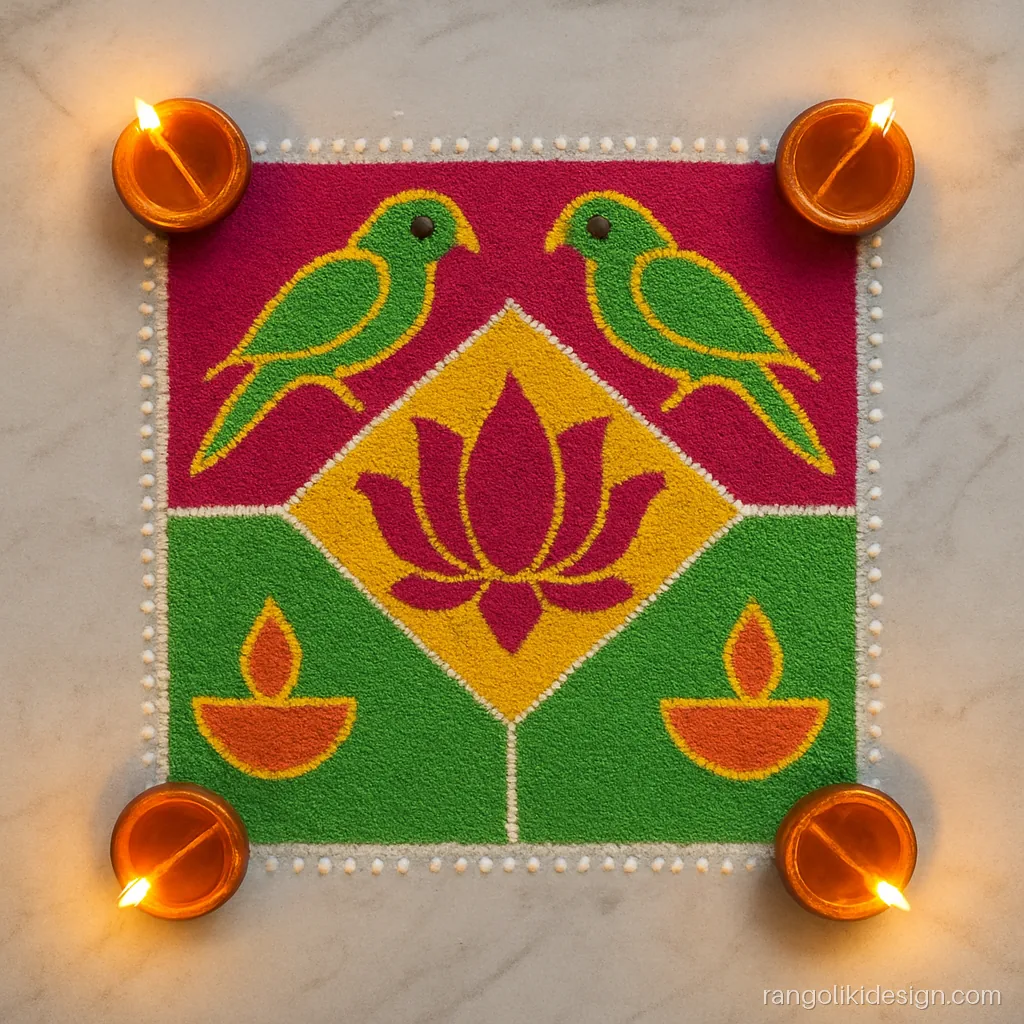
7. Gujarati Chowk Rangoli with Diyas and Parrots
A bright square chowk with four diyas and parrots, typical of Gujarati homes at Diwali and the New Year.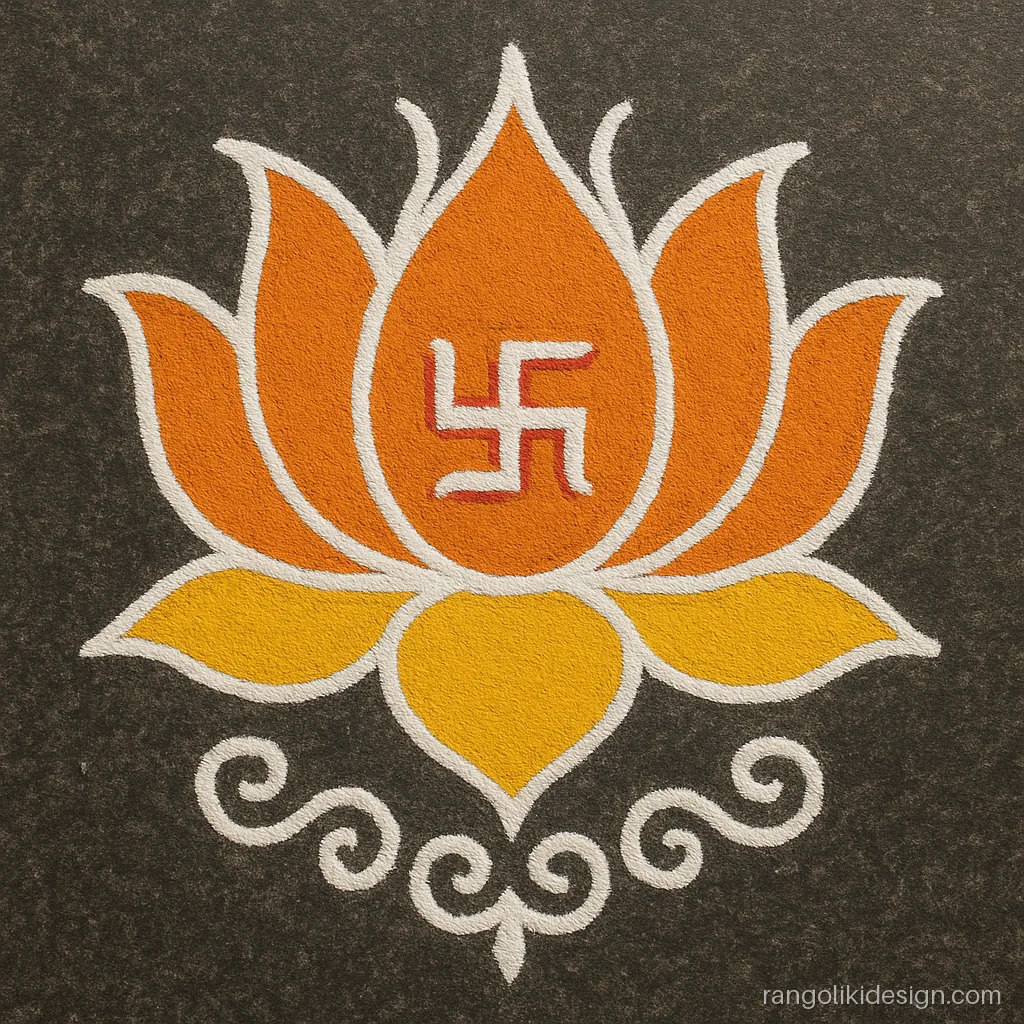
8. Marathi Five Finger Lotus and Swastik Rangoli
Free strokes in white with saffron fills, made with the five-finger trick. A simple traditional big rangoli design for a Maharashtrian doorstep.Kolam, Muggulu and Pookalam: South Indian Traditional Rangoli
South Indian rangoli designs are drawn every morning. Kolam uses rice flour around dots, muggulu adds colour for Sankranthi, and pookalam uses only flowers for Onam.
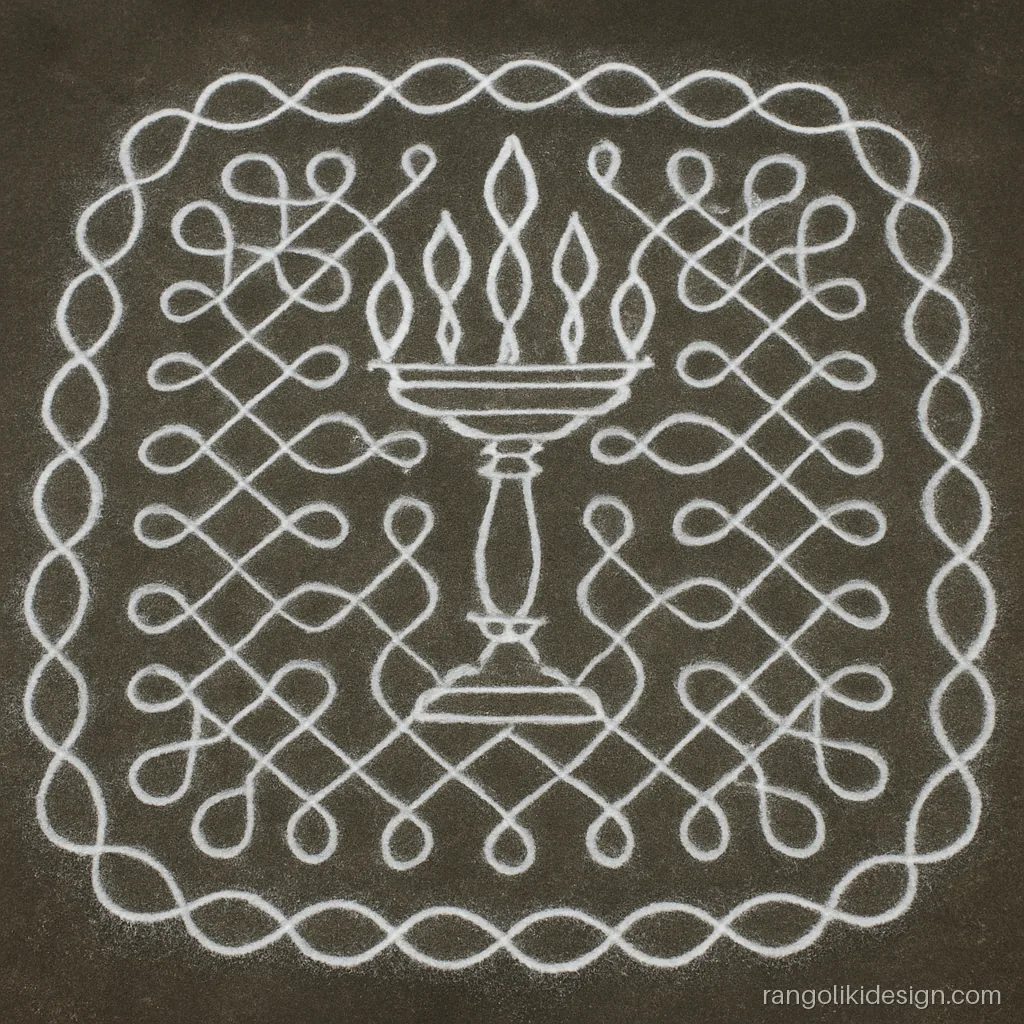
9. Pulli Kolam around a Temple Lamp
A 13 to 7 pulli kolam around a temple lamp. Rice flour on a wet floor at dawn, as it has been done for centuries.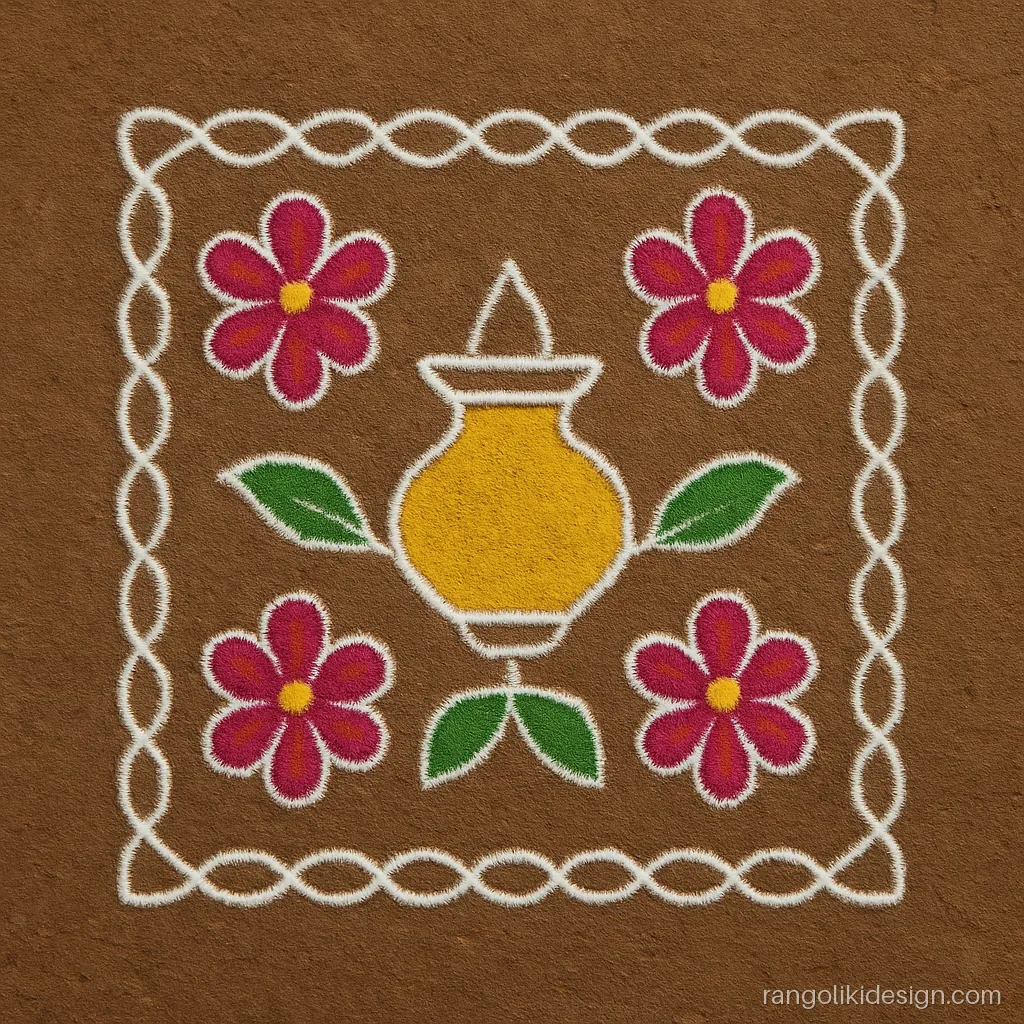
10. Chukki Muggulu with a Central Pot
A chukki muggulu with pink and green fills and a central pot. A beautiful traditional rangoli design for Sankranthi.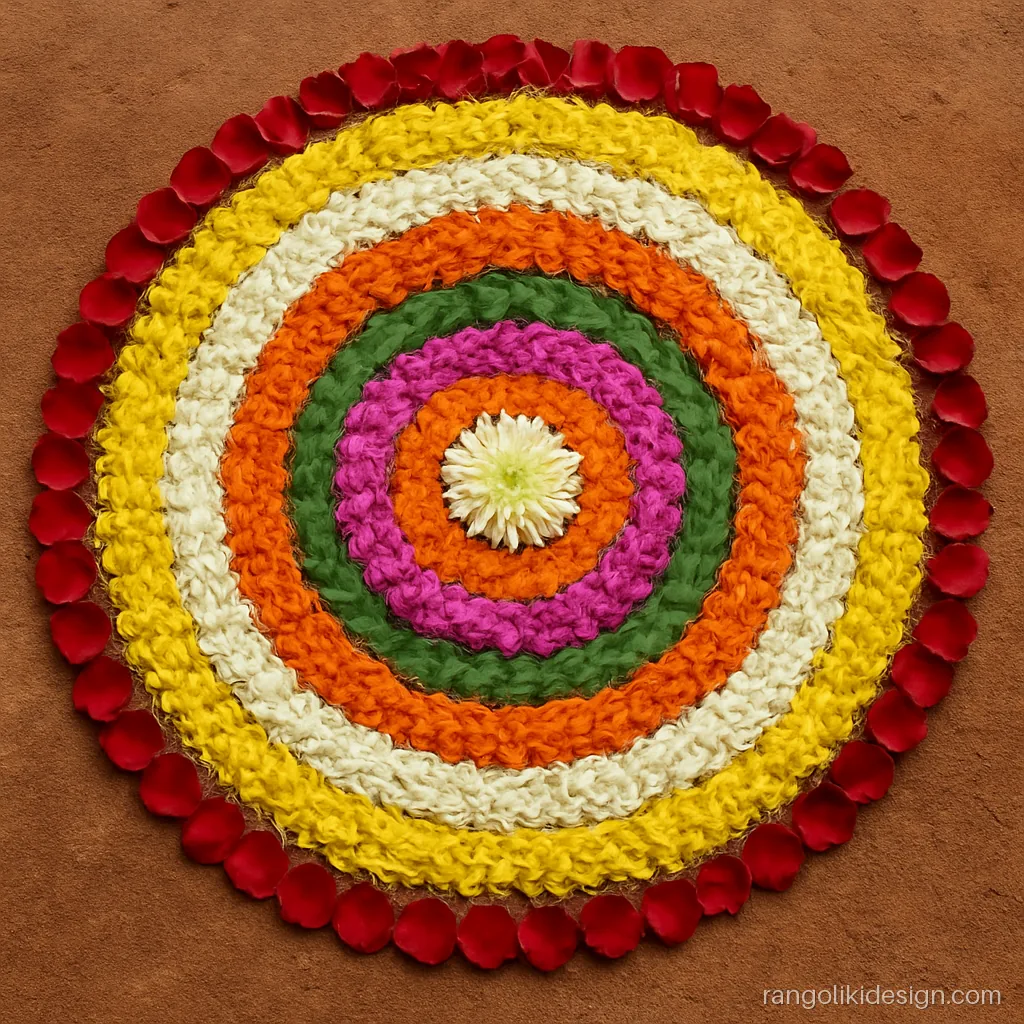
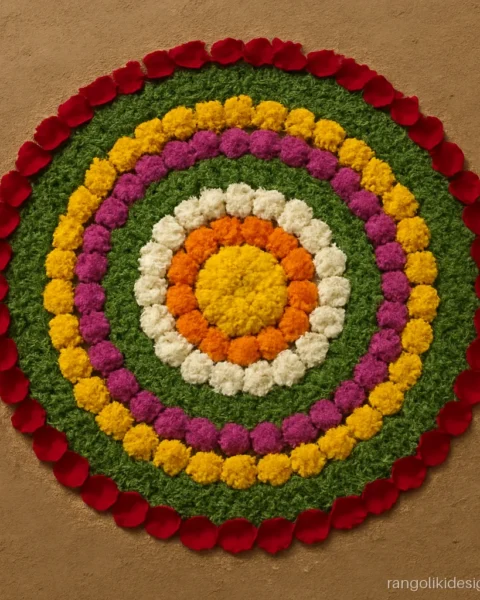
11. Eight Ring Kerala Pookalam
An eight-ring pookalam of marigold, chrysanthemum, rose and leaves. All real flowers, no powder.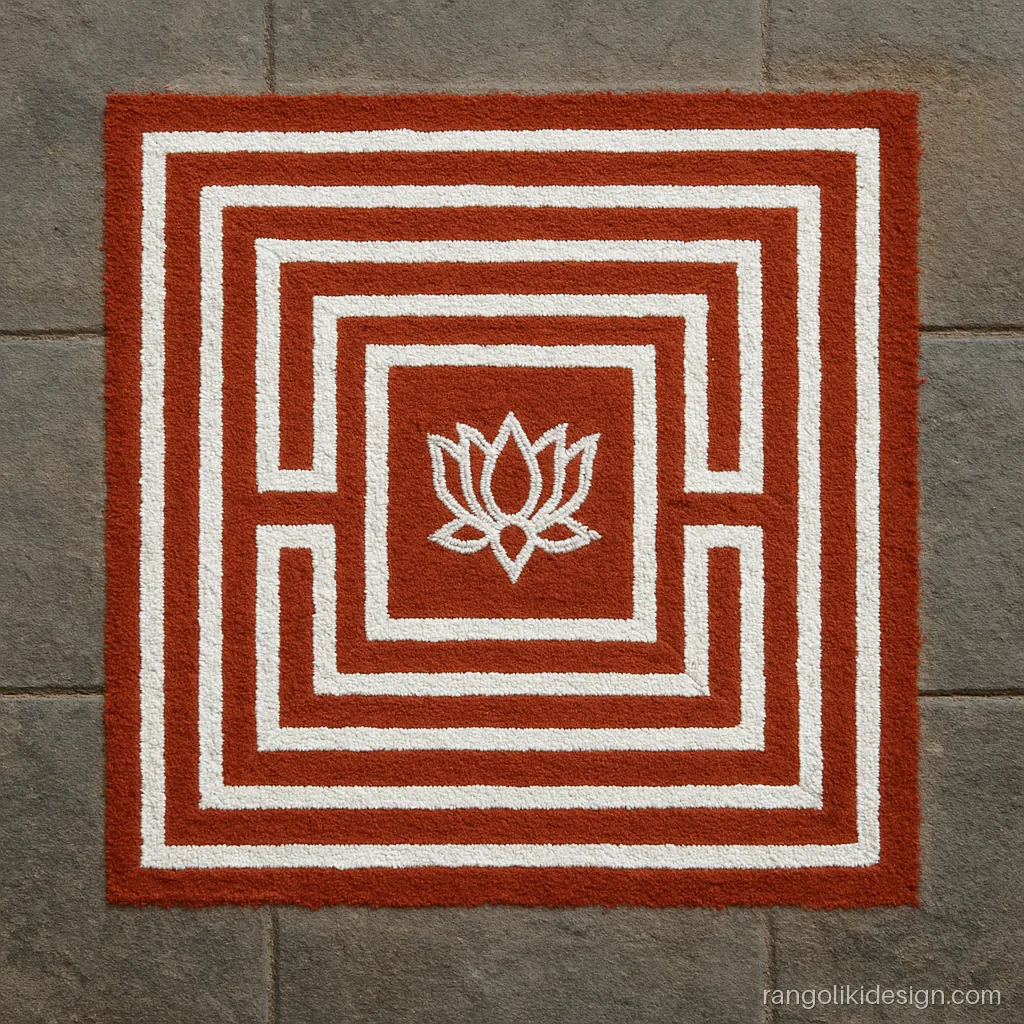
12. Stepped Square Padi Kolam
Padi kolam uses straight stepped lines instead of curves. Drawn on Fridays and in the Margazhi month.Chowk Purana and Big Traditional Rangoli Designs for Diwali
In Uttar Pradesh, chowk purana is drawn in flour for pujas and weddings. Big festival rangolis across India use the same old shapes: kalash, lotus, diya and swastik.
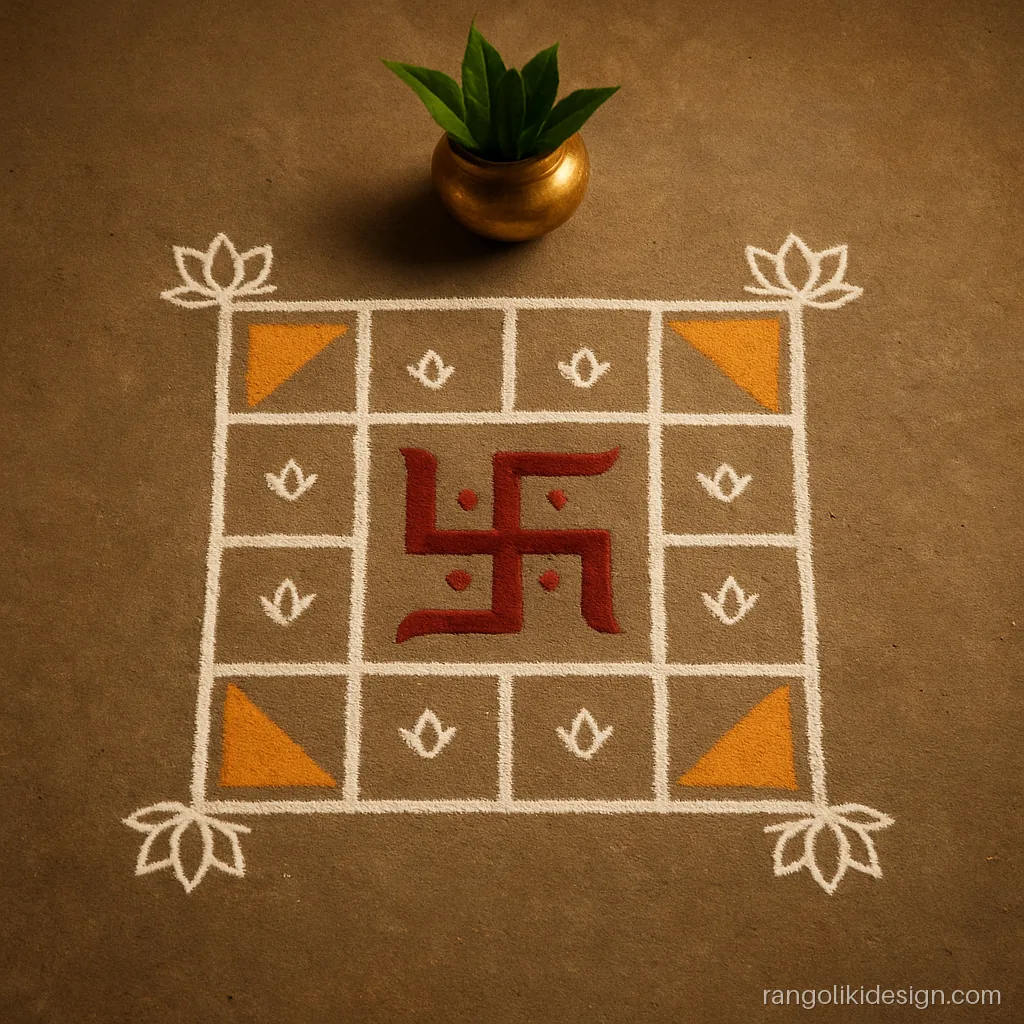
13. Chowk Purana in Flour with Swastik Grid
A chowk purana square in wheat flour with turmeric and kumkum. Made for satyanarayan puja and weddings in UP homes.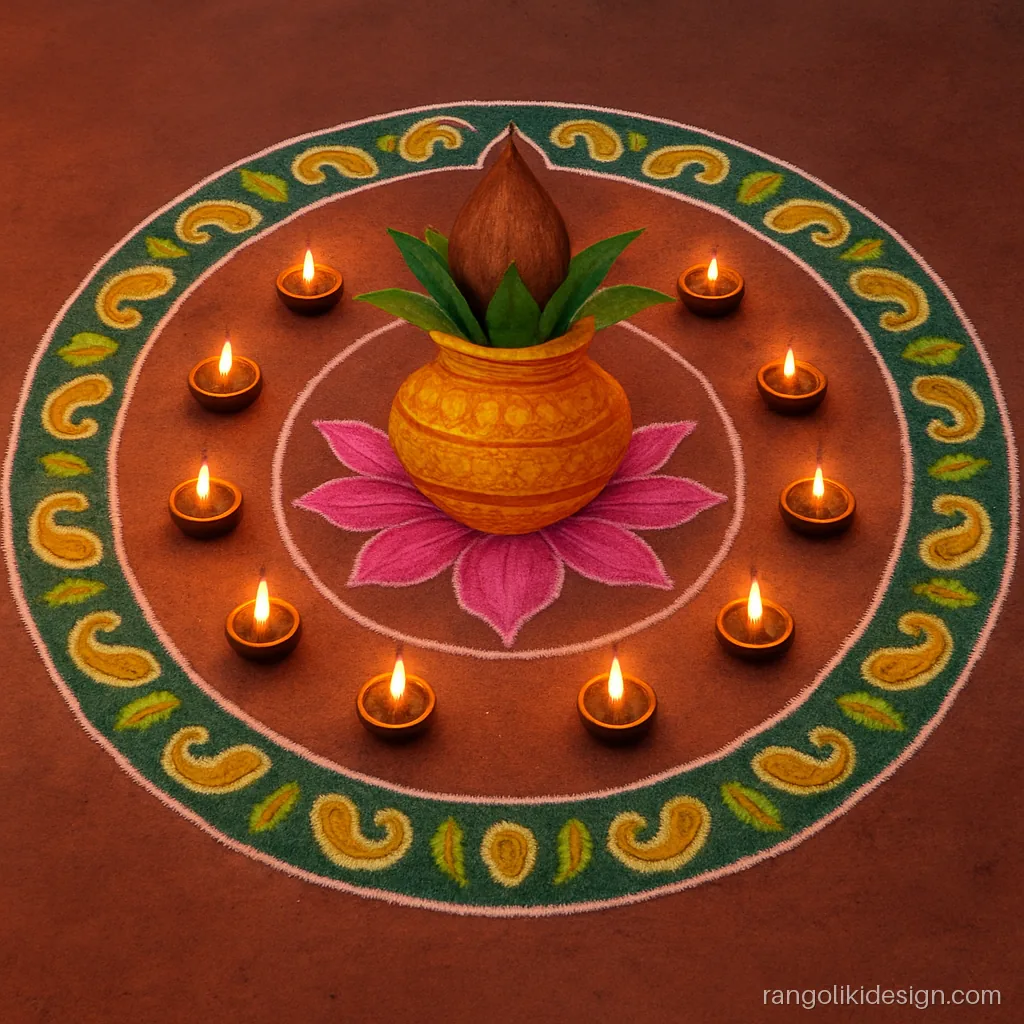
14. Kalash on a Lotus Diwali Rangoli
A tall kalash rising from a pink lotus, with diyas around. A beautiful traditional big rangoli design for Laxmi Pujan.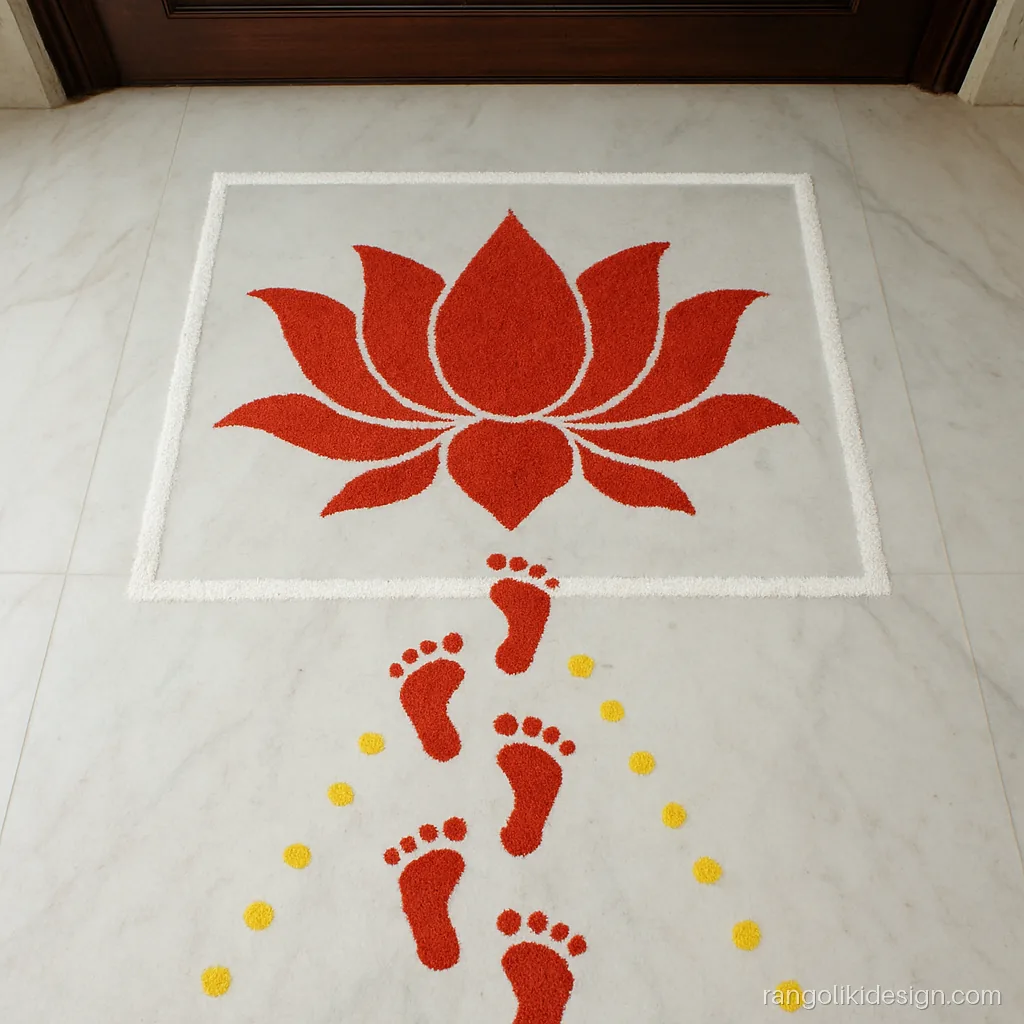
15. Laxmi Charan Entering a White Chowk
Red Laxmi charan step into a white chowk. Point the feet into the house, as custom says.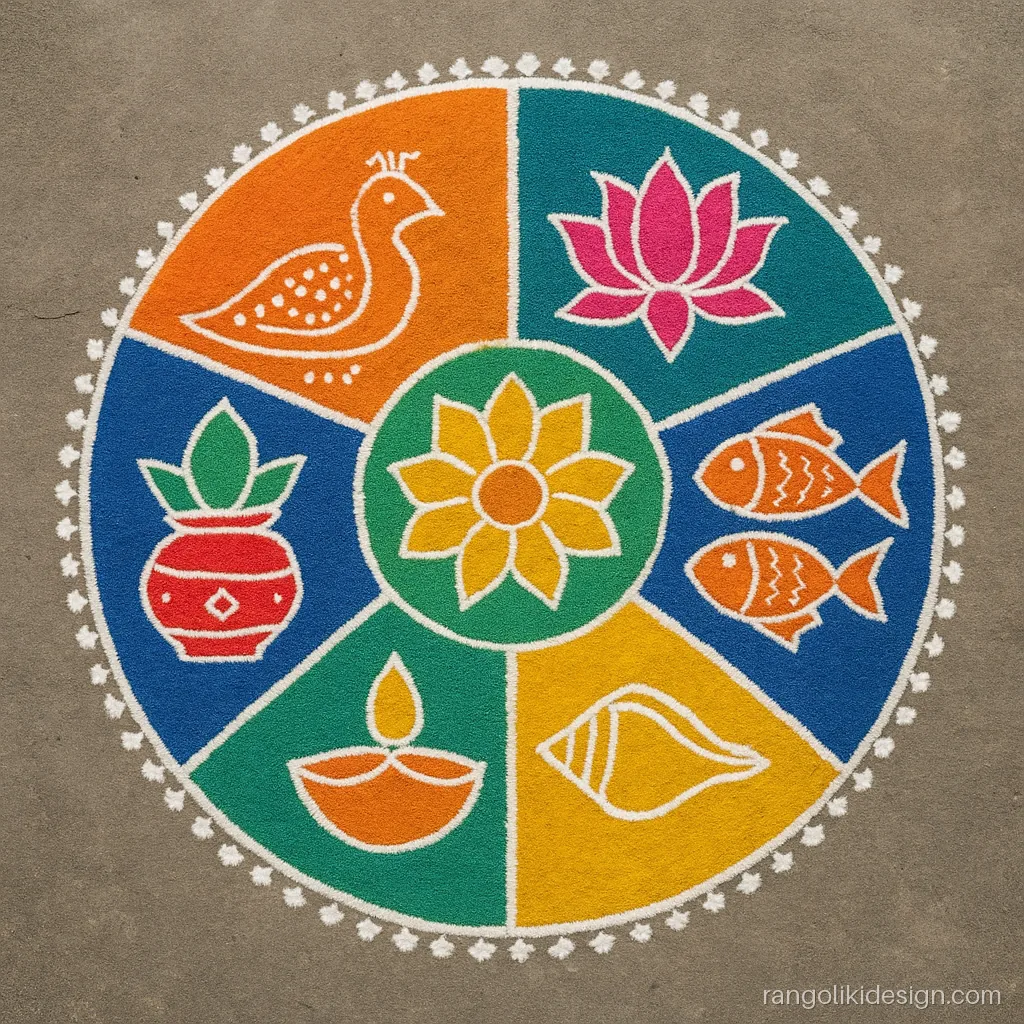
16. Regional Motif Mandala Rangoli
One mandala with a peacock, lotus, fish, conch and diya. A unique traditional rangoli design for school culture days.Regional Styles of Traditional Rangoli
Unique rangoli designs grew in every state, each with its own material and motifs.
| Region | Indian rangoli | Unique rangoli designs and motifs | Material |
|---|---|---|---|
| Bengal | Alpana | Lotus, conch, footprints, paddy | Rice paste |
| Bihar | Aripan | Fish, sun, tree, kalash | Rice paste |
| Rajasthan | Mandana | Peacock, swastik, geometric squares | Chalk on gerua |
| Maharashtra | Sanskar Bharti | Free strokes, lotus, shankh | Rangoli powder |
| Tamil Nadu | Kolam | Dots and loops, lamp | Rice flour |
| Andhra and Telangana | Muggulu | Chukki grids, pot, gobbemma | Rice flour and colour |
| Uttar Pradesh | Chowk purana | Square chowk, swastik | Flour, haldi, kumkum |
| Kerala | Pookalam | Rings of flowers | Fresh flowers |
Natural Colours for Old Style Rangoli
- White: rice flour, rice paste or ground white stone (chirodi).
- Yellow: haldi mixed with rice flour.
- Red: kumkum or gerua (red ochre).
- Green: dried leaf powder, such as dried mehndi or neem.
- Orange: dried marigold petals ground fine.
For a 1 metre design keep about 300 g of white and 100 g of each colour. Shop colours are often synthetic, so keep children from breathing the dust and wash hands after.
How to Make Rice Paste for Alpana and Aripan
Soak half a cup of rice for two hours, then grind it with a little water into a smooth paste, thin like milk. Dip a fingertip or a small rolled cloth and draw in one smooth movement. Rice paste dries white and stays for days on a mud or red floor. For more white designs see white rangoli designs.
Common questions
What are the main types of traditional rangoli designs in India?
Alpana in Bengal, aripan in Bihar, mandana in Rajasthan, Sanskar Bharti in Maharashtra, kolam in Tamil Nadu, muggulu in Andhra and Telangana, chowk purana in Uttar Pradesh and pookalam in Kerala. Each uses different materials and motifs.
What are alpana rangoli designs?
Alpana is the Bengali form of rangoli, painted with rice paste using a fingertip or cloth. It shows lotus, conch, paddy and Laxmi footprints and is made for Lakshmi Puja and weddings.
Which traditional rangoli designs are best for Diwali?
A kalash on a lotus, Laxmi charan stepping into a chowk, or a swastik with diyas. These carry the old meaning of welcoming Laxmi. Our Diwali rangoli designs page has more ideas.
What are simple traditional big rangoli designs for a courtyard?
Try a kolam on a 13 to 7 dot grid or a mandana square in white chalk. Both cover a large space with only one or two colours and look grand from a distance.
Why are old rangoli designs made with rice flour?
Rice flour is natural and feeds ants and birds, so the rangoli is also an act of sharing. It is also cheap and easy to sweep away the next morning.
What do the symbols in indian culture rangoli designs mean?
The lotus stands for purity and Laxmi, the kalash for plenty, the swastik for good luck, fish for fertility and the diya for light over darkness. Peacocks stand for beauty and joy.