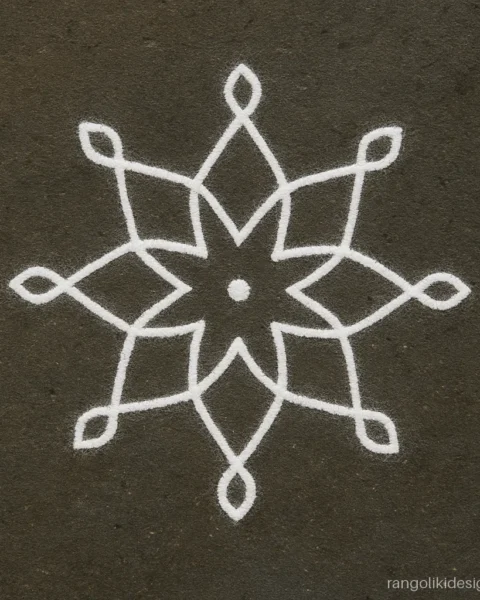
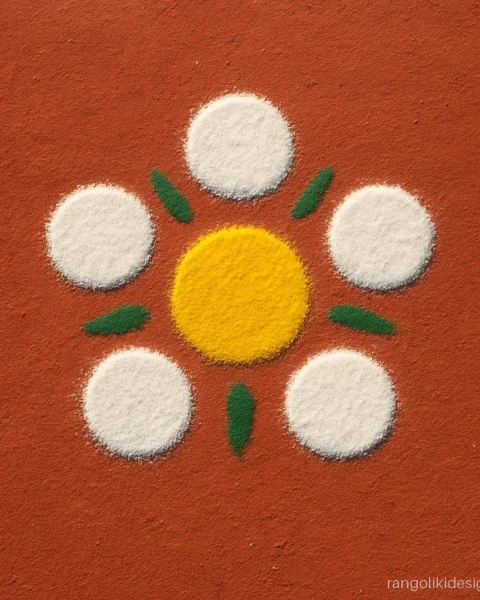
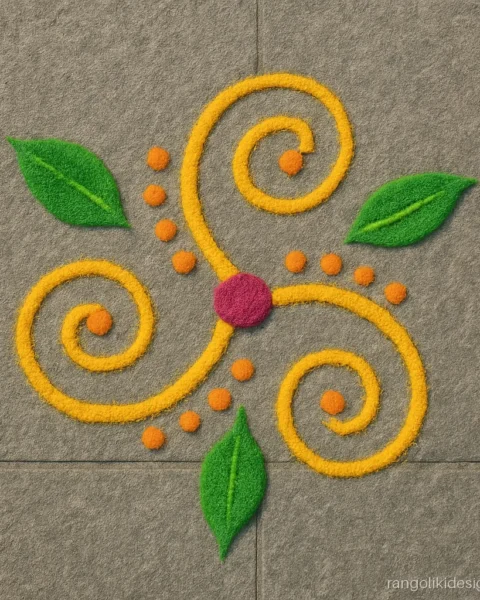
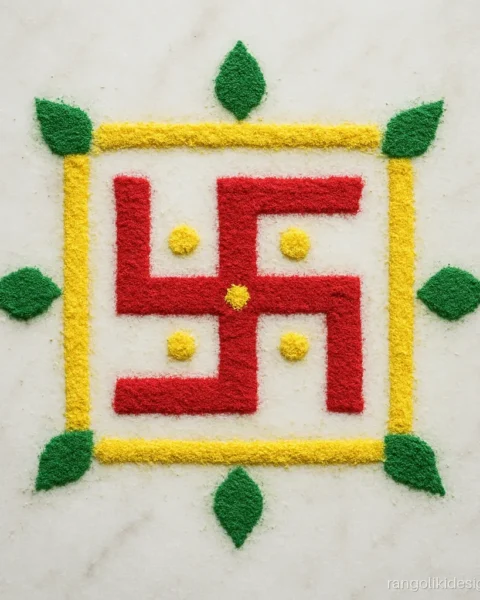
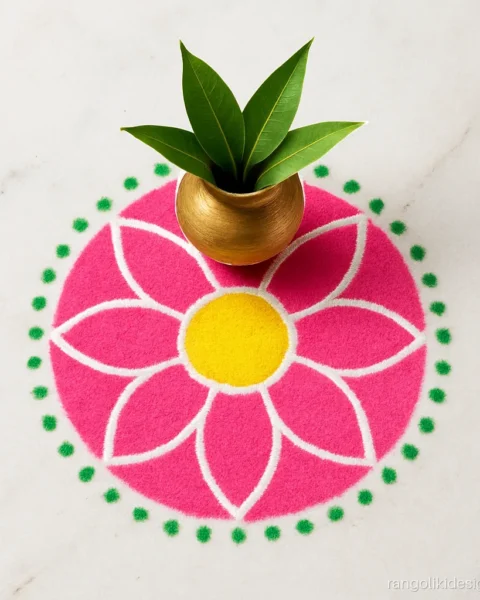
Rangoli designs with dots are the easiest way to get a neat, even rangoli, even if you have never drawn one before. You put the dots (pulli or chukki) first, then join them with lines, so the shape comes out right on its own.
This dot rangoli designs gallery is sorted by grid size: 5 by 5, 7-4, 9 to 5, 11 to 6 and 15-8. Each picture tells you the time and size. Start small, and move to a bigger grid once your hand is steady.
In Maharashtra it is called thipkyanchi rangoli, and dot rangoli is also the base of the Tamil kolam and the Telugu muggulu. If you want quick ideas for kids, also see easy rangoli designs.
Small Rangoli Designs with Dots on a 5 by 5 Grid
Small rangoli designs with dots start with 25 dots in five rows. These small dot rangoli designs fit a flat door or a pooja room and take 8 to 15 minutes. A simple 5 dots rangoli is the best first step for any beginner.
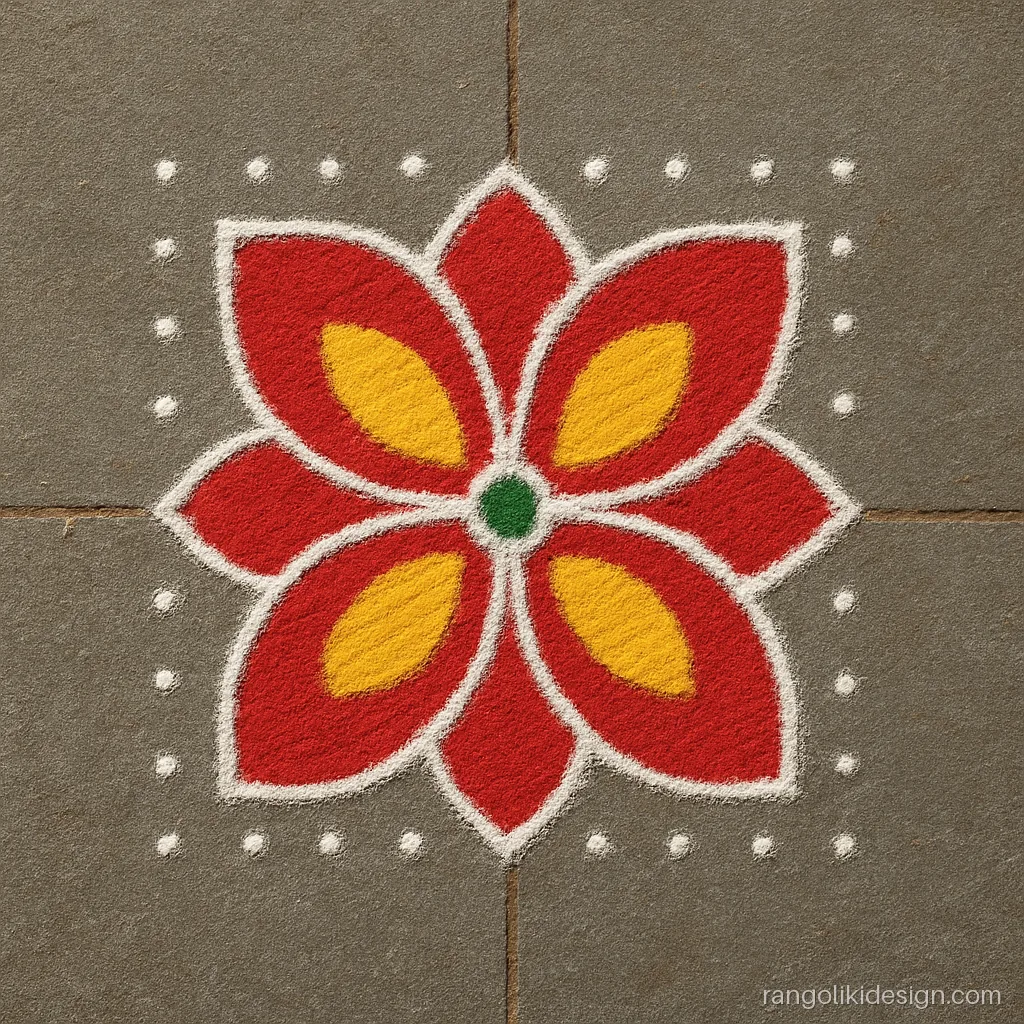
1. Red and Yellow Flower on 25 Dots
The first design most girls learn. Put 25 dots in five rows, loop around them and fill with two colours. 10 minutes, 30 cm.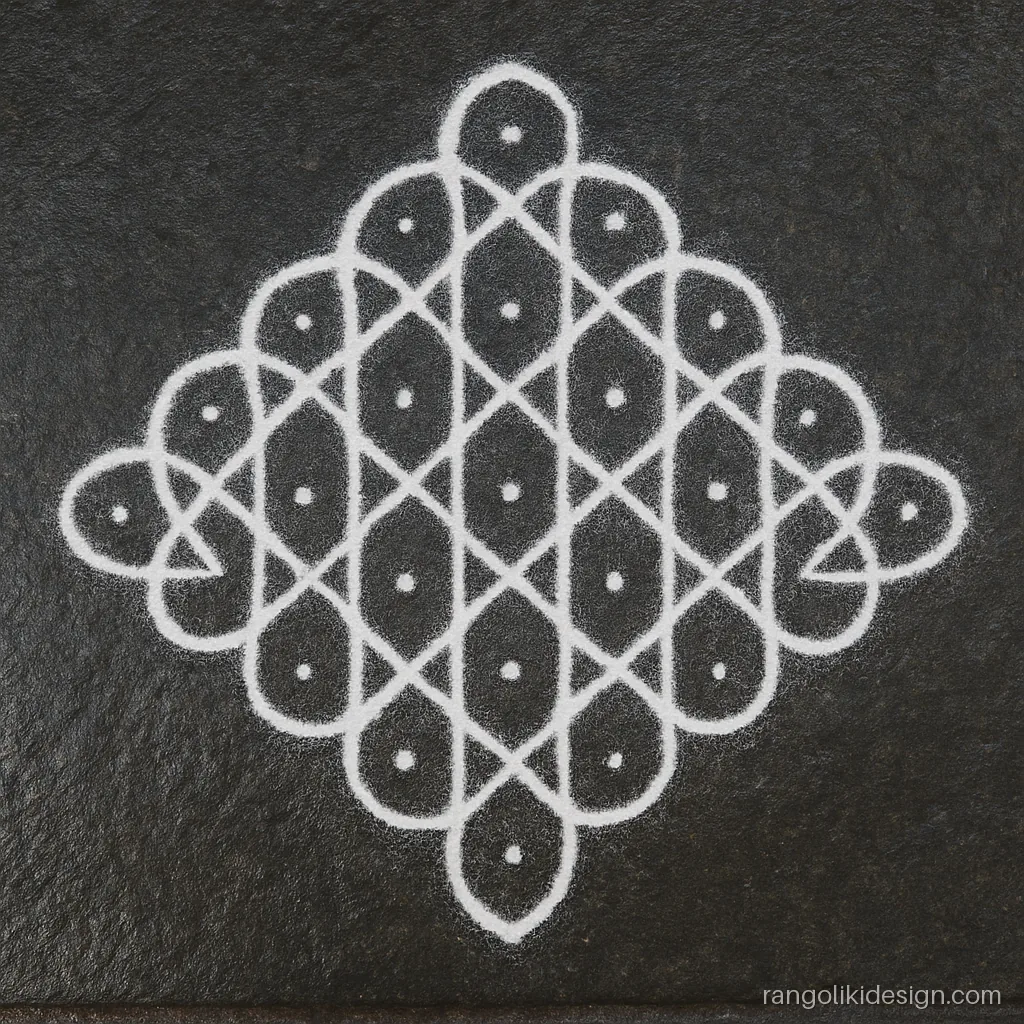
2. White Pulli Kolam Woven Around 25 Dots
One line that never breaks, like a Tamil morning kolam. Use rice flour on a wet floor so it sticks. 12 minutes, 35 cm.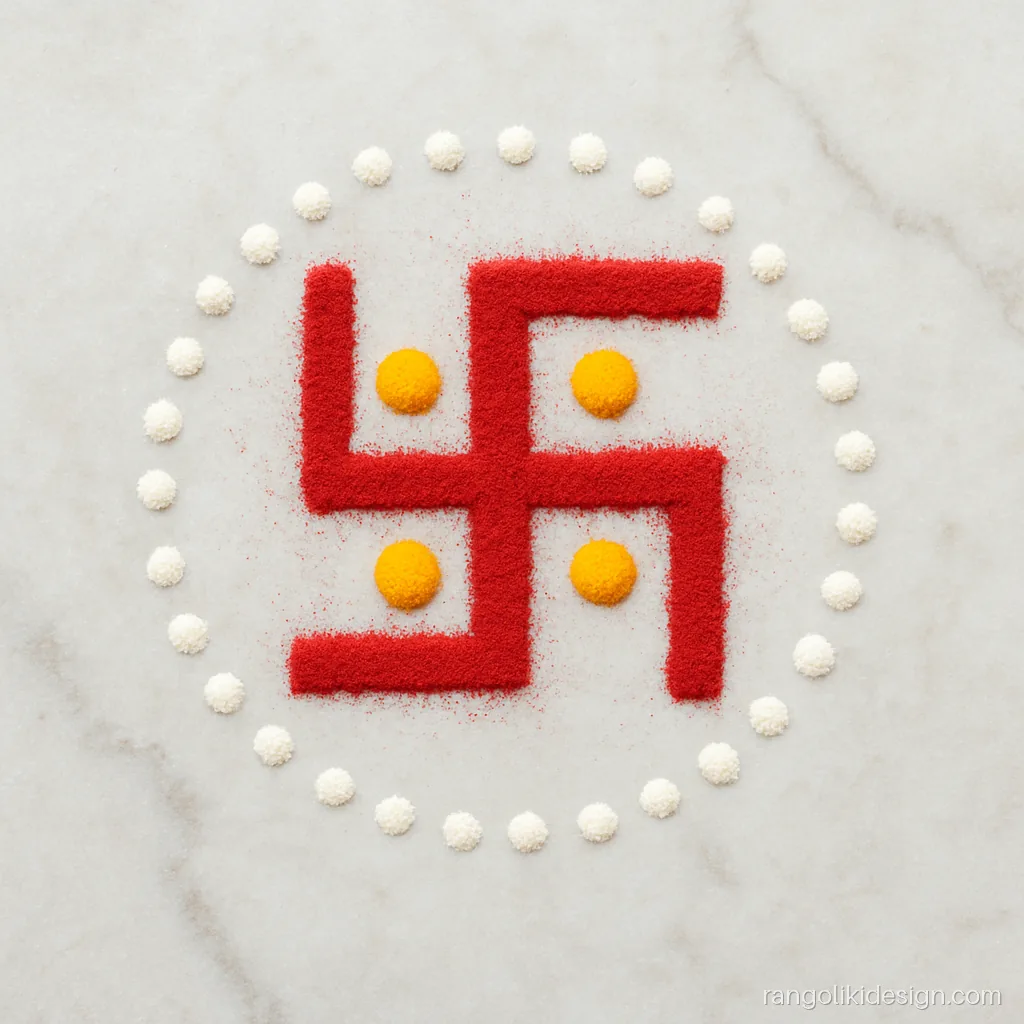
3. Haldi Kumkum Swastik on 5 by 5 Dots
A swastik joined on 25 dots in haldi and kumkum colours. Ideal at the pooja room door. 8 minutes, 25 cm.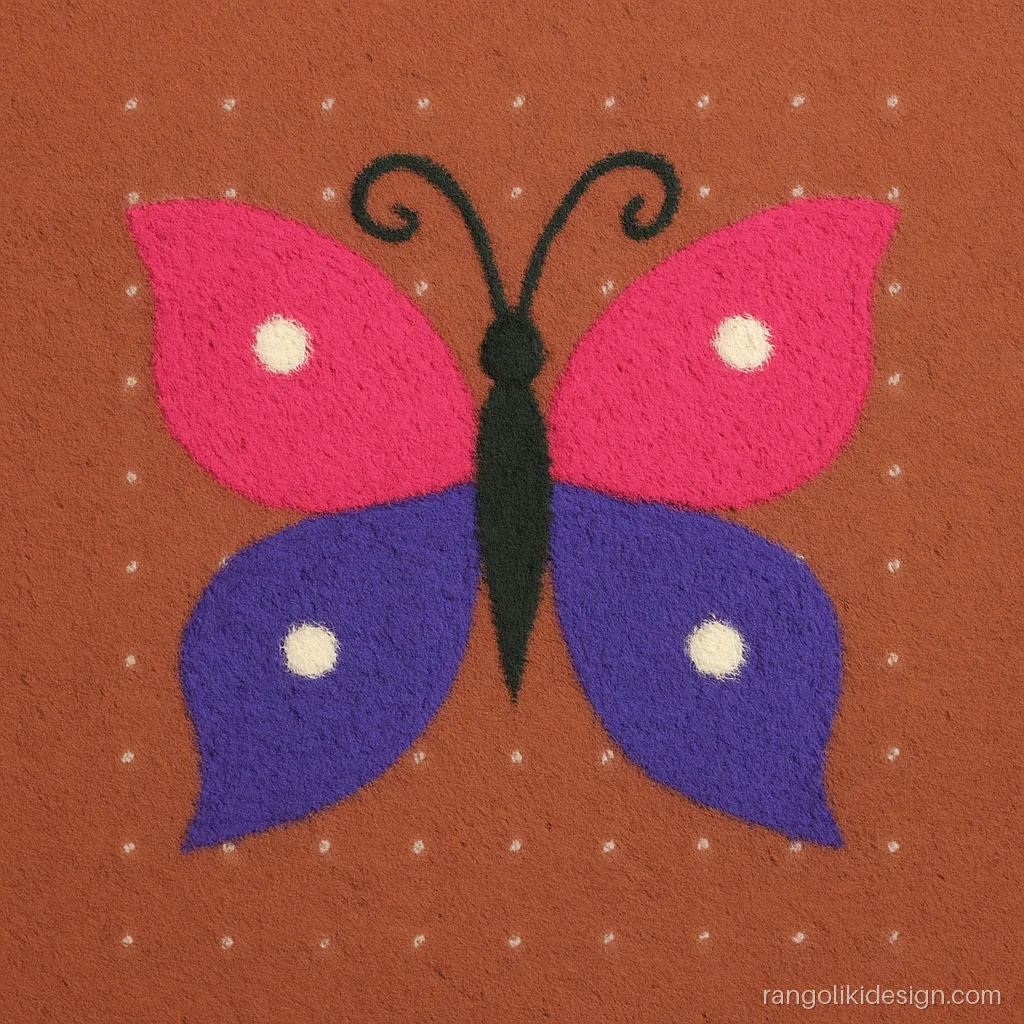
4. Pink and Purple Butterfly Dot Rangoli
Kids enjoy this one: 36 dots, two wings and a body. 15 minutes, 35 cm.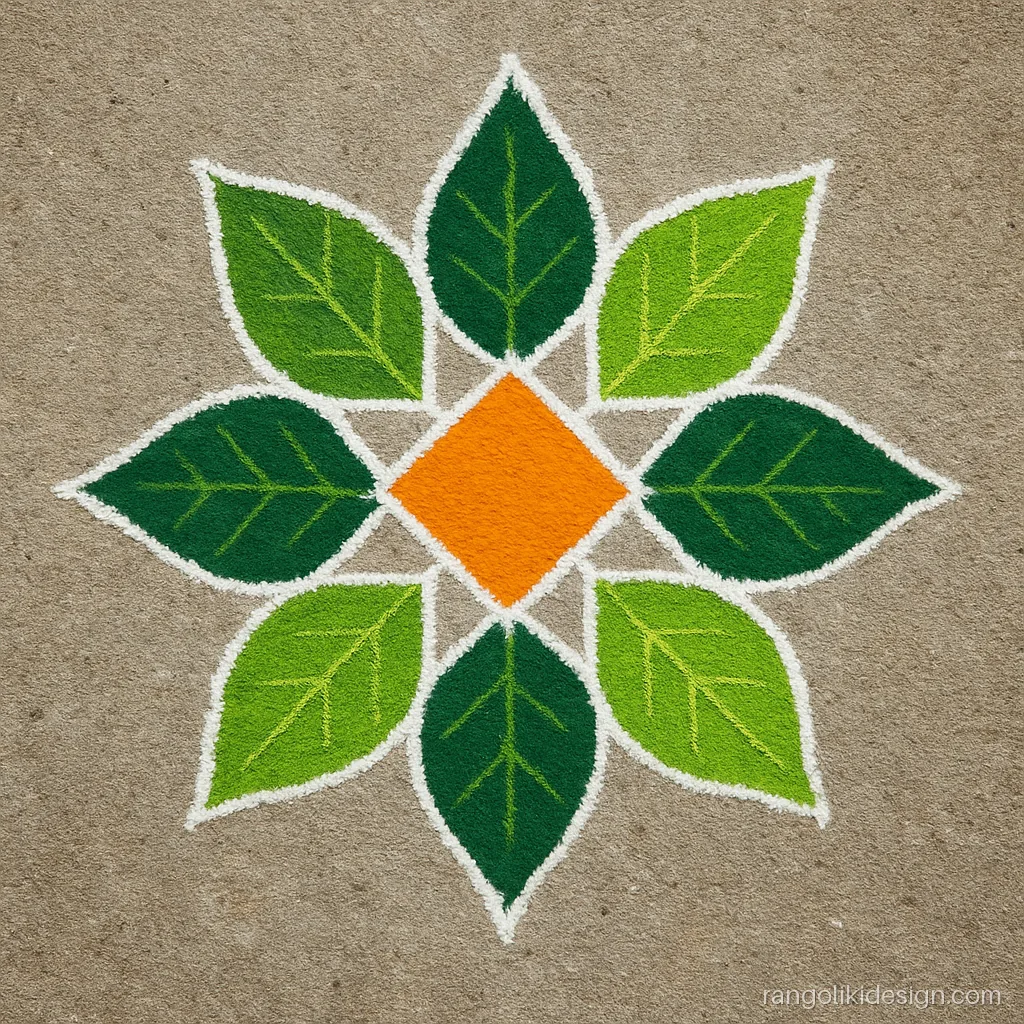
5. Eight Leaf Star Rangoli in Two Greens
Eight leaves around a small orange square. Two greens and one orange keep it fresh for daily use. 15 minutes, 35 cm.Rangoli Designs with Dots 7-4
The 7-4 grid is the most searched dot pattern: 7 dots in the middle row, reducing by one to 4 in the top and bottom rows. It gives a nice round shape and suits simple rangoli designs with dots for every day.
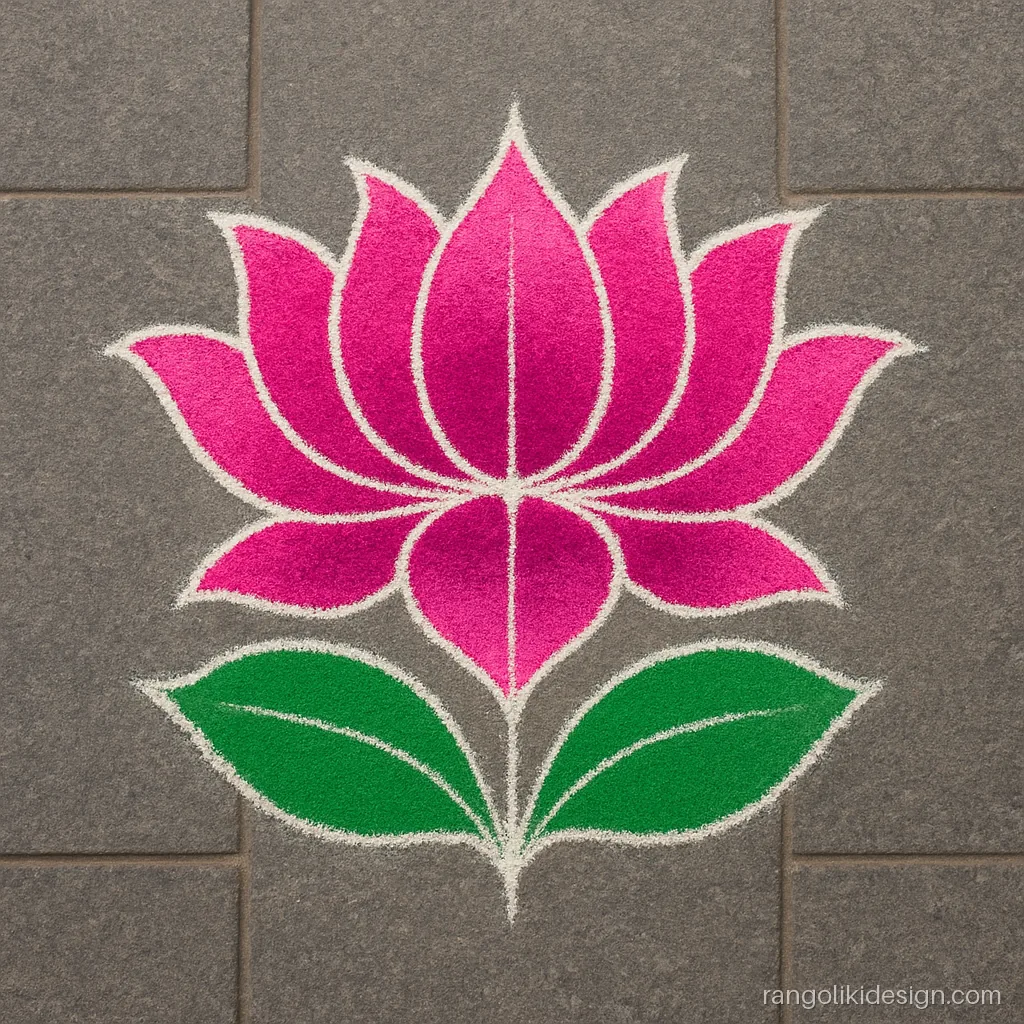
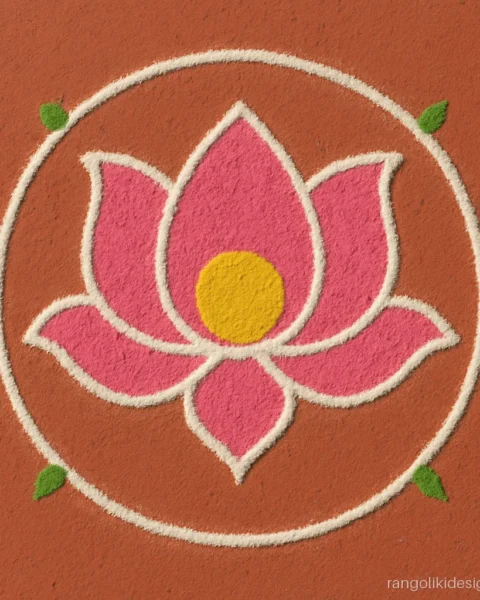
6. Pink Lotus Rangoli on 7 by 4 Dots
The 7-4 grid gives the lotus five petals that line up neatly. 20 minutes, 45 cm, good for Fridays.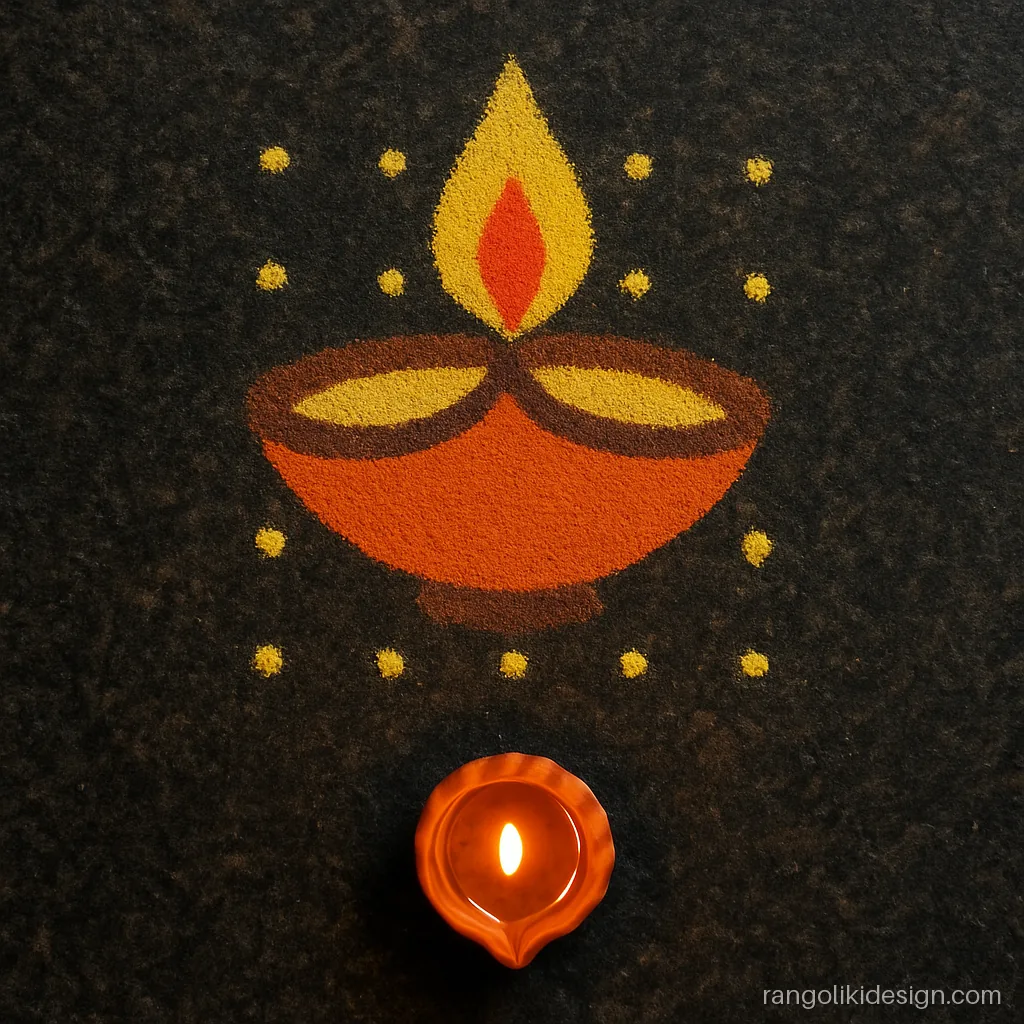
7. Orange Diya Rangoli on 7 by 4 Dots
One diya on a 7-4 grid, perfect for the five days of Diwali. Redraw it each day in a new colour. 15 minutes, 40 cm.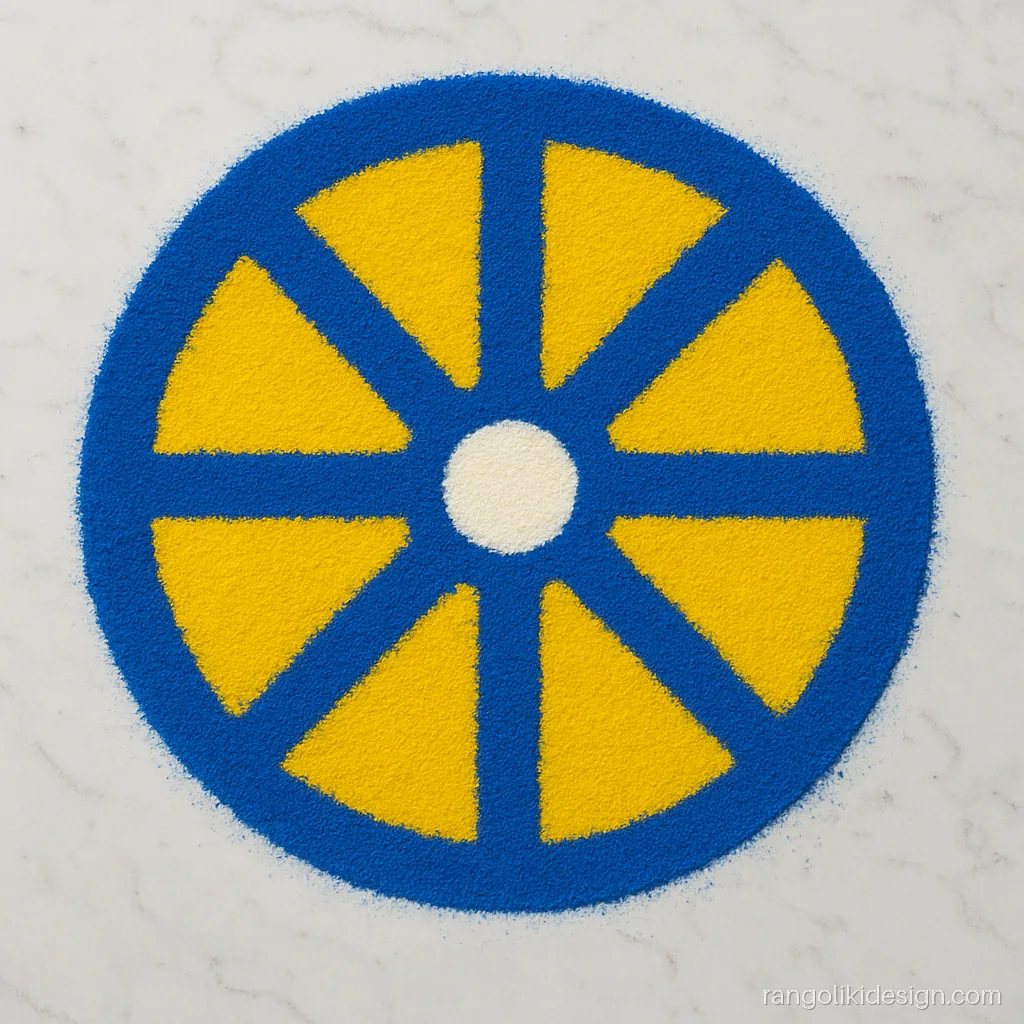
8. Turning Blue Chakra Wheel Dot Rangoli
Curved spokes make the wheel look like it is turning. 20 minutes, 45 cm.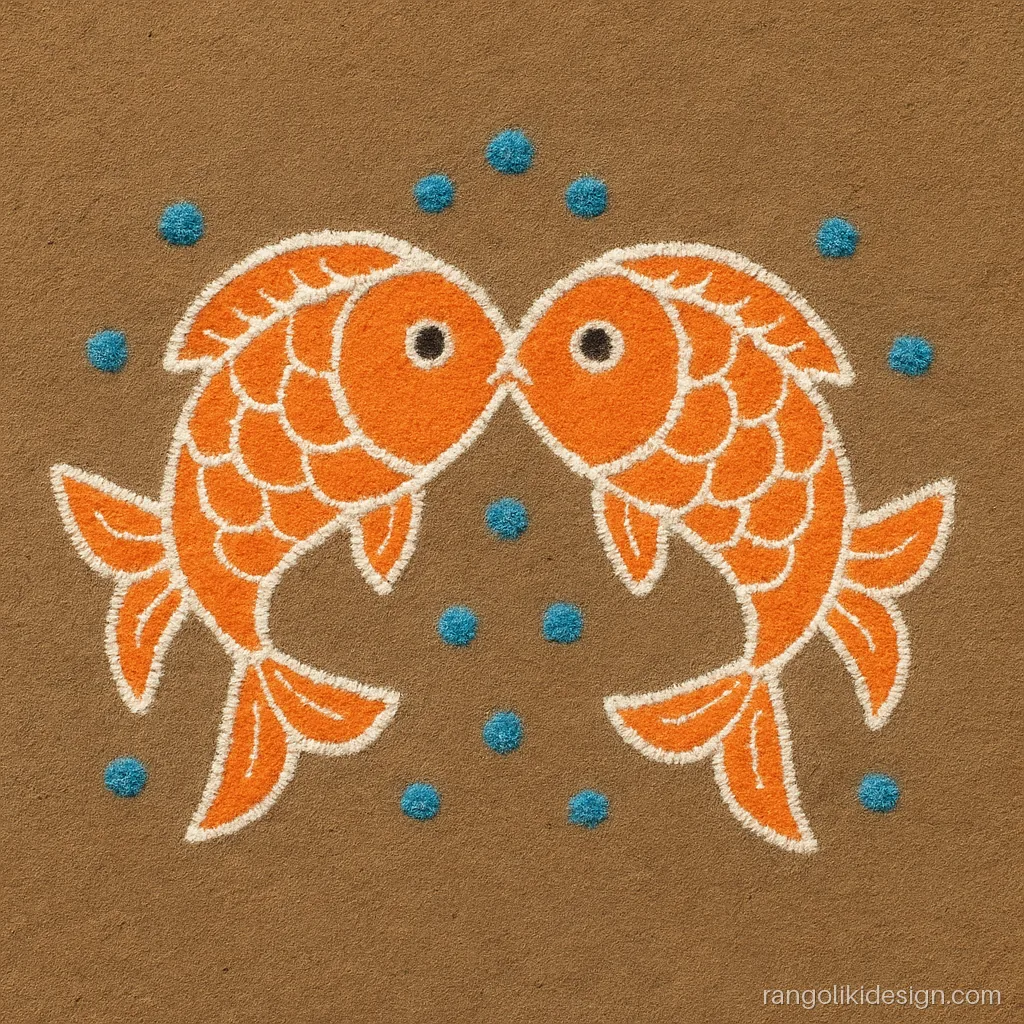
9. Two Lucky Fish Dot Rangoli
Two fish are a sign of good luck, often drawn for a new home. 20 minutes, 45 cm.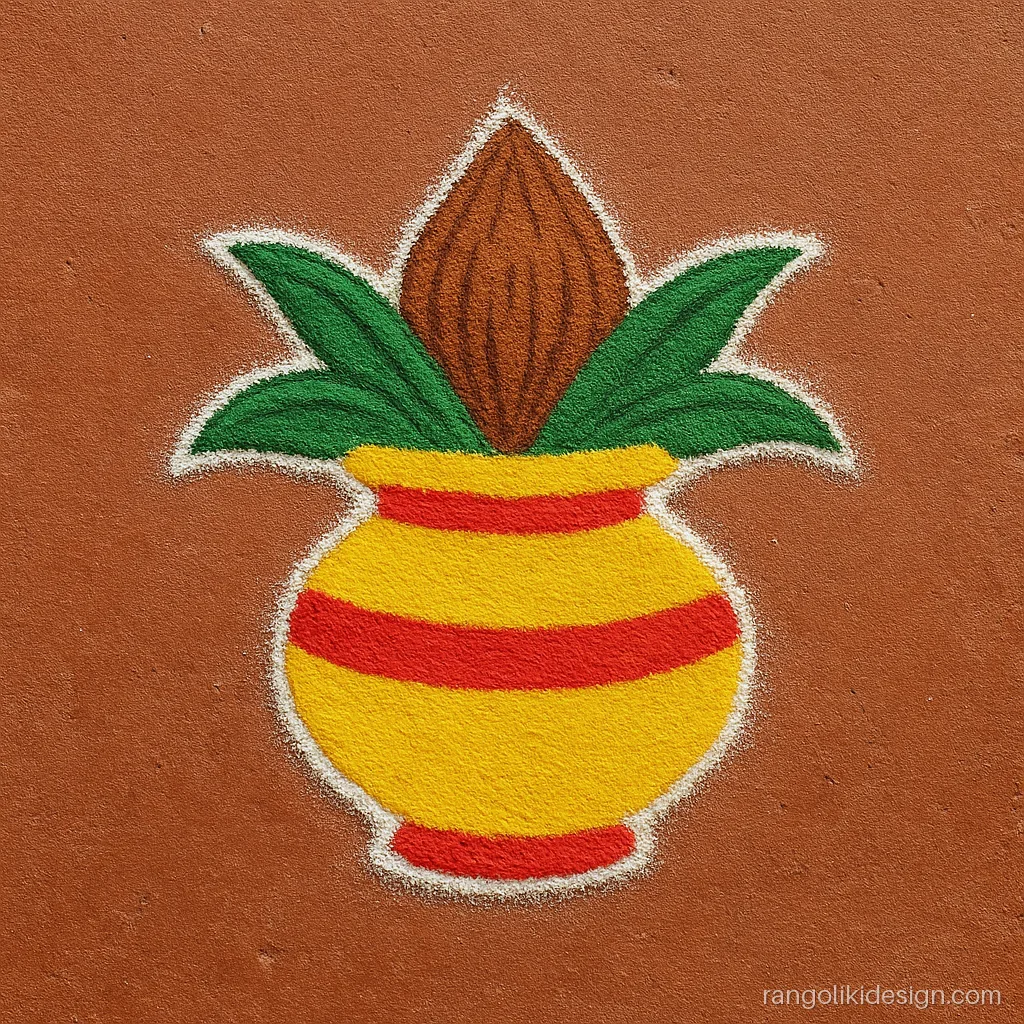
10. Yellow Kalash Rangoli with Mango Leaves
Good for griha pravesh or the Navratri ghatasthapana. 25 minutes, 45 cm.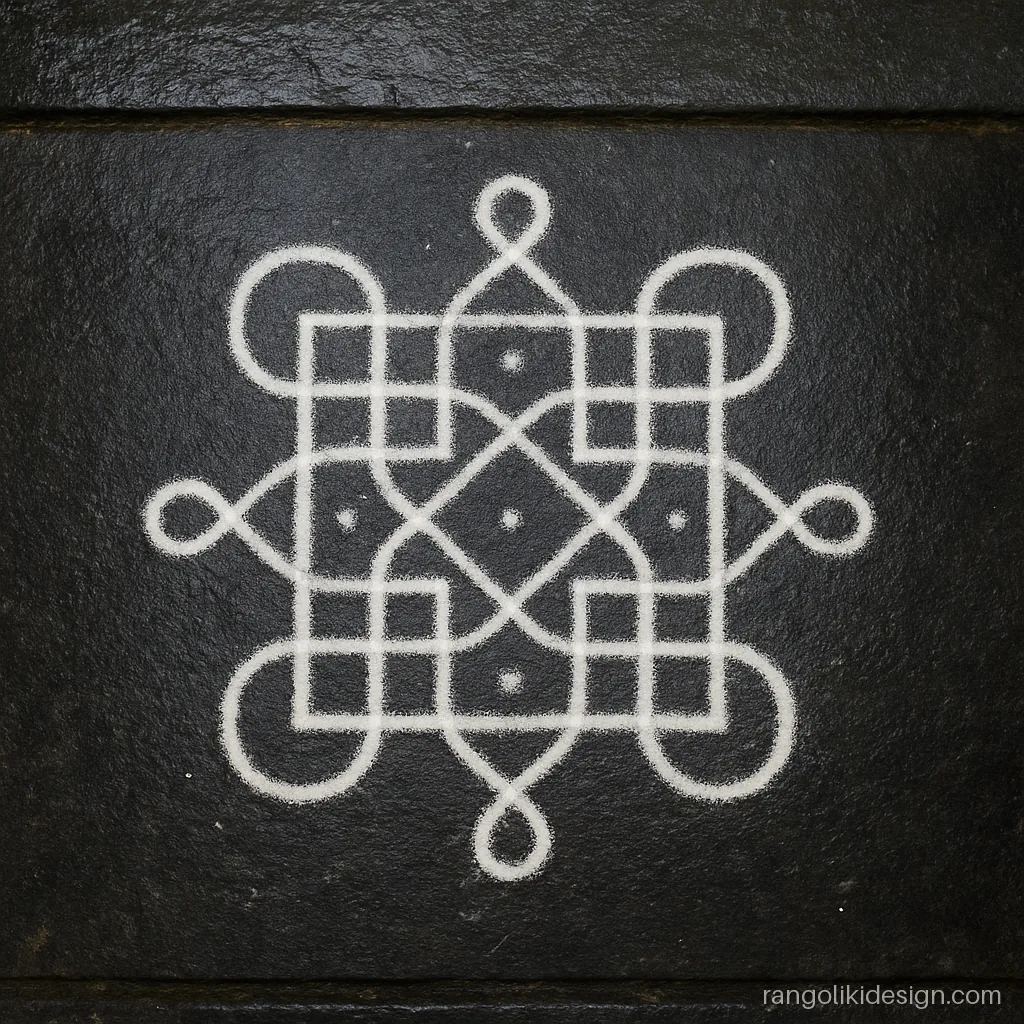
11. Interlaced Sikku Kolam on 7 by 4 Dots
A sikku kolam where one line loops round every dot. Practise it on paper first. 20 minutes, 50 cm.9 to 5 Dots Rangoli Designs
9 to 5 dots rangoli designs have 9 dots in the middle row and 5 in the end rows. The extra space lets you add a feather, a sun or a pair of animals.
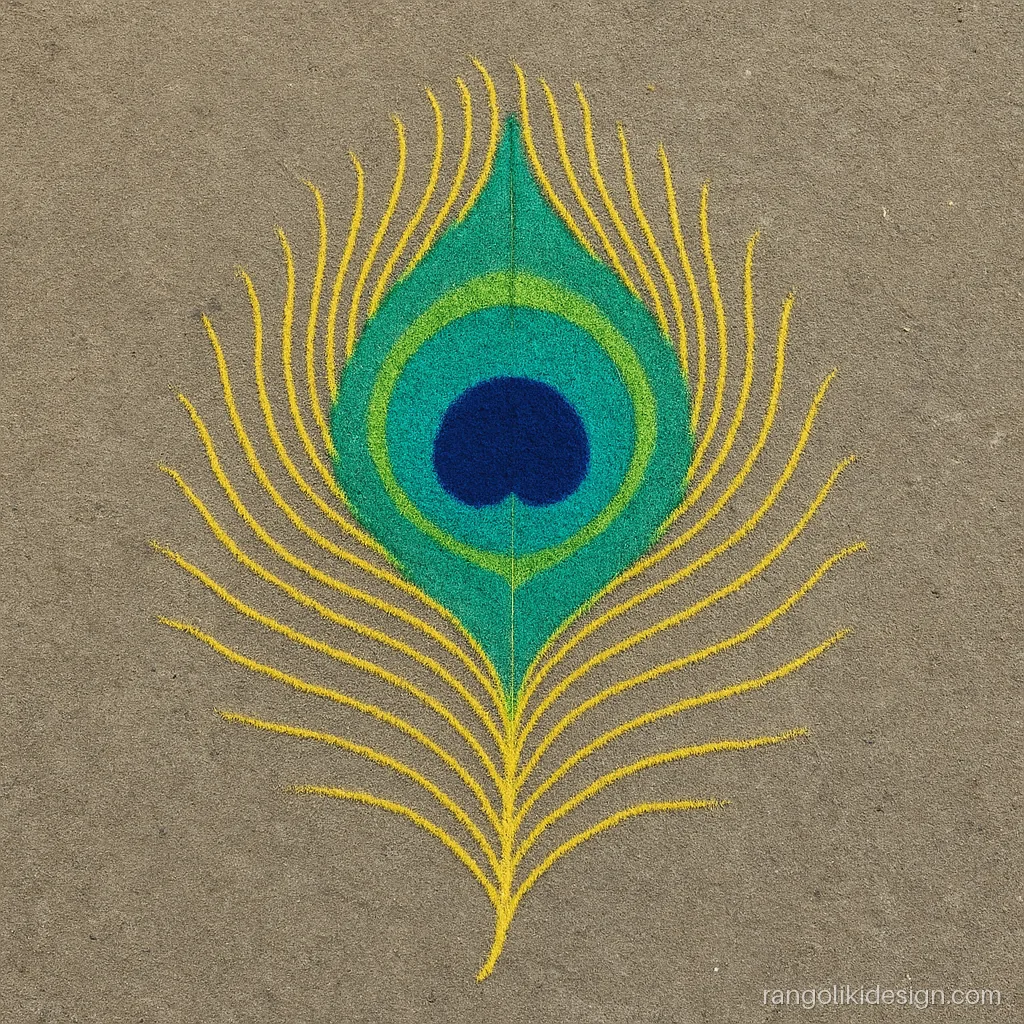
12. Peacock Feather Rangoli on 9 by 5 Dots
One feather instead of a full peacock, so it stays simple. 25 minutes, 50 cm.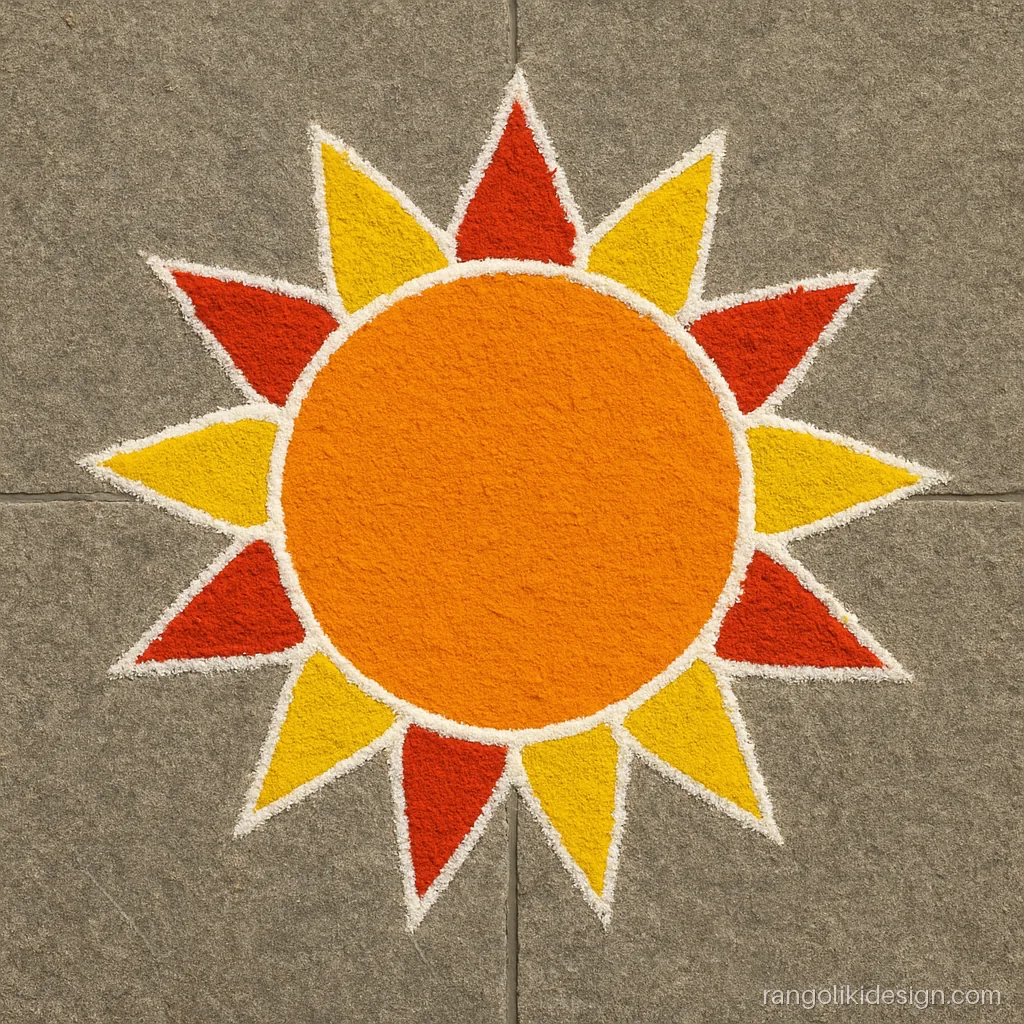
13. Bright Sun with Twelve Rays Dot Rangoli
Great for Sankranti or Chhath mornings. Each ray uses two dots. 20 minutes, 50 cm.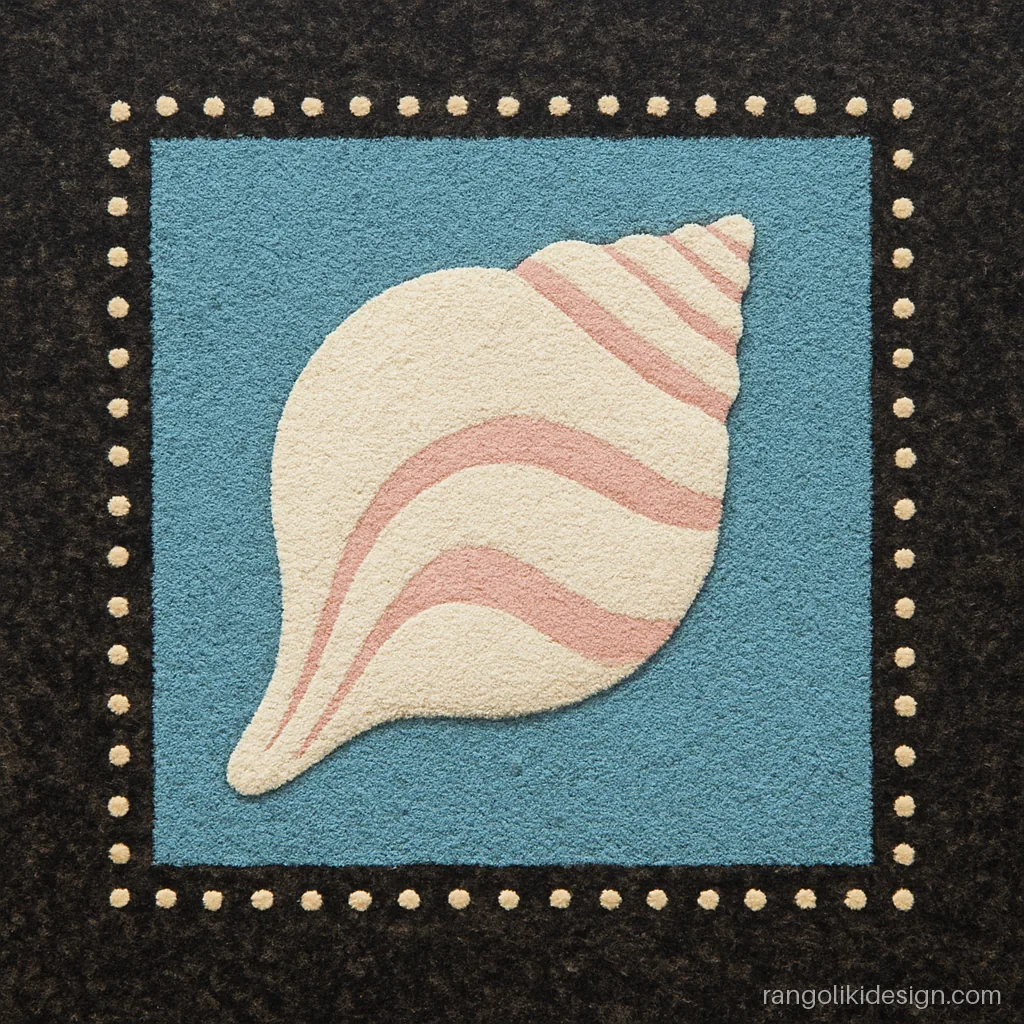
14. White Shankh Conch Rangoli for Pooja Days
The shankh suits pooja days and Tulsi Vivah. Keep it white with a little pink. 25 minutes, 50 cm.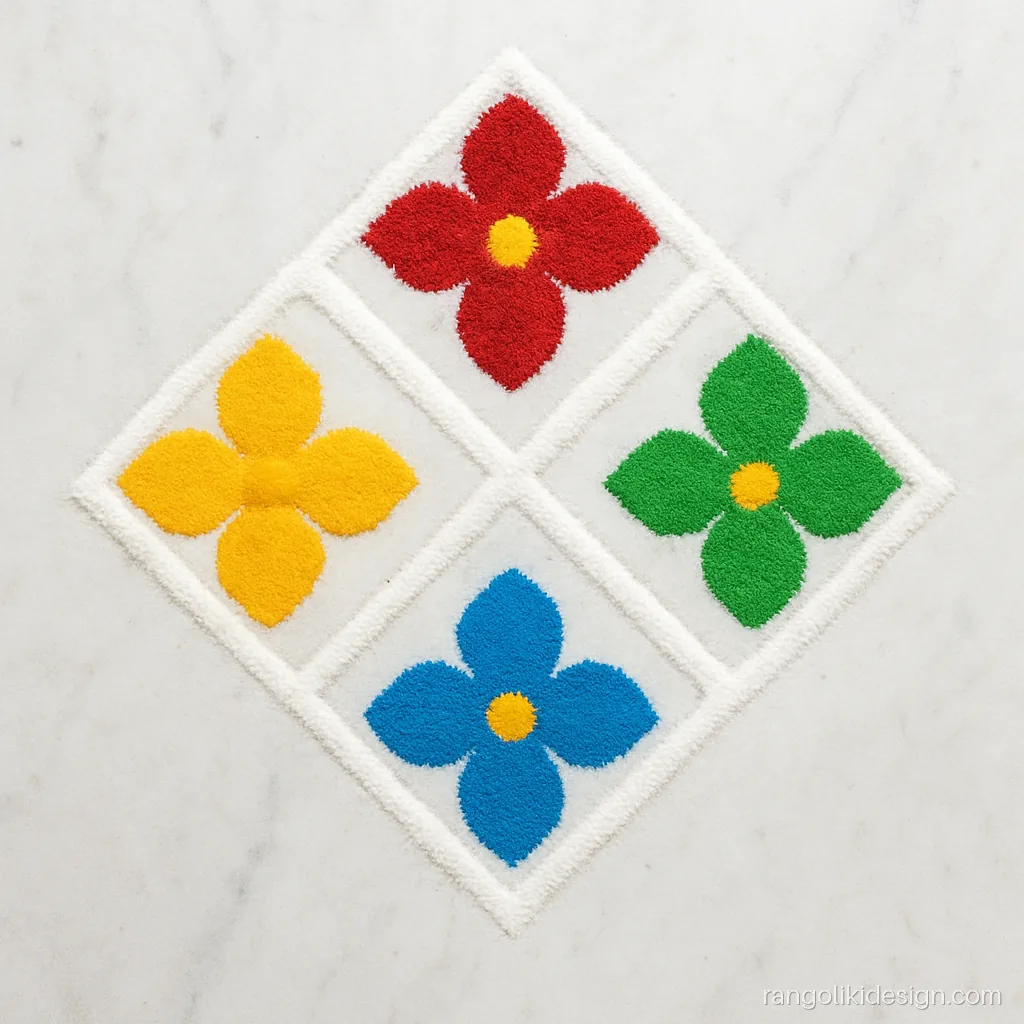
15. Four Flower Diamond Rangoli
Each corner gets its own colour, so kids can share the work. 20 minutes, 50 cm.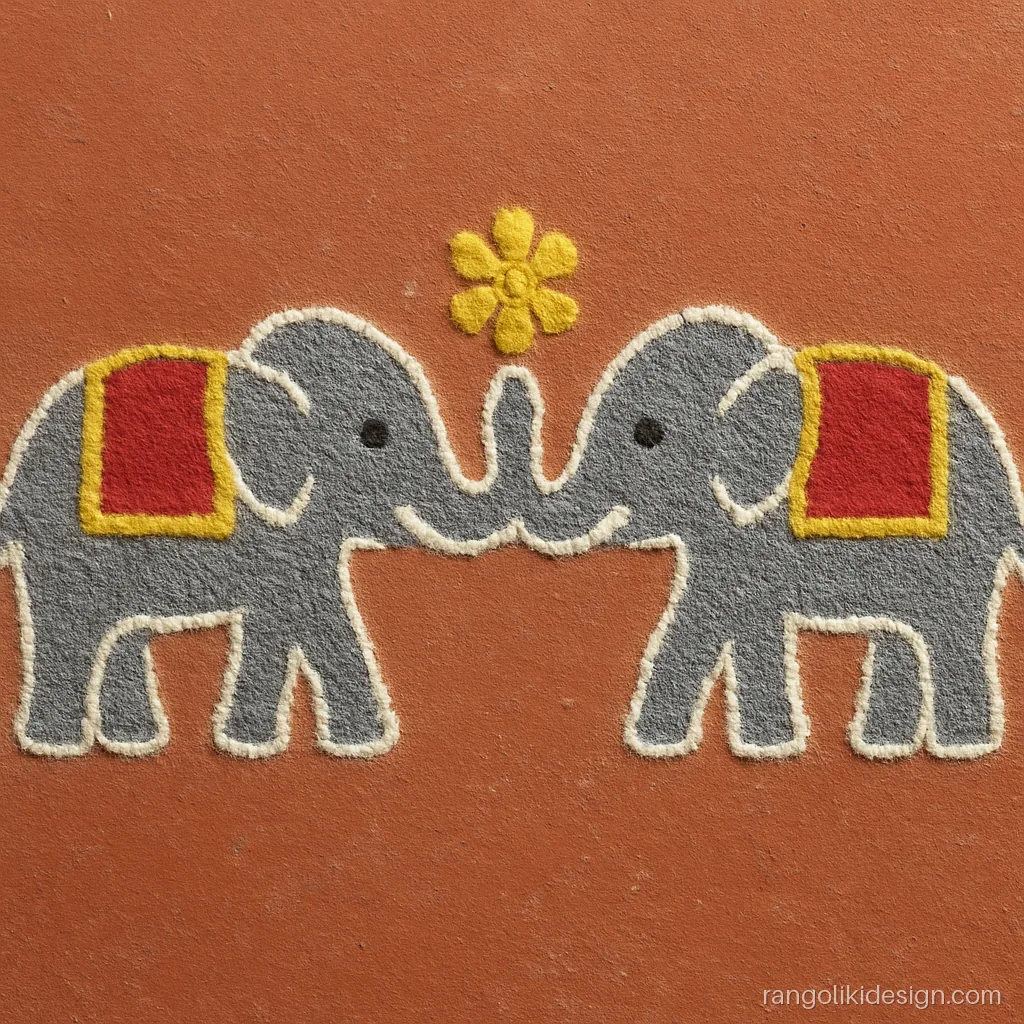
16. Elephant Pair Rangoli with Raised Trunks
Two elephants with raised trunks welcome guests. Good for weddings and a new home. 30 minutes, 55 cm.11 to 6 Dot Rangoli Designs
The 11 to 6 grid is the step up from 9 to 5. It takes about 90 dots and makes designs around 60 cm, a good size for the main door.
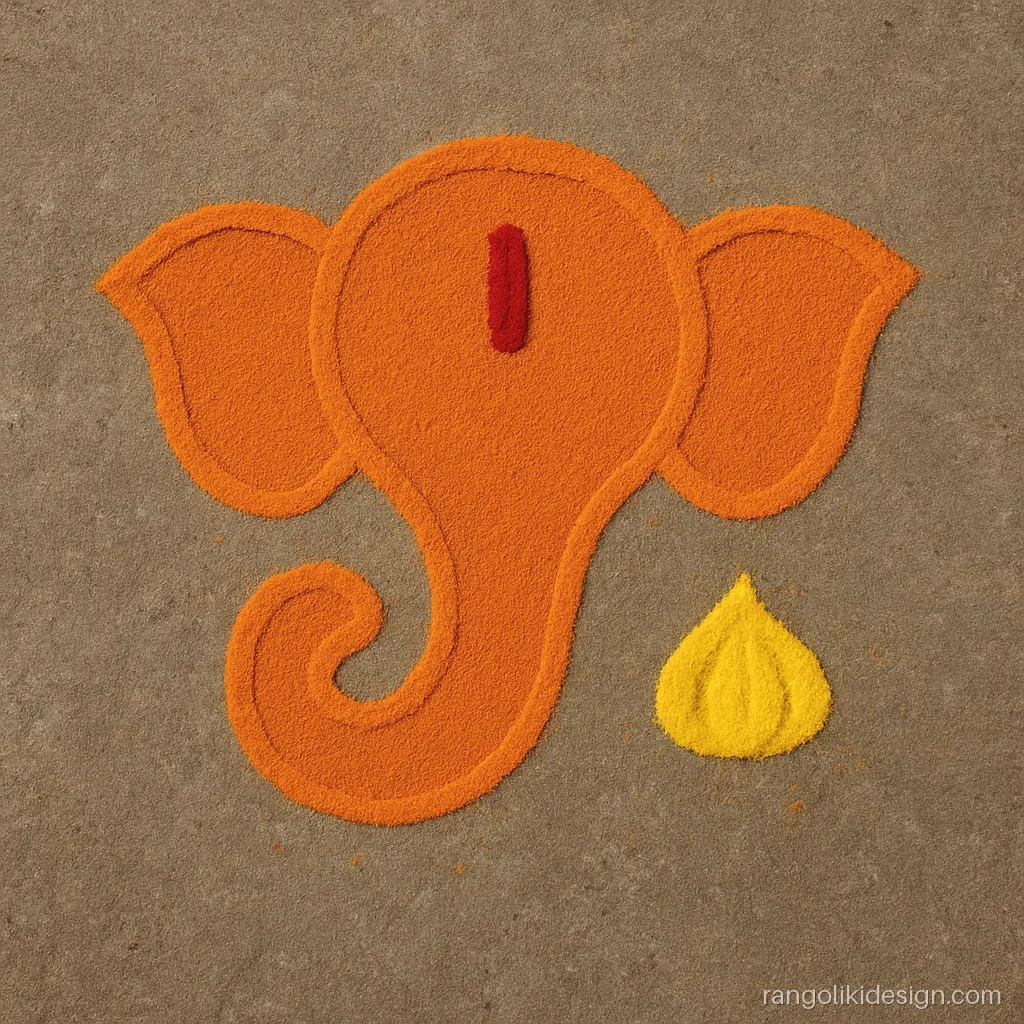
17. Curved Ganesh Outline Dot Rangoli
A stylised Ganesh made only of curves: head, ears and trunk. 35 minutes, 60 cm, great for Ganesh Chaturthi.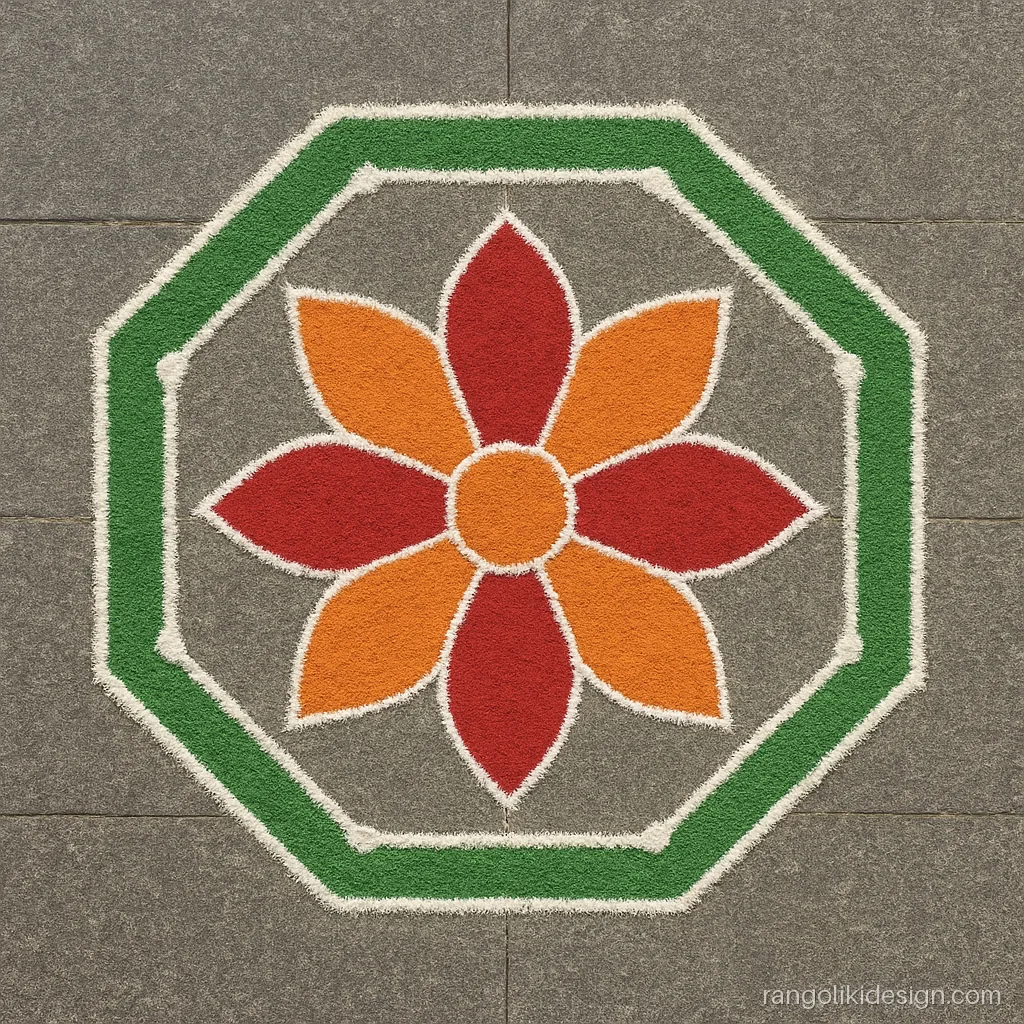
18. Octagon Framed Eight Petal Rangoli
The octagon border makes it look framed. 30 minutes, 60 cm.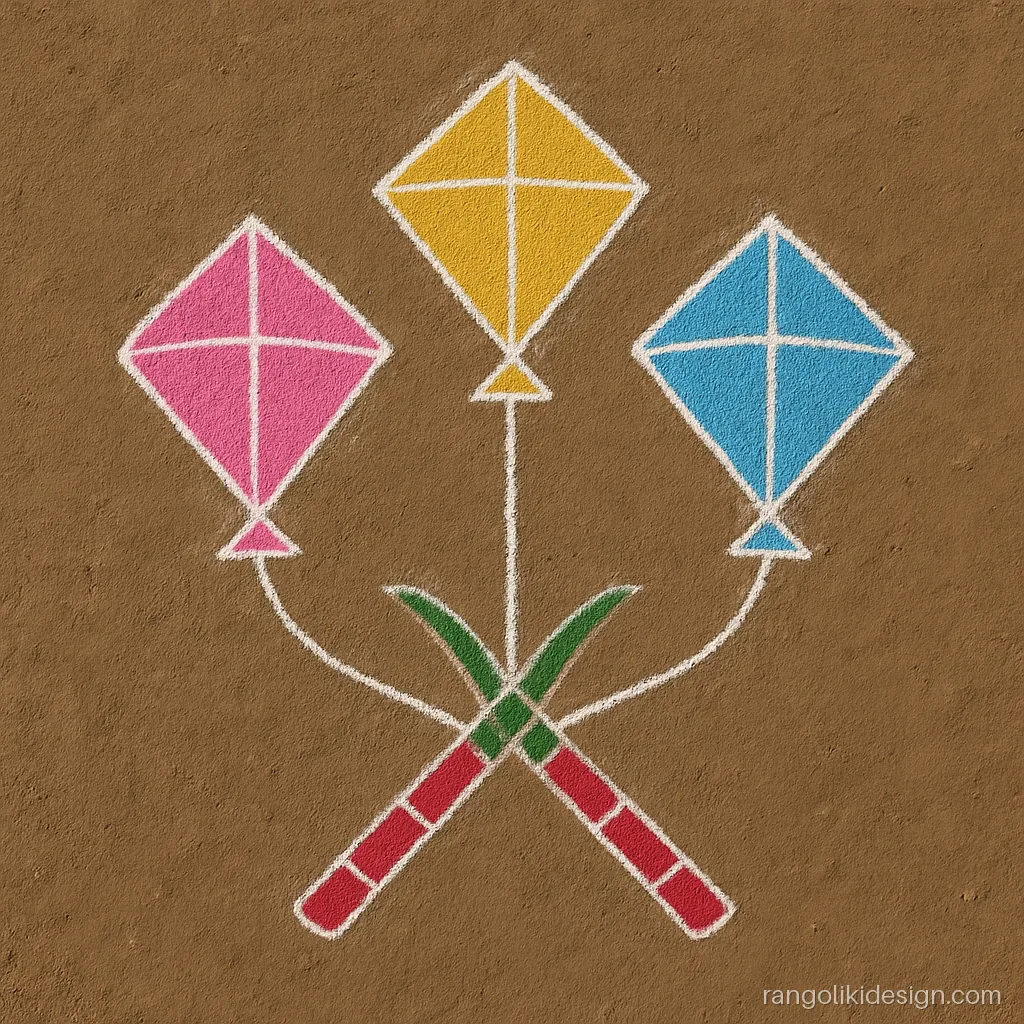
19. Sankranti Kites and Sugarcane Dot Rangoli
Made for Makar Sankranti and Pongal mornings. 30 minutes, 60 cm.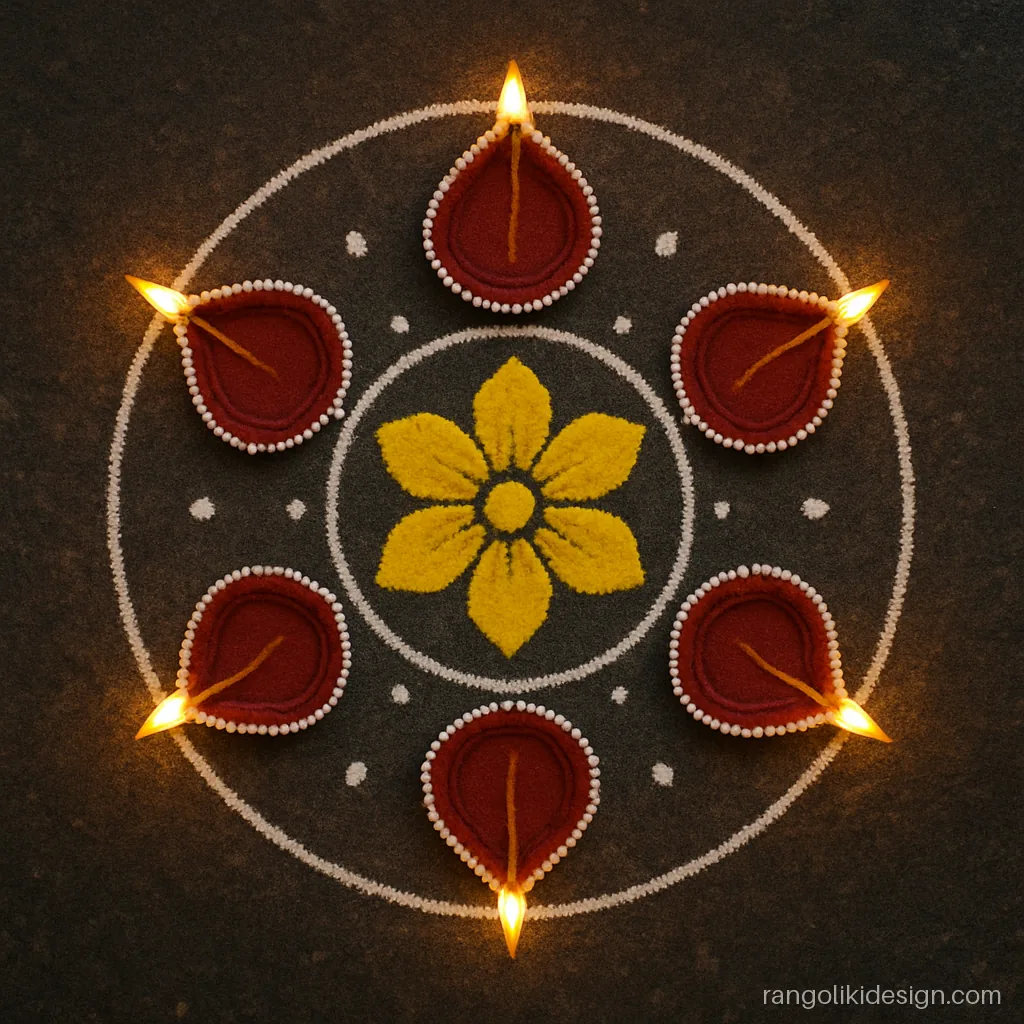
20. Six Diya Ring Rangoli for Diwali
Six diyas in a ring around a flower. 35 minutes, 60 cm. Place real diyas outside it at night.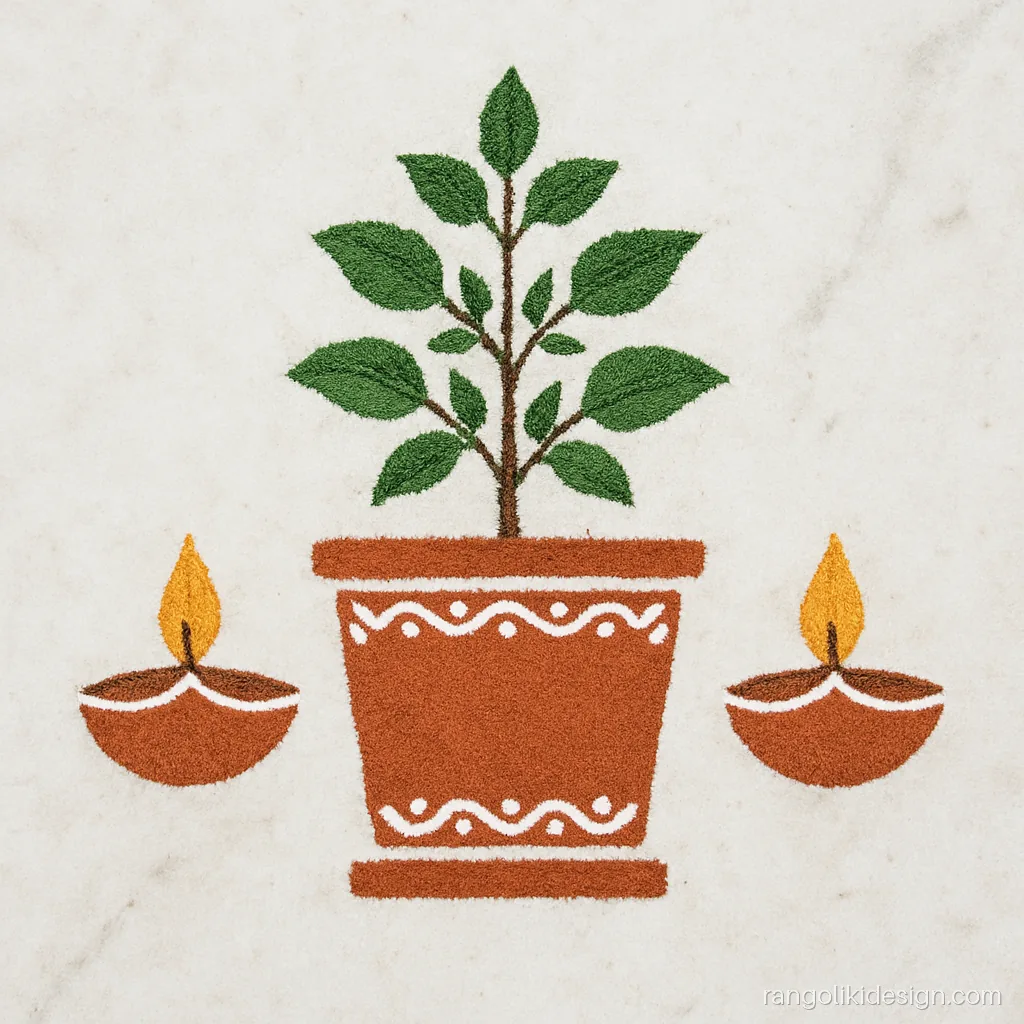
21. Tulsi Plant in a Pot Rangoli
A tulsi pot for Tulsi Vivah or the daily pooja near the plant. 30 minutes, 55 cm.Big Rangoli Designs with Dots 15-8
Big rangoli designs with dots use a 15-8 grid or more. Mark the rows with a chalk line first, and keep 600 g to 1 kg colour ready for a design about 1 metre across. A 15 to 7 dots rangoli is a slightly narrower choice for a long passage.
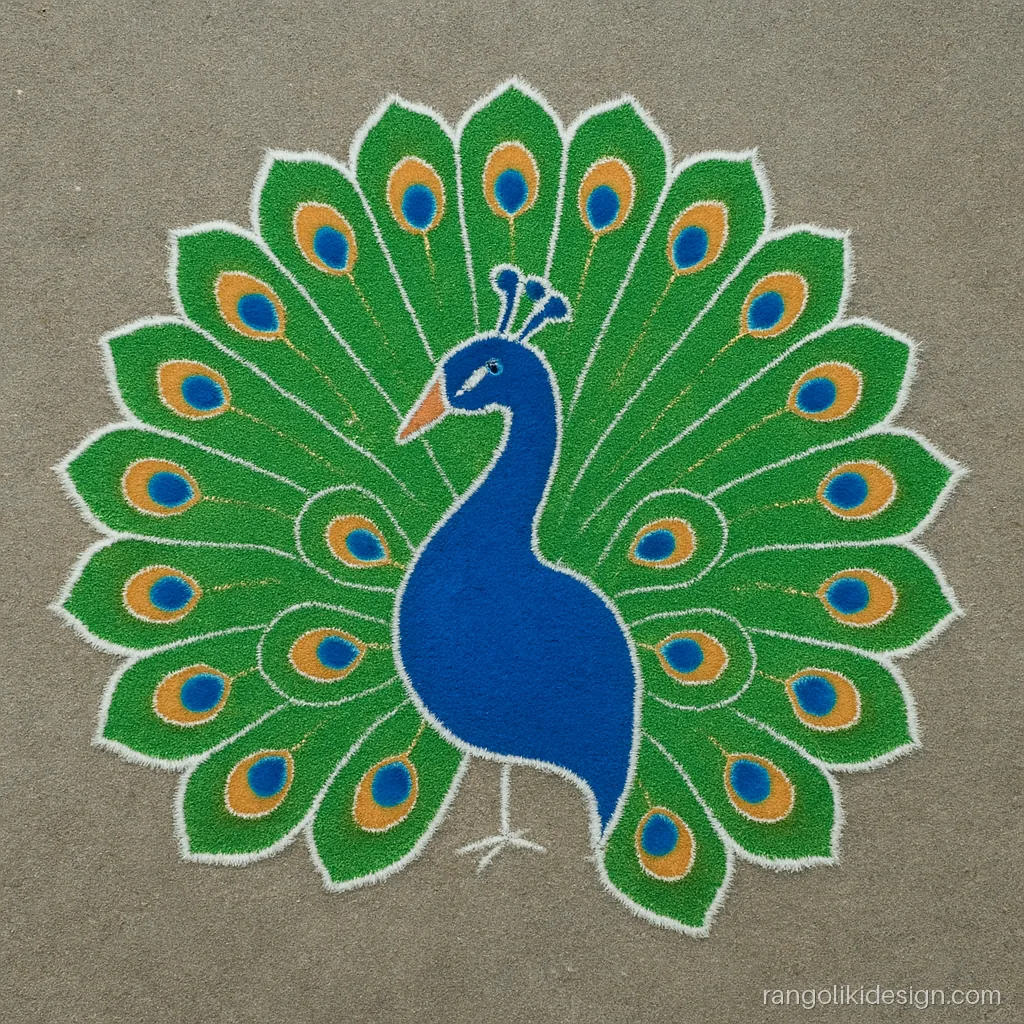
22. Big Blue Peacock on 15 by 8 Dots
The biggest grid on this page. Snap a chalk line for each row to keep the dots straight. 75 minutes, 90 cm.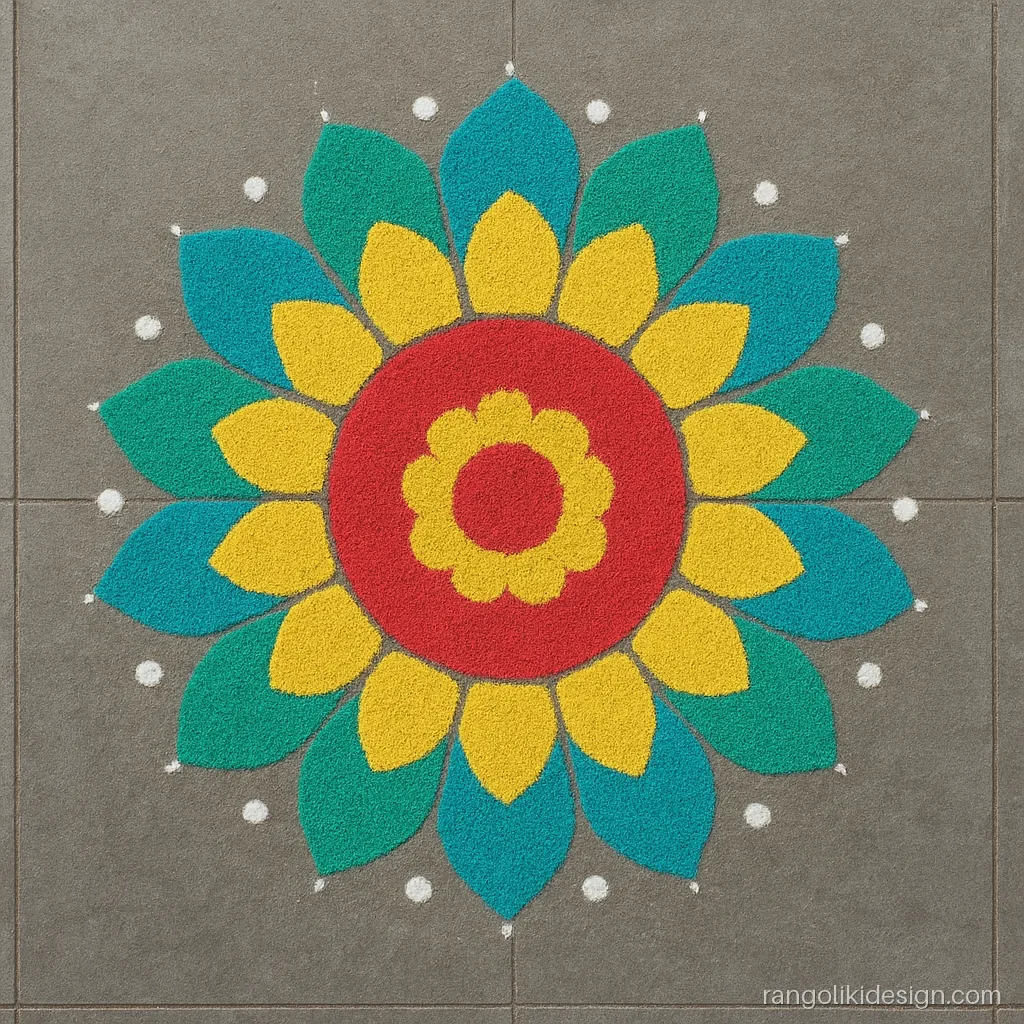
23. Three Petal Ring Rangoli for Society Entrances
Three petal rings on 15-8 dots, good for a society entrance. About 700 g colour, 70 minutes, 1 metre.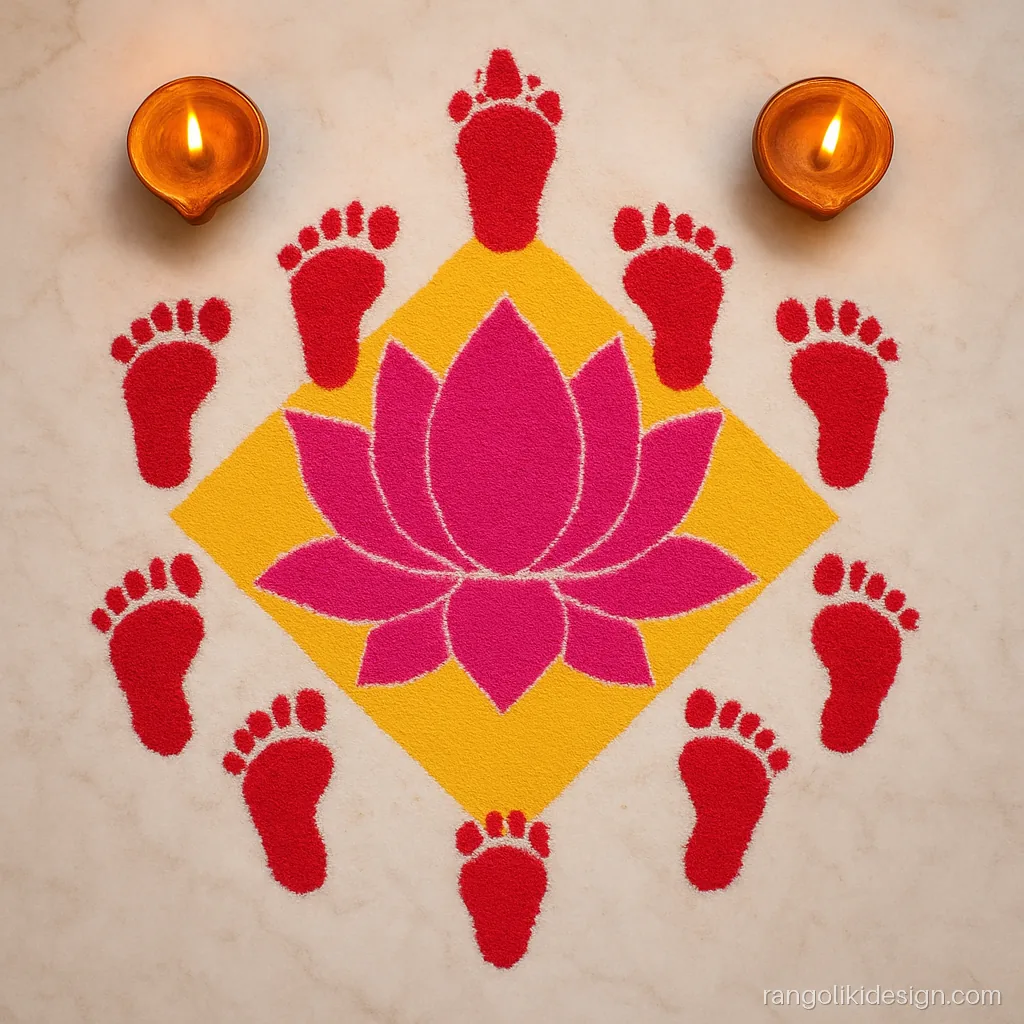
24. Lotus and Laxmi Charan for Laxmi Pujan
For Laxmi Pujan night. Keep the footprints pointing into the house. 60 minutes, 1 metre.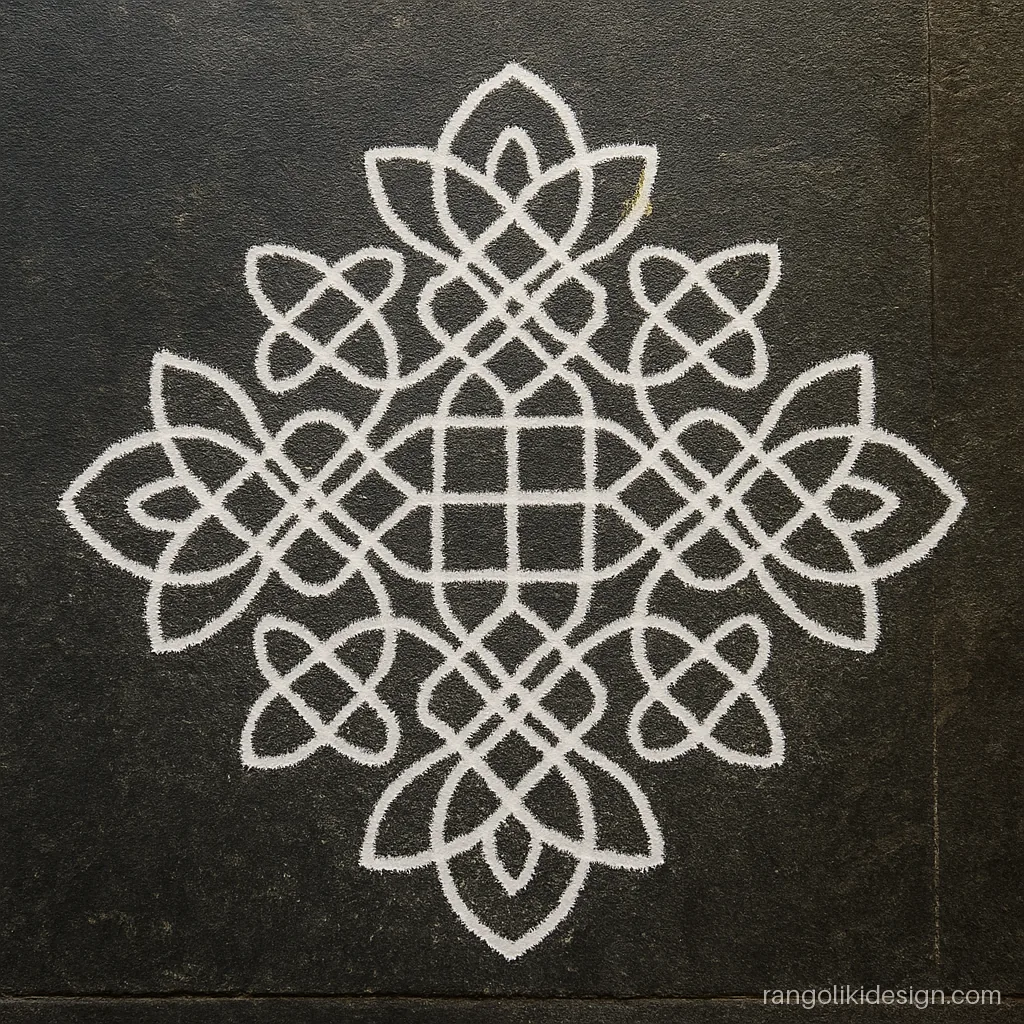
25. Margazhi Style Big White Sikku Kolam
One line, no lifting of the hand. A Margazhi month favourite in Tamil homes. 50 minutes, 1 metre.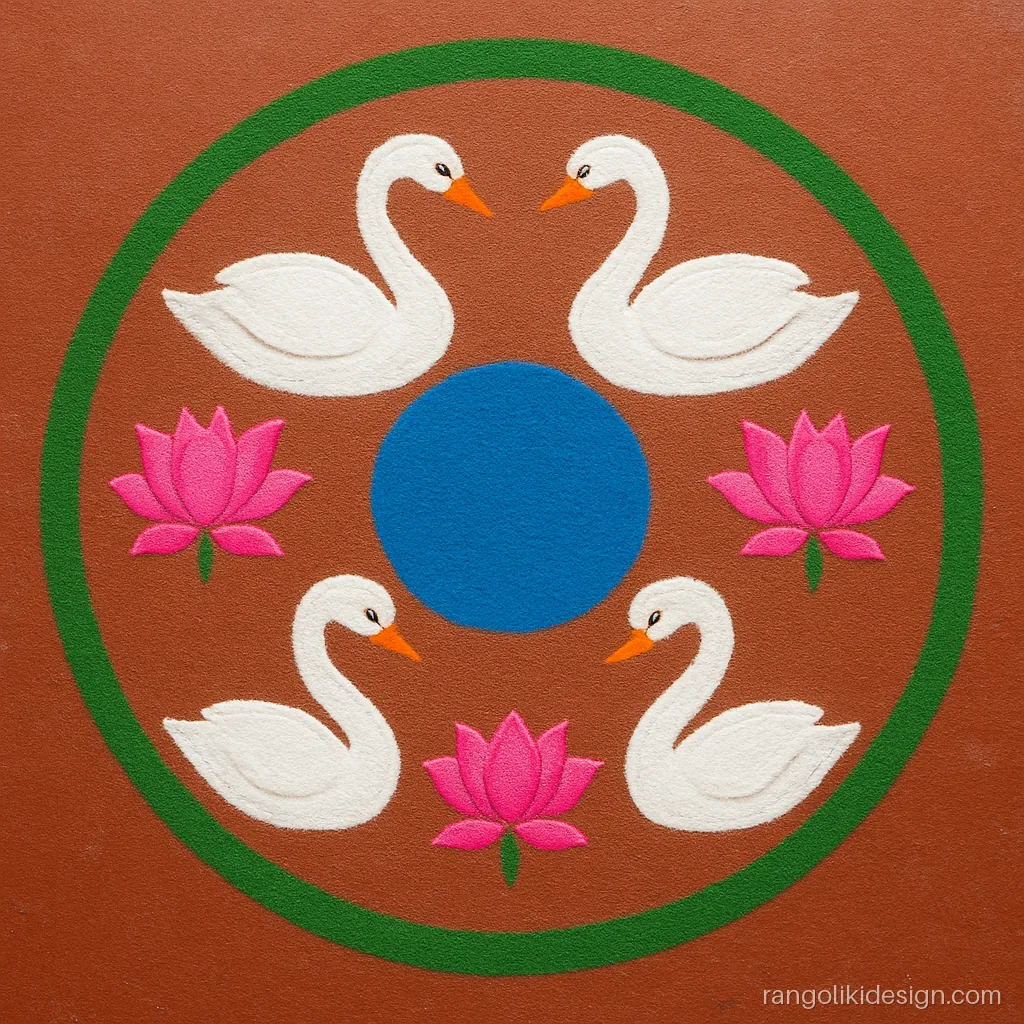
26. Four Swans Rangoli Around a Blue Pond
Four swans and four lotus buds, good for a hall or a competition. 80 minutes, 1.1 metres.Simple Dot Rangoli Designs for Diwali
These dot rangoli designs for diwali are quick enough to redo each of the five days. Pair them with ideas from our Diwali rangoli designs page.
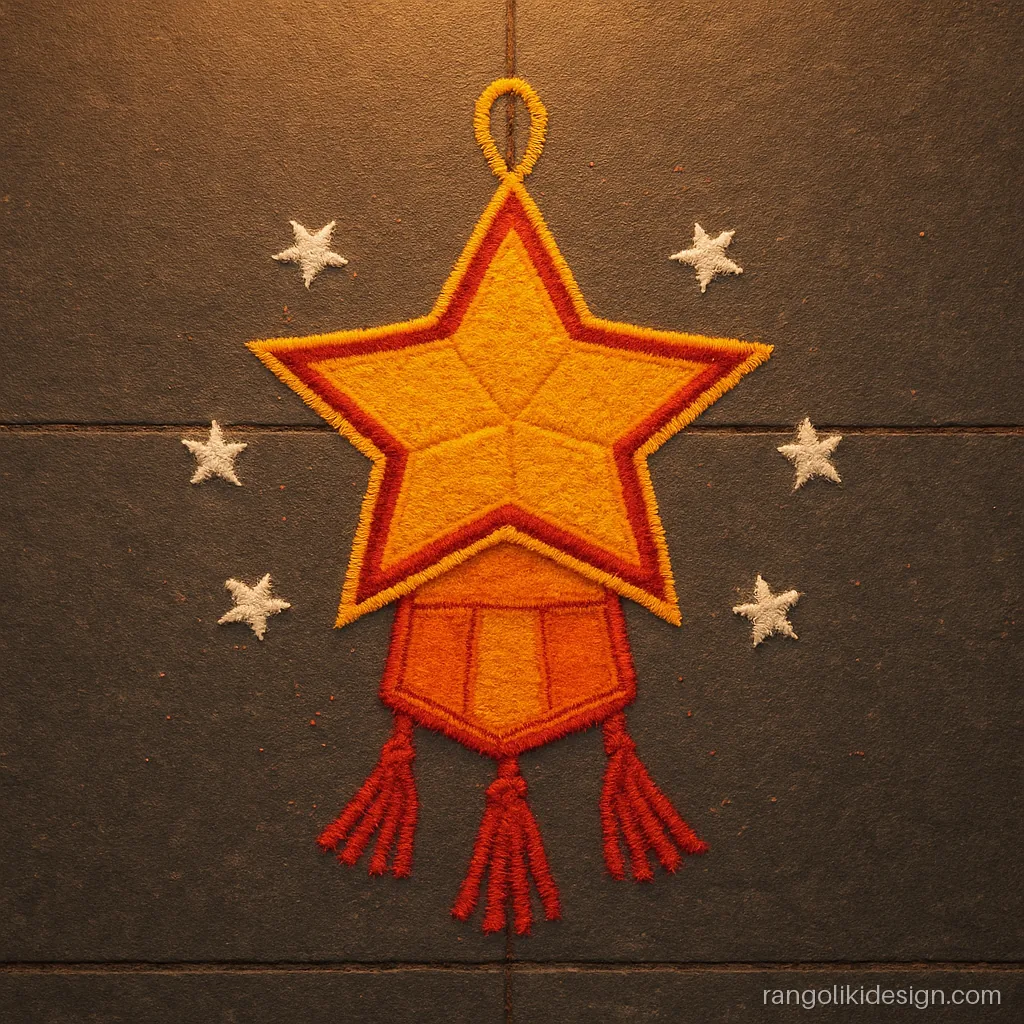
27. Akash Kandil Sky Lantern Dot Rangoli
The akash kandil hangs in Maharashtrian homes all through Diwali. Draw it on the floor too. 25 minutes, 50 cm.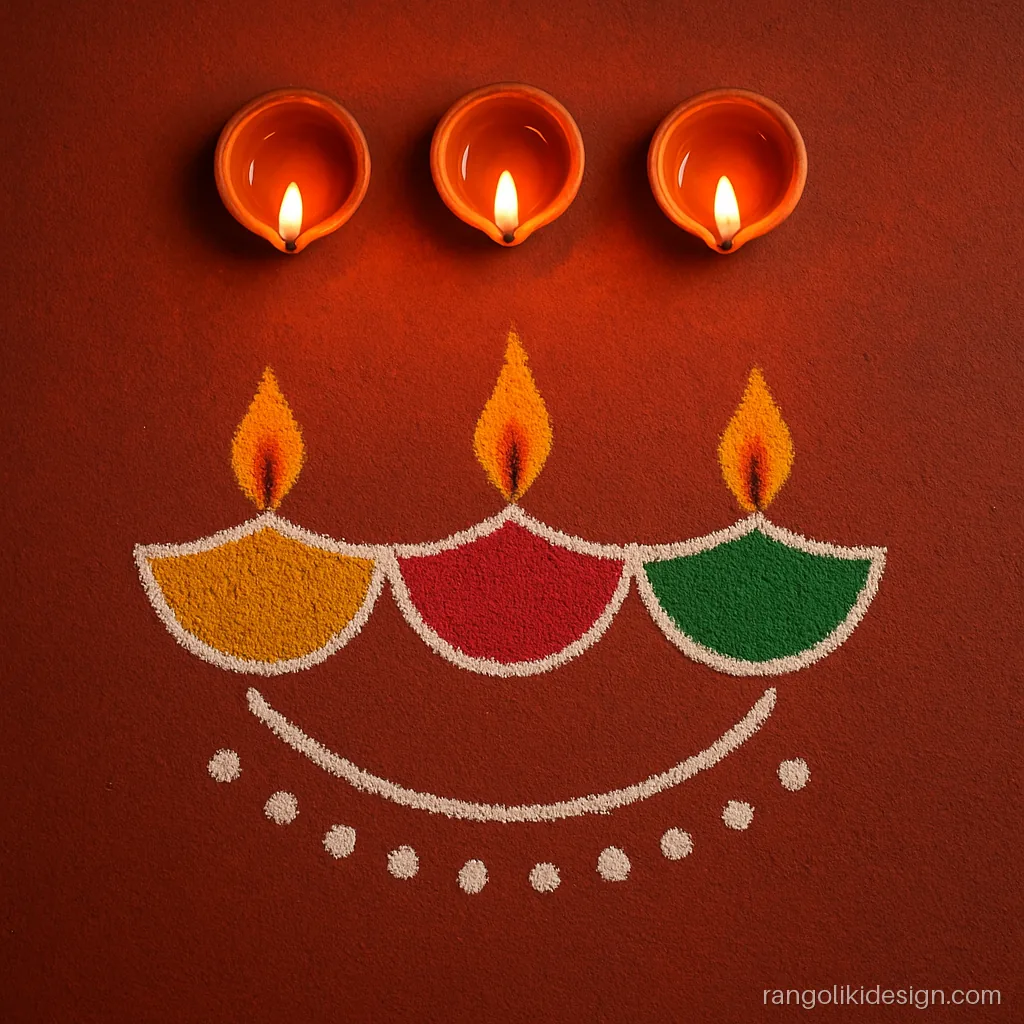
28. Tricolour Diya Trio Dot Rangoli
Three diyas side by side, each a different colour. 20 minutes, 50 cm.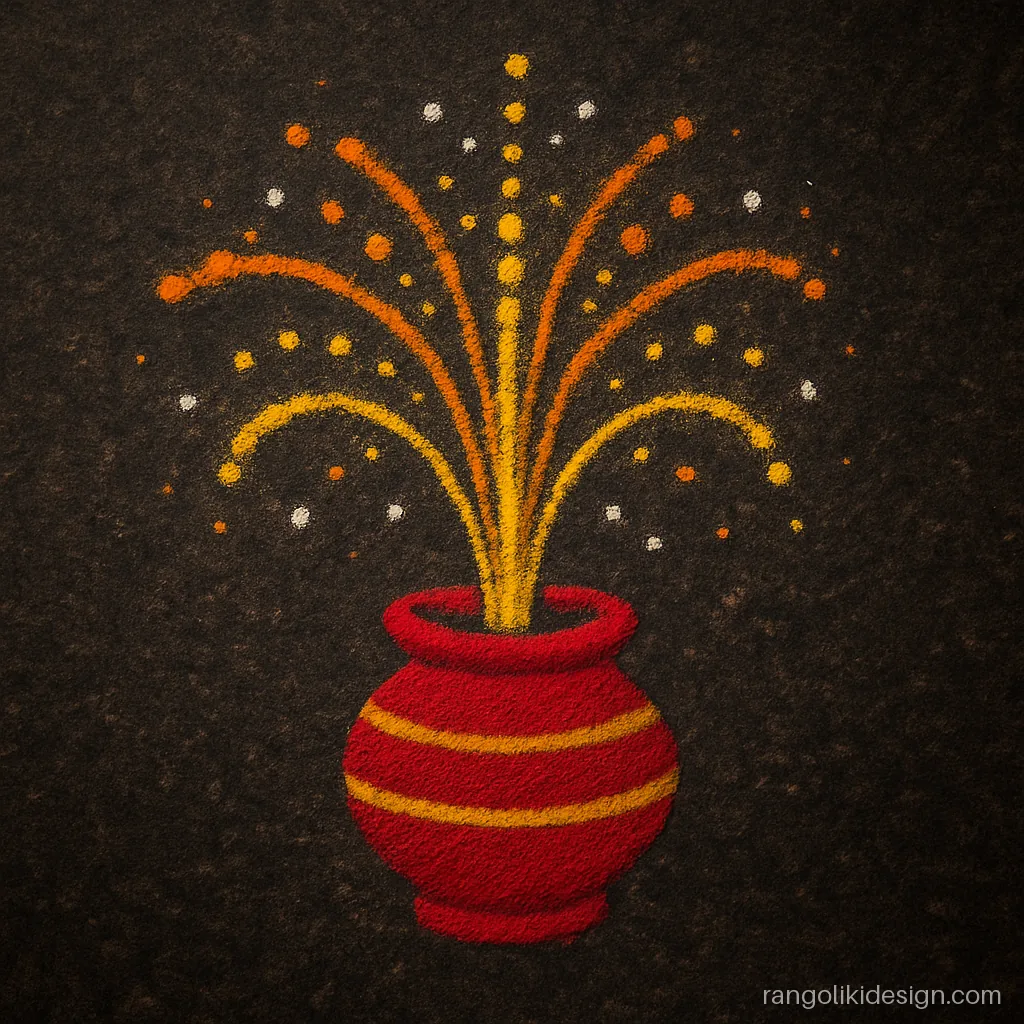
29. Anaar Fountain Rangoli with Sparks
Kids love this anaar. Tap a tea strainer to sprinkle the spark dots. 20 minutes, 45 cm.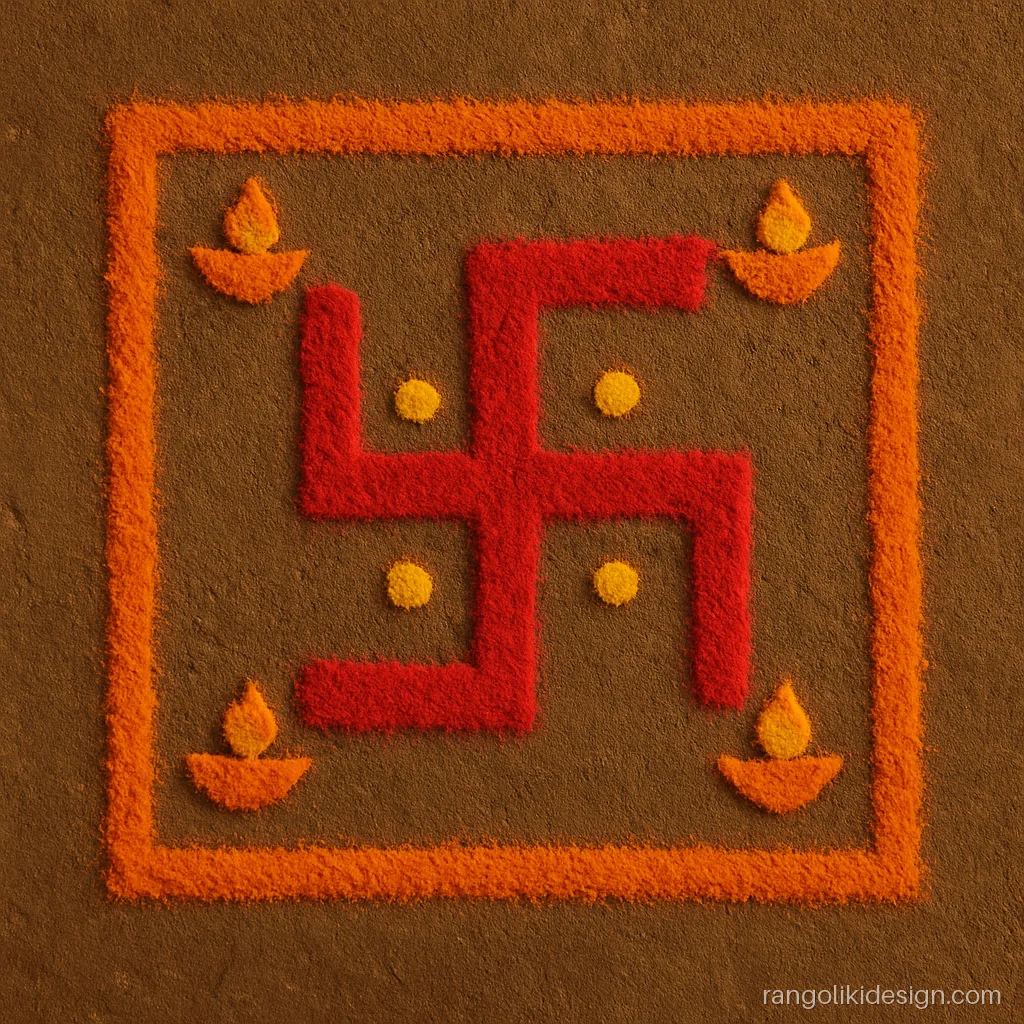
30. Diwali Swastik with Four Tiny Diyas
A swastik for Laxmi Pujan with a diya at each arm end. 30 minutes, 55 cm.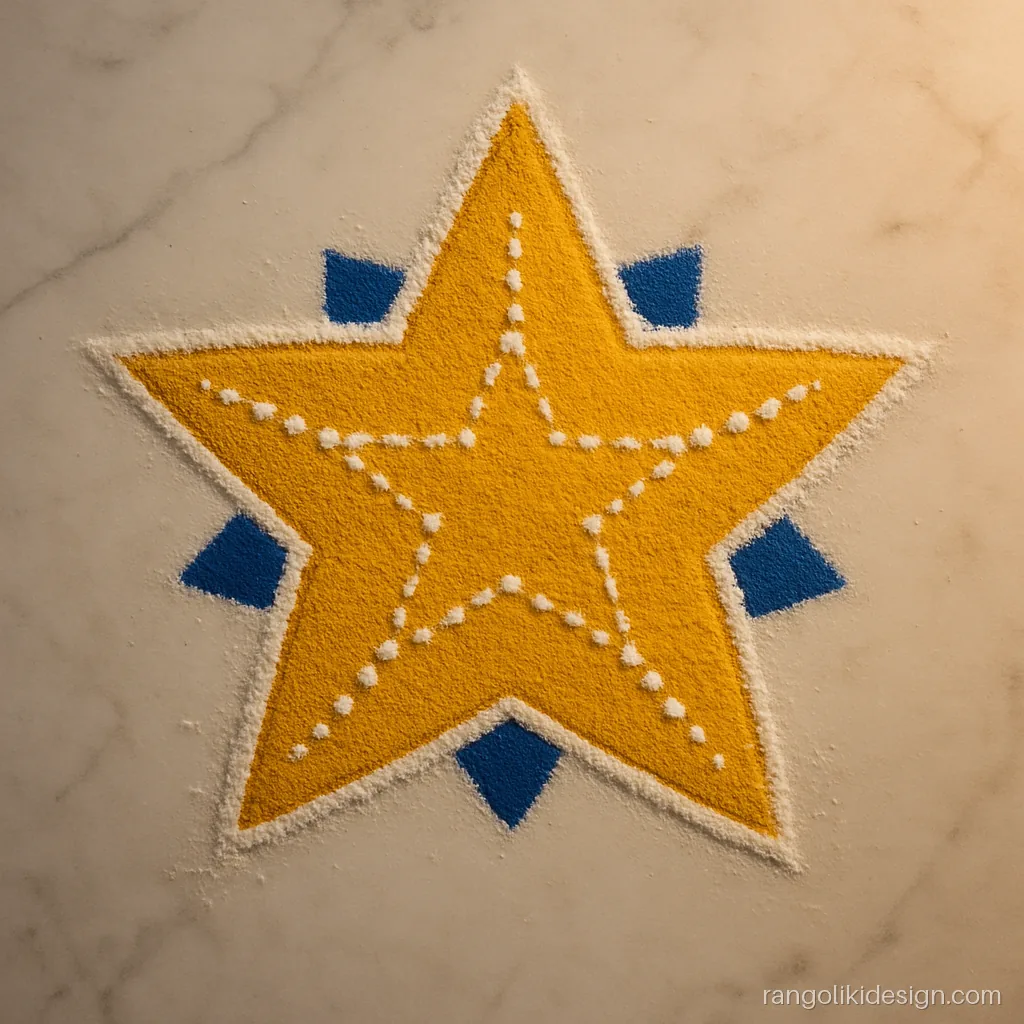
31. Gold Star Rangoli with Blue Triangles
A star in gold looks lovely in diya light. 20 minutes, 50 cm.Dot Rangoli Designs with Colours and Practice Grids
Practise your grids on black chart paper, then try colour rangoli designs with dots. The last design shows how to hide the dots for a clean finish.
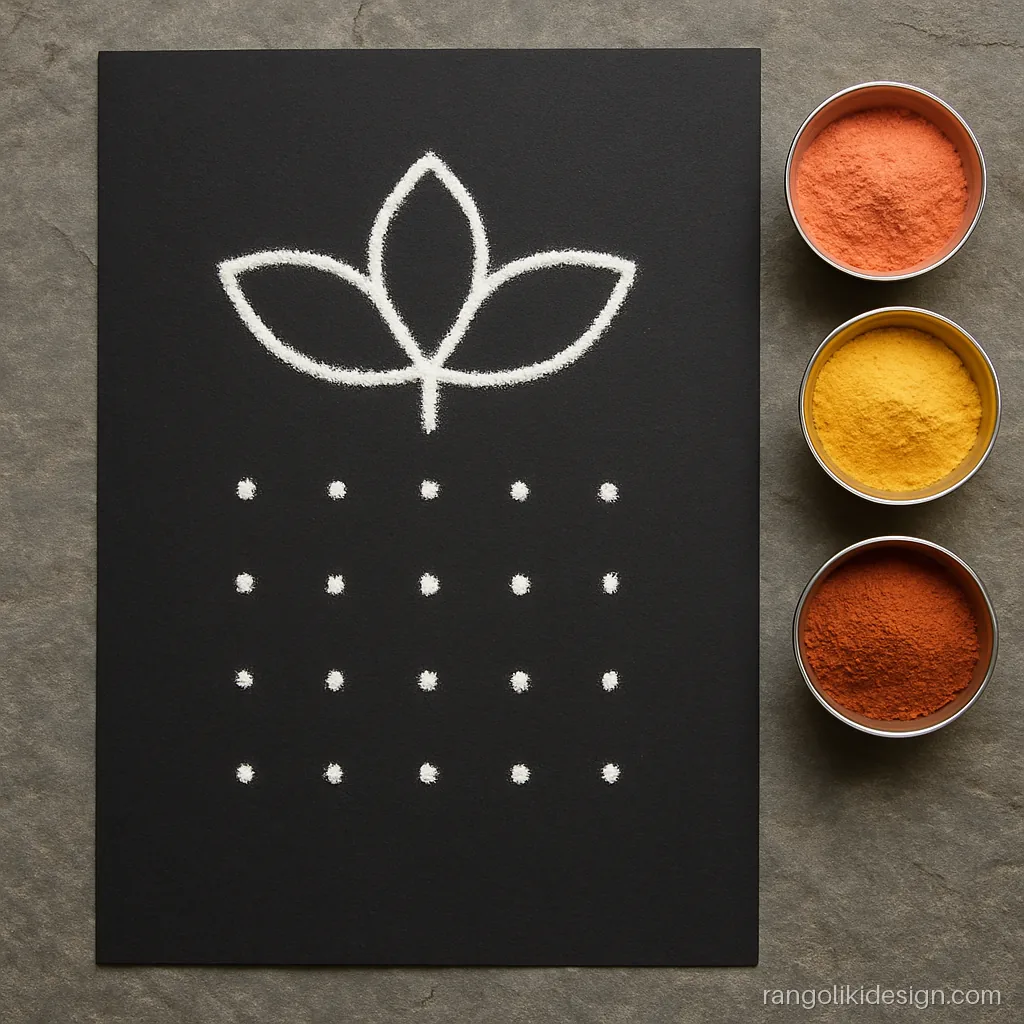
32. Black Chart Paper Practice Rangoli
Practise on black chart paper before the festival. Fold the paper into a grid to keep the rows straight. 10 minutes.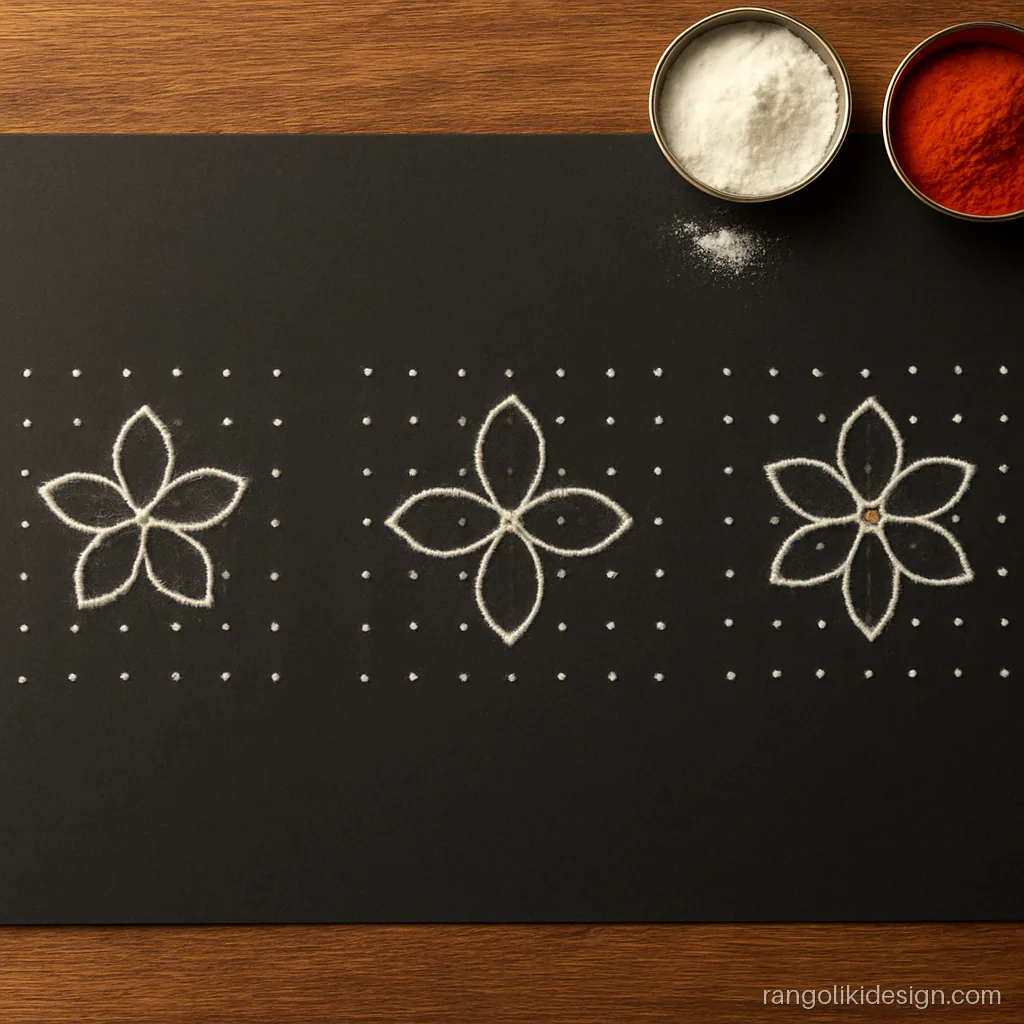
33. Three Dot Grid Sizes for Practice
Compare grid sizes on one sheet. Start with 5 by 5, then move up to 9 to 5. 15 minutes.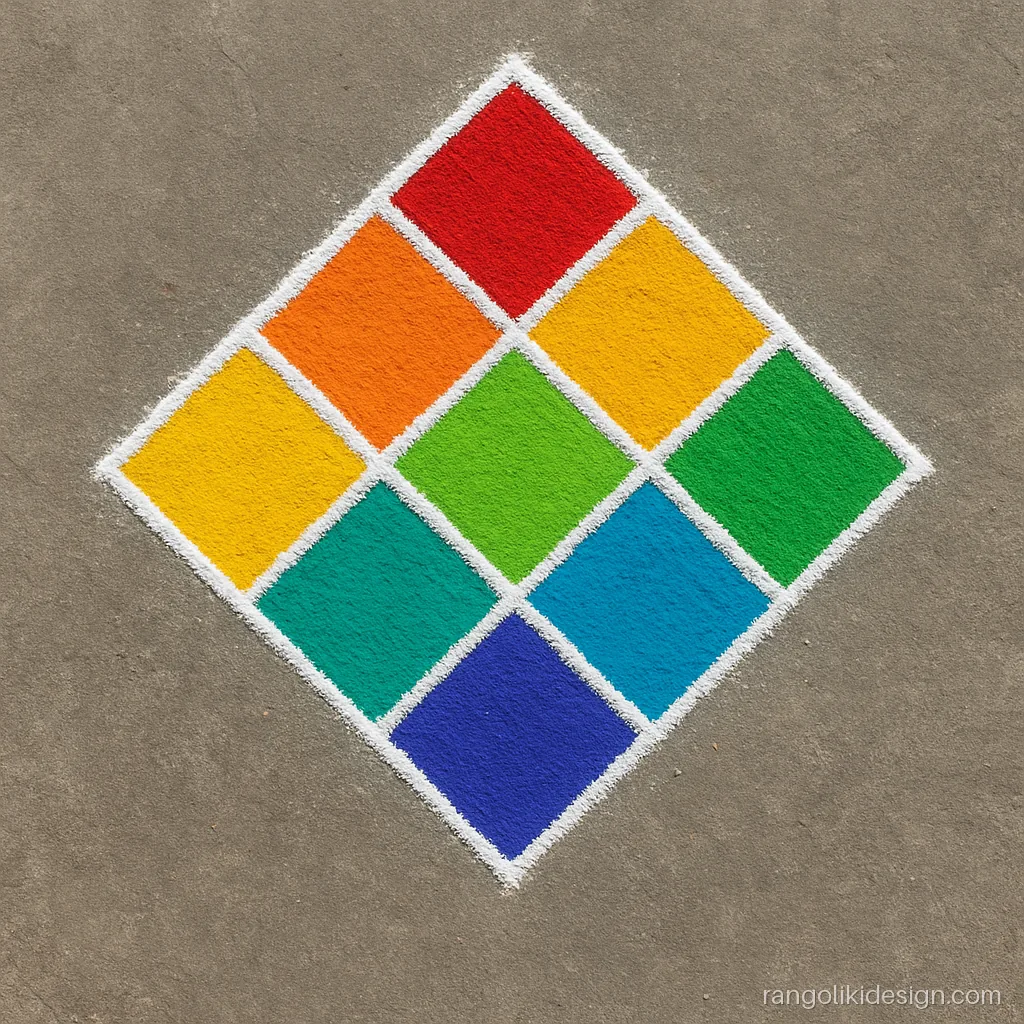
34. Nine Rainbow Diamonds Rangoli
Nine diamonds, nine colours. Fill from the centre outward so your hand does not smudge. 30 minutes, 60 cm.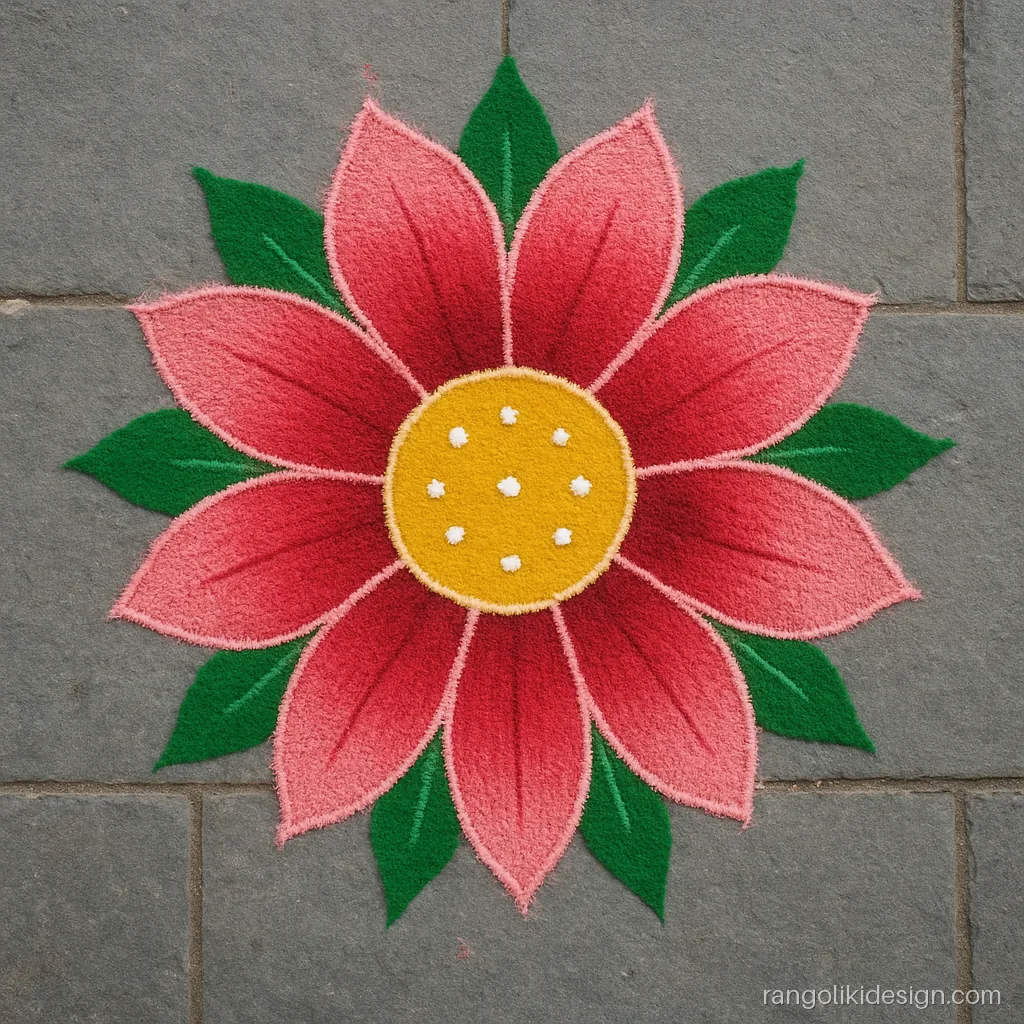
35. Shaded Red and Pink Flower Rangoli
Shading from red to pink adds depth. Rub the line between the two colours with a spoon. 40 minutes, 70 cm.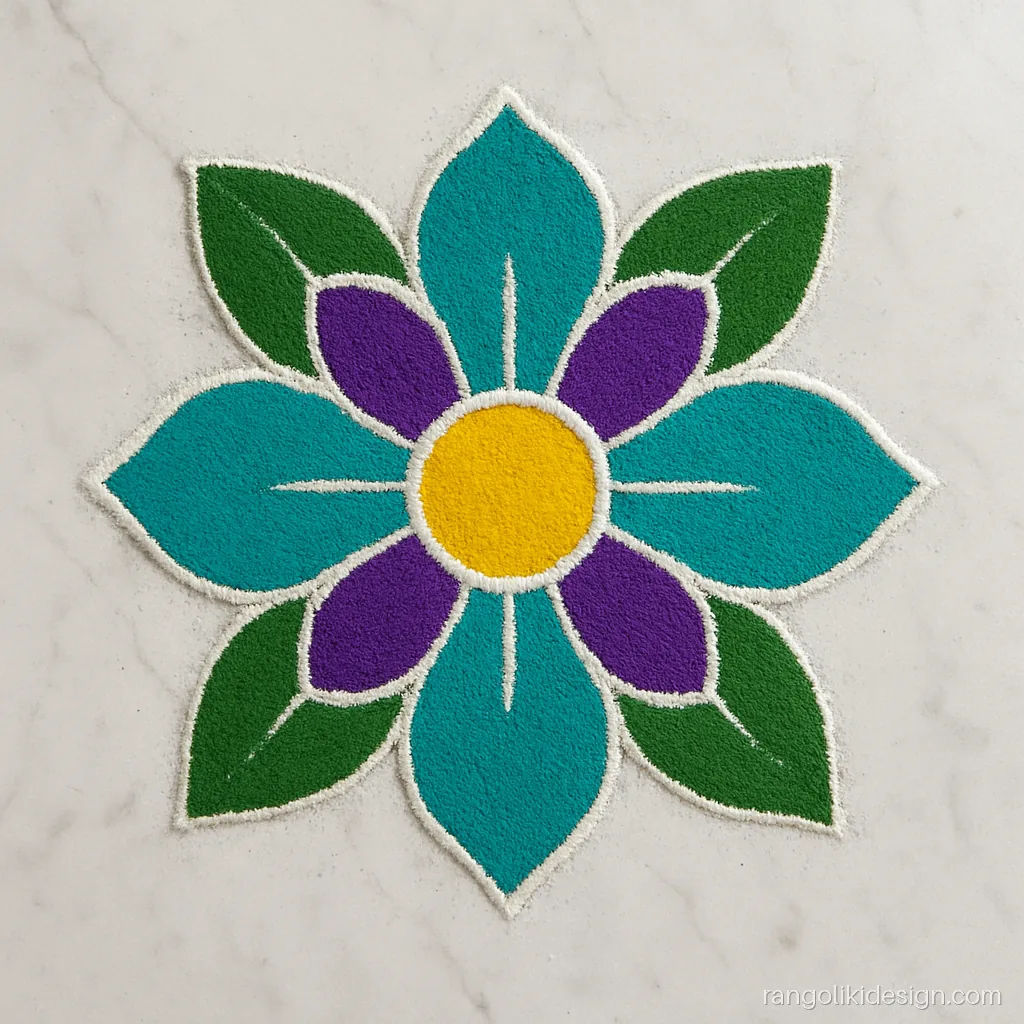
How to Put Dots for Simple Rangoli Designs with Dots
- Hold a pinch of white powder between thumb and first finger. Tap, do not pour, so each dot is the size of a small bindi.
- Make the middle row first. For a 7-4 grid, put 7 dots in a straight line about 5 cm apart.
- Add rows above and below, one dot less each time (6, 5, 4), placing each dot in the gap of the row before.
- Join the dots with lines, then fill colour inside. Draw outlines last for a sharp finish.
On a big floor, snap a chalk-dipped thread to mark straight rows before you put dots.
Thipkyanchi Rangoli: The Marathi Dot Rangoli
Thipkyanchi rangoli is the Marathi name for rangoli designs with dots. A thipka is a dot, so the name simply means rangoli made from dots. In Maharashtrian homes, girls learn it from their mother or aaji at the doorstep, and a fresh thipkyanchi rangoli design is drawn every evening of Diwali next to the akash kandil.
- The grids are the same: 7-4, 9 to 5, 11 to 6 and 15-8. Many Marathi notebooks write them as 7 te 4 or 9 te 5.
- Traditional thipkyanchi rangoli is made with white rangoli powder on a gerua or cow-dung-coated floor, with haldi, kumkum and green filled inside.
- The same region also has the free flowing Sanskar Bharti rangoli designs, which use strokes instead of dots. Many families draw a dot design on weekdays and a Sanskar Bharti design for big festivals.
Dot Grid Size Guide
| Grid | Size | Time | Colour |
|---|---|---|---|
| 5 by 5 | 25 to 35 cm | 10 min | 50 g |
| 7-4 | 40 to 50 cm | 15 to 25 min | 100 g |
| 9 to 5 | 50 to 55 cm | 20 to 30 min | 150 g |
| 11 to 6 | 55 to 65 cm | 30 to 40 min | 250 g |
| 15-8 | 90 cm to 1.1 m | 50 to 80 min | 600 g to 1 kg |
Tips for Dotted Rangoli Designs with Colours
- Fill dark colours first and light colours last, so dark powder does not spoil yellow or white.
- Use a tea strainer to sprinkle a soft background over a big area.
- A fork or comb drawn through a filled petal gives fine lines.
- For a clean look, cover the dots with colour at the end. For a kolam look, leave them showing.
See more colour combinations in rangoli designs with colours.
Common questions
What does 7-4 mean in rangoli designs with dots?
It means 7 dots in the middle row, then rows of 6, 5 and 4 dots above and below. The dots sit in the gaps of the row before, so the grid looks like a diamond. 9 to 5 and 15-8 work the same way.
What is thipkyanchi rangoli?
Thipkyanchi rangoli is the Marathi name for dot rangoli. You put a grid of dots (thipke) on the floor and join them into flowers, diyas, swastiks or kalash shapes. It is the most common Diwali rangoli in Maharashtra, and every design on this page can be made in that style.
Which dot rangoli designs are best for beginners?
Start with a 5 by 5 square grid and a four-petal flower. An easy 5 to 3 dots rangoli, like a small leaf or bud, is even quicker. Then try a 7-4 lotus or diya, and once your dots are even, move to 9 to 5 dots.
How do I keep the dots in a straight line?
Draw a light chalk line for the middle row, or snap a thread dipped in chalk. Keep the gap between dots the same, using two fingers as a guide. On paper, fold the sheet into squares first.
Can I make rangoli designs without dots?
Yes. Free hand and circle designs need no dots. You can also draw on a dot grid and then cover the dots with colour so they do not show. Our free hand rangoli designs page has many ideas.
How much time does a big rangoli with dots take?
A 15-8 grid design about 1 metre across takes 50 to 80 minutes for one person. Two people can halve that: one puts dots and lines, the other fills colour.