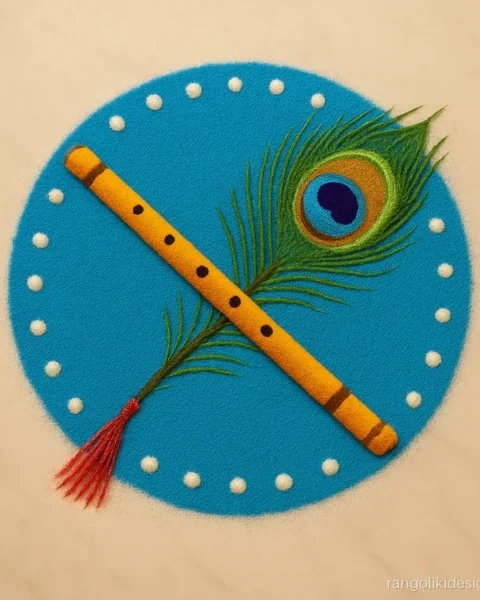
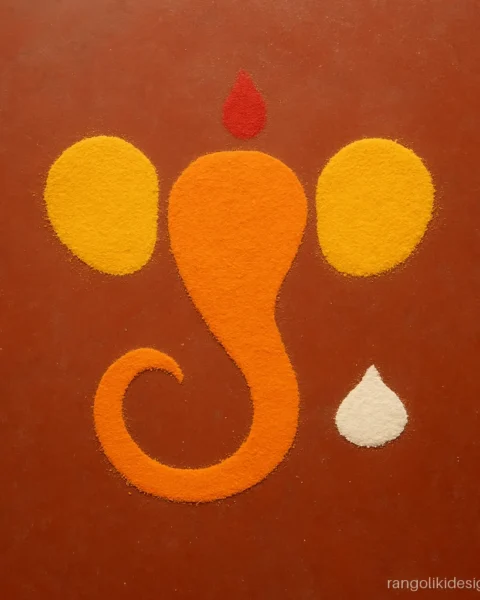
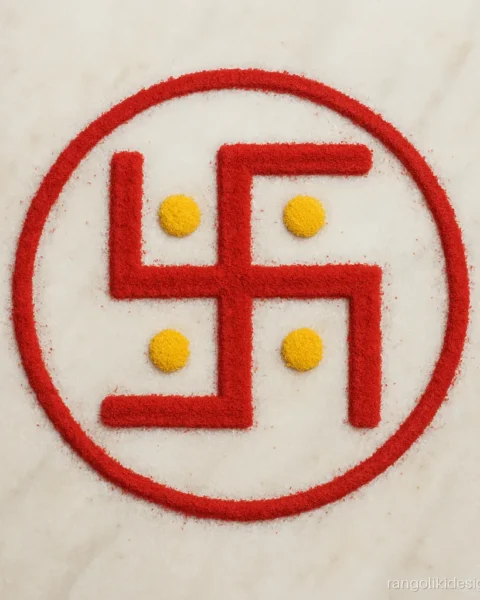
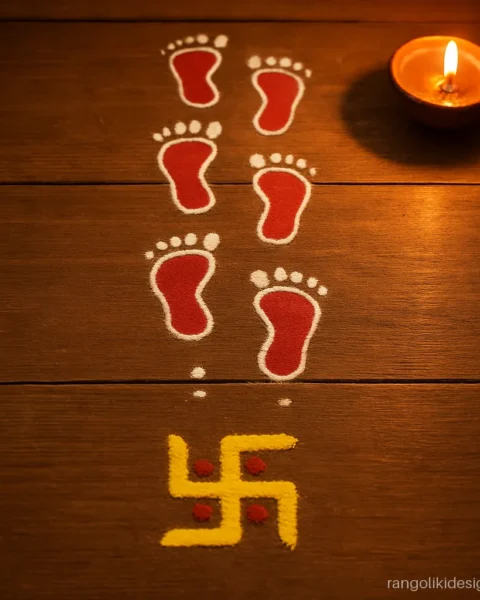
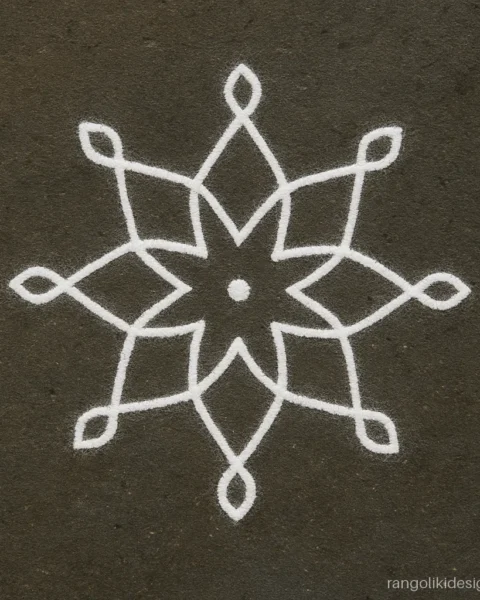
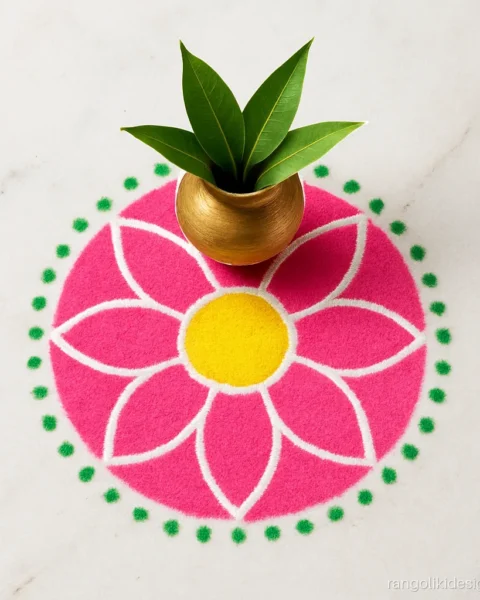
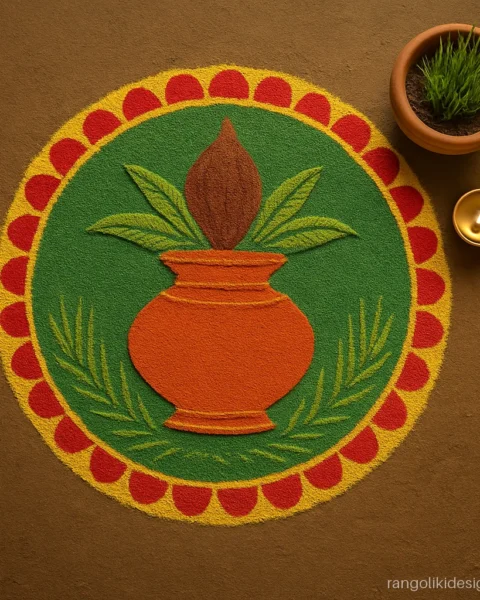
Pooja rangoli designs mark the sacred space before the bhagwan is seated, the kalash is placed or the havan begins. They are usually small, neat and full of meaning: a kalash for fullness, a chowk for the seat of the deity, a lotus for purity.
Here are 12 rangoli designs for pooja at home and in the temple: kalash rangoli designs for Diwali and every day, temple and mandir rangoli designs, the square chowk drawn for Satyanarayan pooja, and Ayudha pooja and thali designs. Each caption says how long it takes and how big to make it.
For symbols of particular gods, see god rangoli designs and Ganesh rangoli designs. For the four-dot saathiya that starts most pujas, see swastik rangoli designs.
Kalash Rangoli Designs
Diwali kalash rangoli with flowers is the most loved pooja design. A kalash rangoli design with flowers needs only a chalk outline and a few handfuls of petals. These simple kalash rangoli designs and one hard kalash design for Diwali show the range, so you can pick a kalash rangoli simple enough for every day or a big one for the festival.
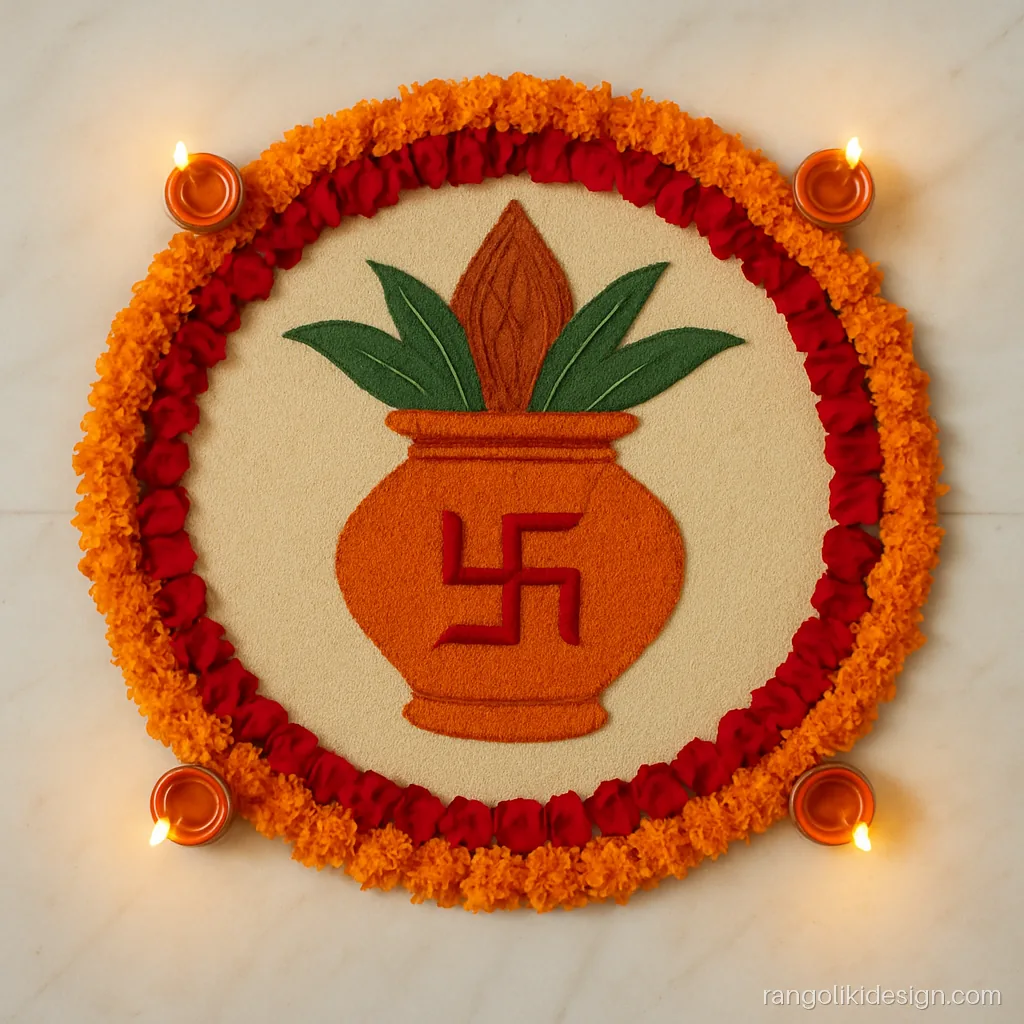
1. Kalash Rangoli in a Marigold Ring
A powder kalash inside a ring of real marigold and rose. Medium, 35 minutes, 70 cm.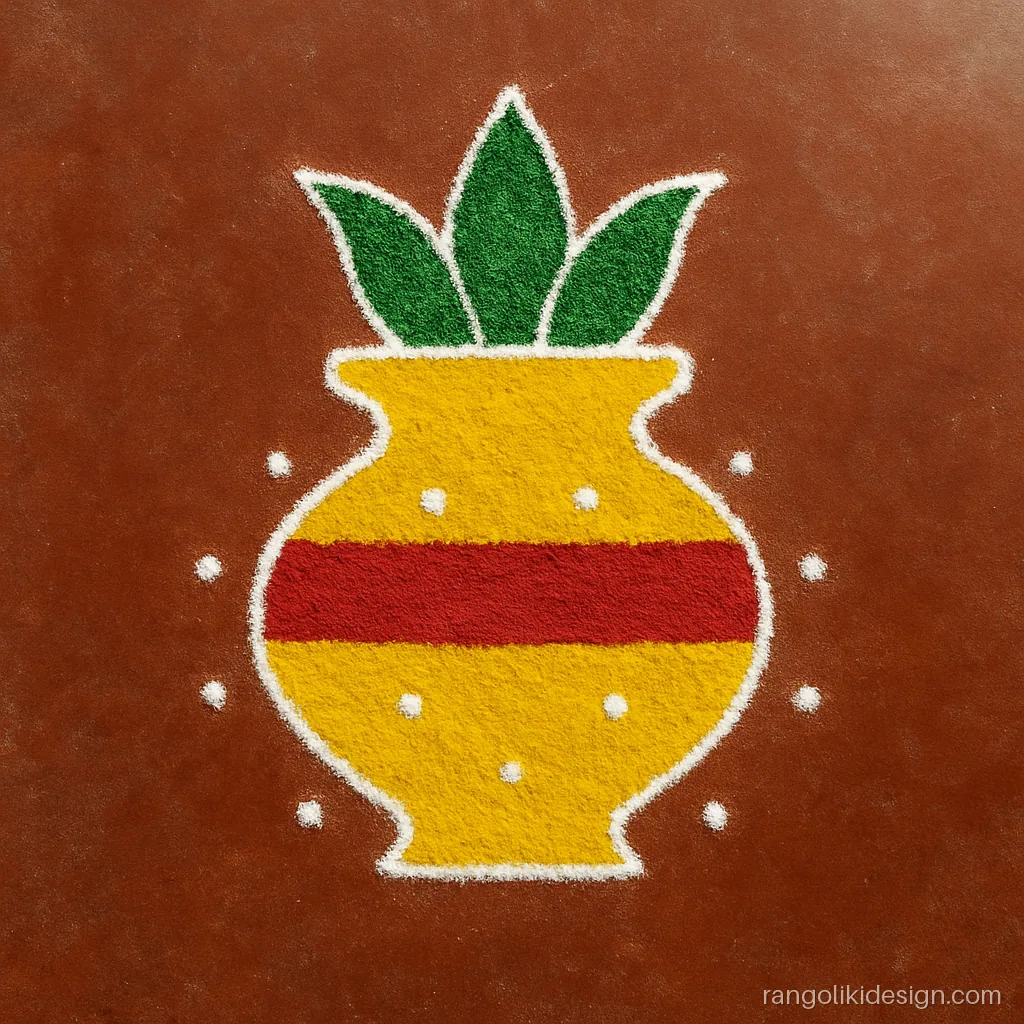
2. Simple Kalash on 7 by 4 Dots
Easy kalash rangoli designs start on a dot grid. Fifteen minutes, 40 cm.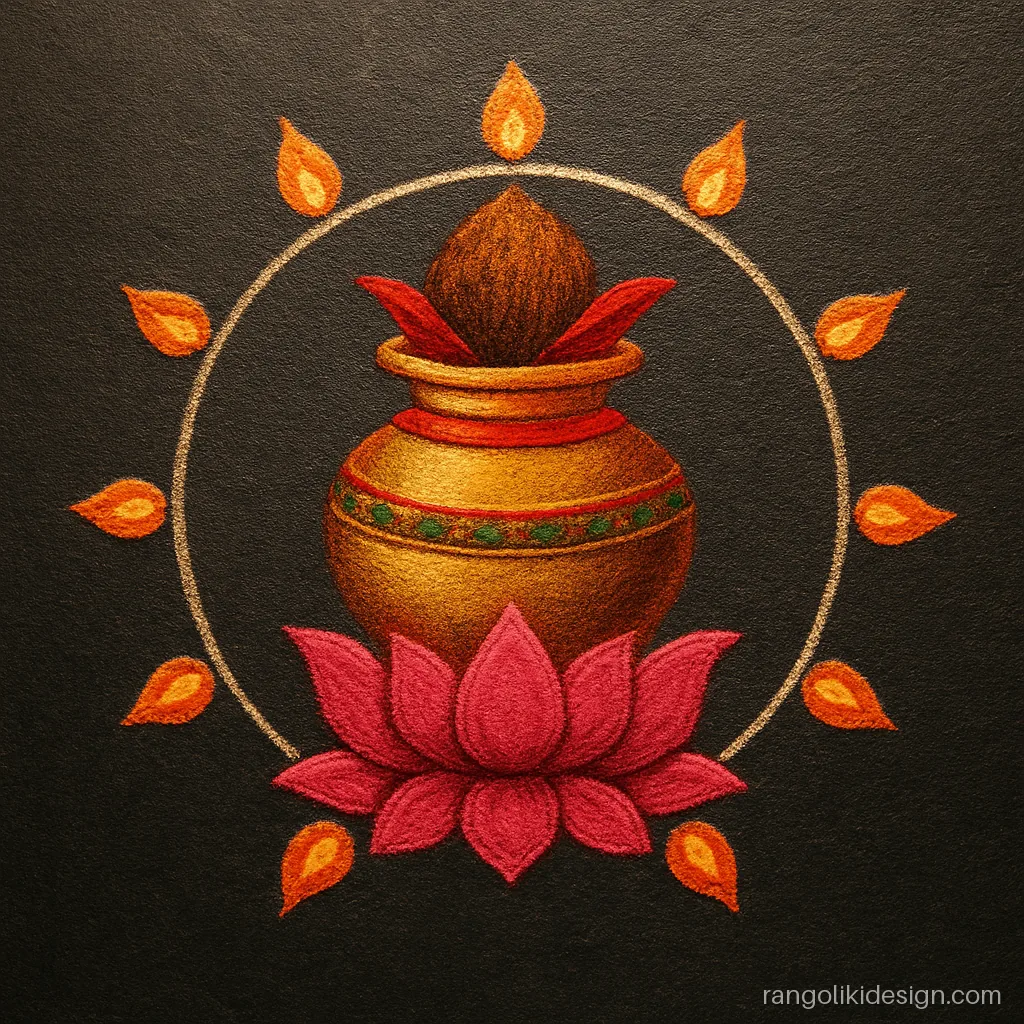
3. Shaded Brass Kalash on a Lotus Base
Hard kalash rangoli designs for Diwali need shading: blend gold to brown for a brass shine. Ninety minutes, 1 metre.Temple and Mandir Rangoli Designs
Temple rangoli designs show a shikhara, bells and steps. Simple temple rangoli designs suit the space in front of a home mandir.
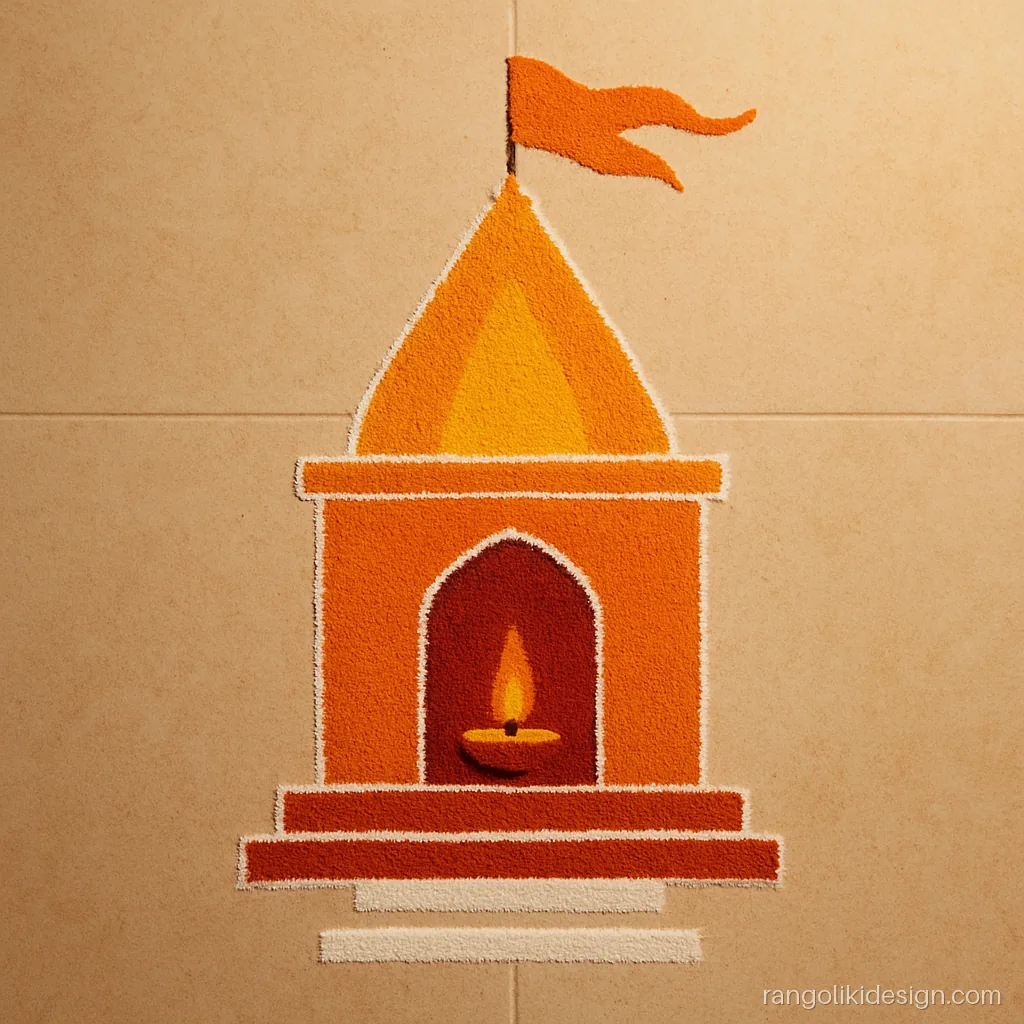
4. Small Temple with a Shikhara and Saffron Flag
A small temple outline with a flag on top. Use a scale for the walls and a spoon for the rounded shikhara. Twenty minutes, 50 cm, good for the pooja room door.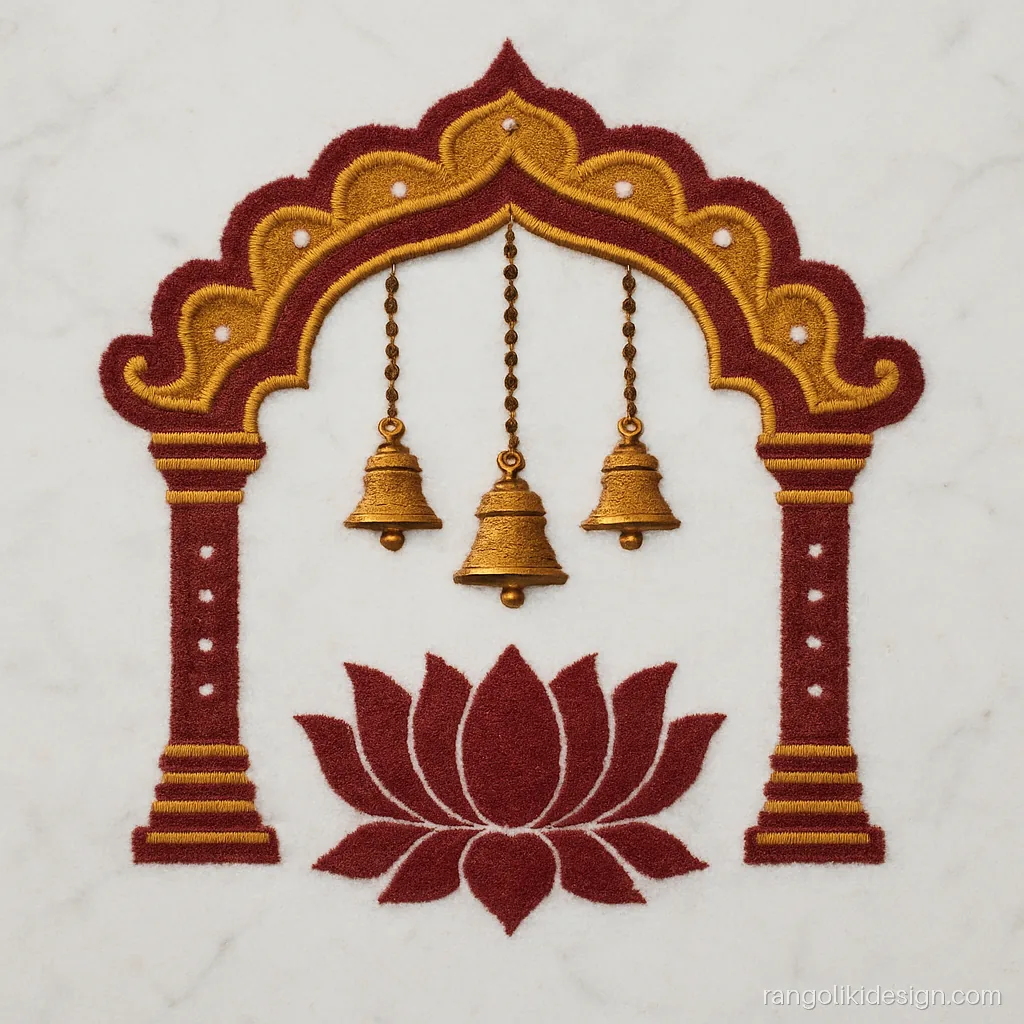
5. Mandir Bells Rangoli Under a Carved Arch
Bells under an arch for the front of the pooja room. Draw the arch with a string and chalk so both sides match, then shade the bells gold to brown. Medium, 40 minutes.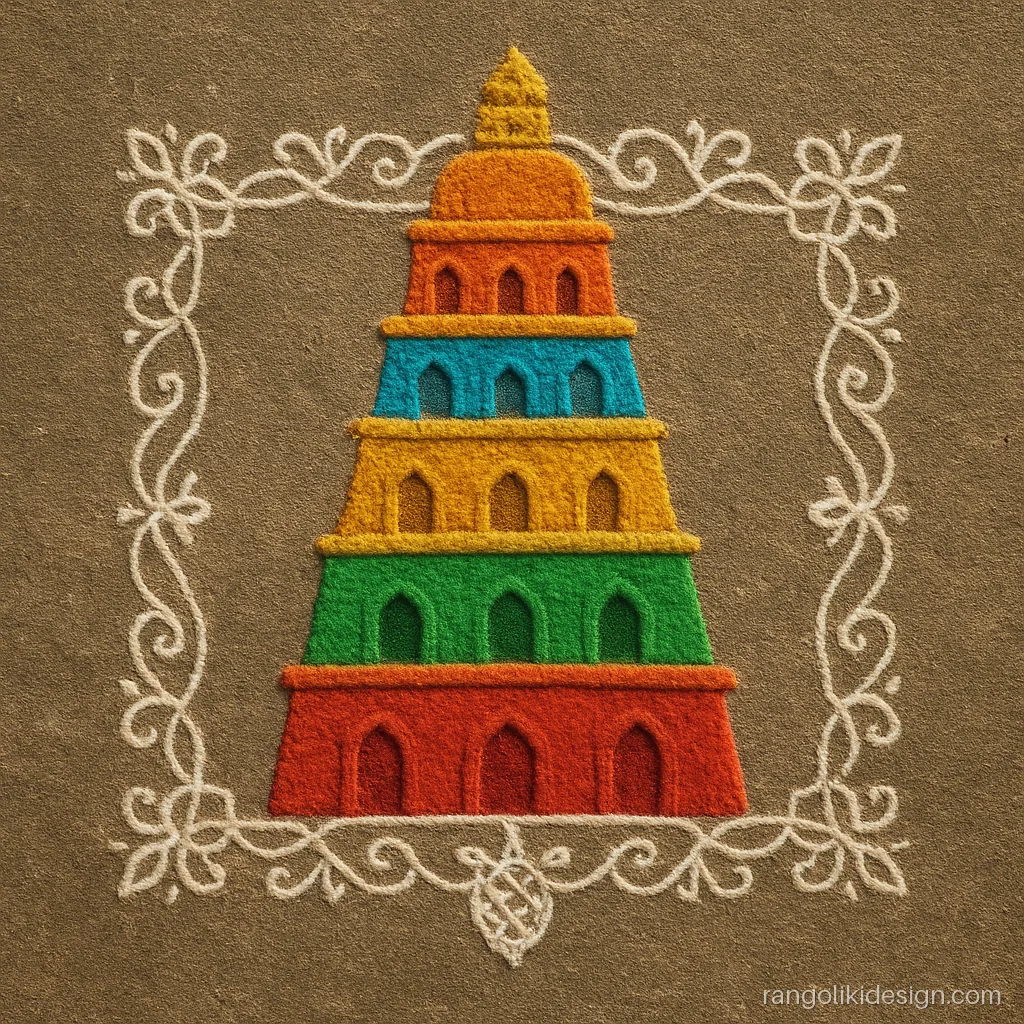
6. Tiered Gopuram Rangoli for Competitions
A south Indian gopuram in five tiers. Temple rangoli designs with colours like this win contests. Hard, 2 hours.Satyanarayan Pooja Chowk Rangoli Designs
A rangoli for satyanarayan pooja starts with a square chowk where the wooden pat is placed. For a home satyanarayan pooja rangoli, a 60 cm chowk is enough. Chowk rangoli designs use rice, haldi and kumkum.
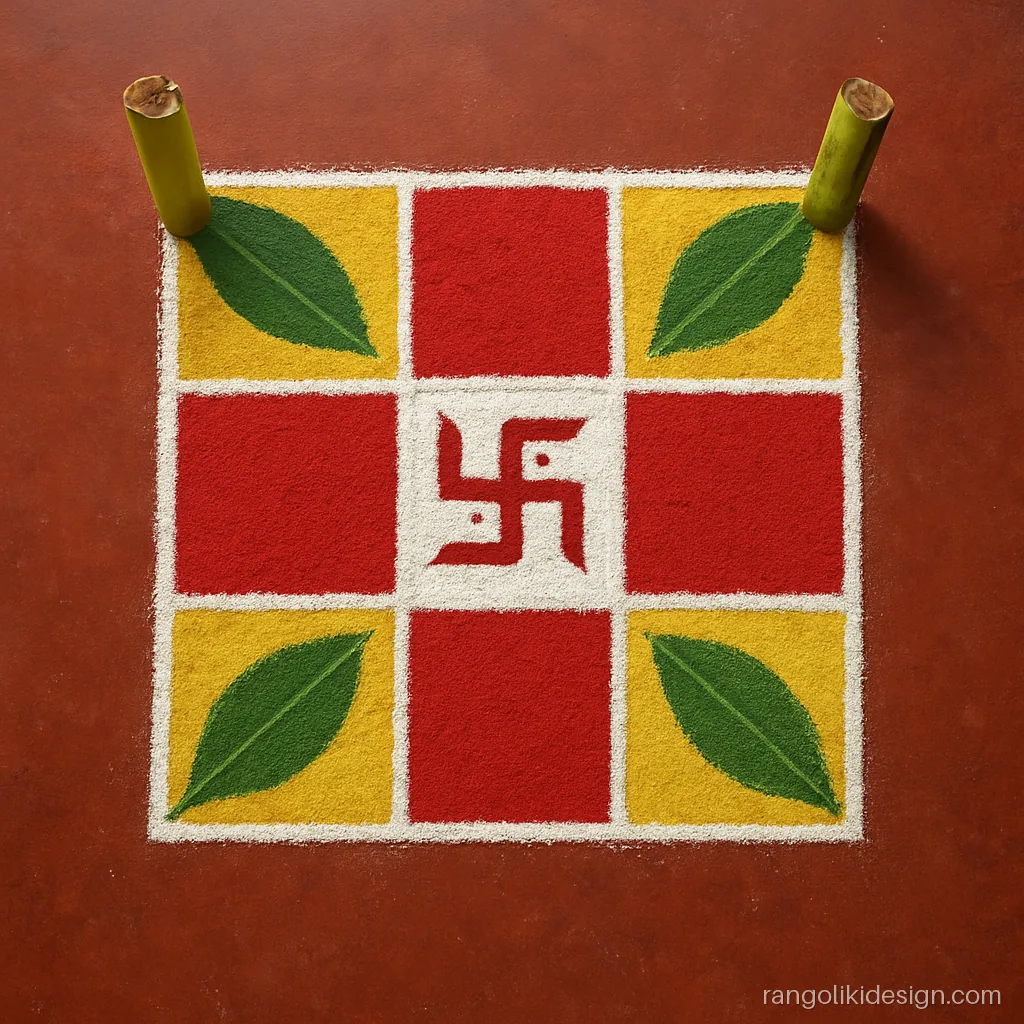
7. Satyanarayan Pooja Chowk with Banana Leaves
The chowk with banana leaves at the corners for the pat. Medium, 30 minutes.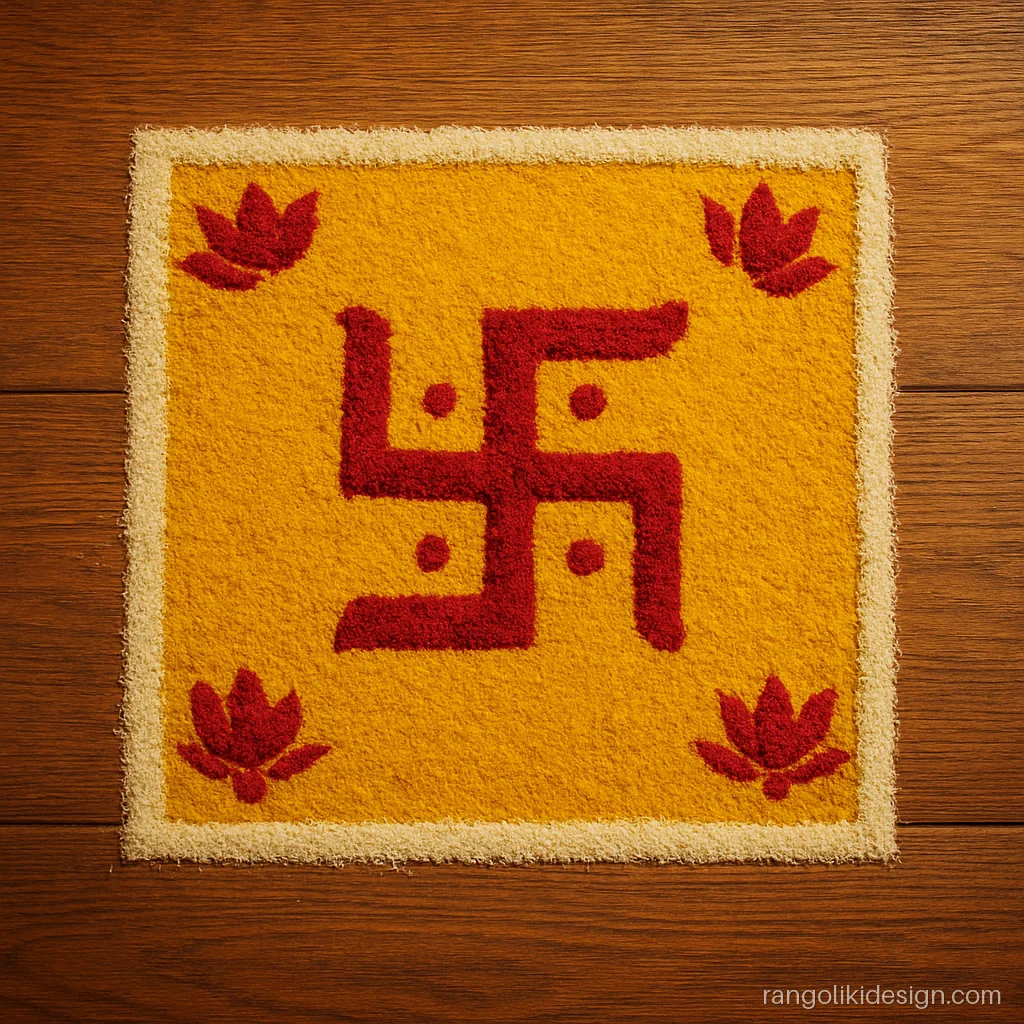
8. Rice Grain Chowk Rangoli in Haldi Kumkum
Coloured rice grains make a raised, textured chowk. Colour the rice a day before with haldi and kumkum mixed in a little water, then dry it. Twenty five minutes.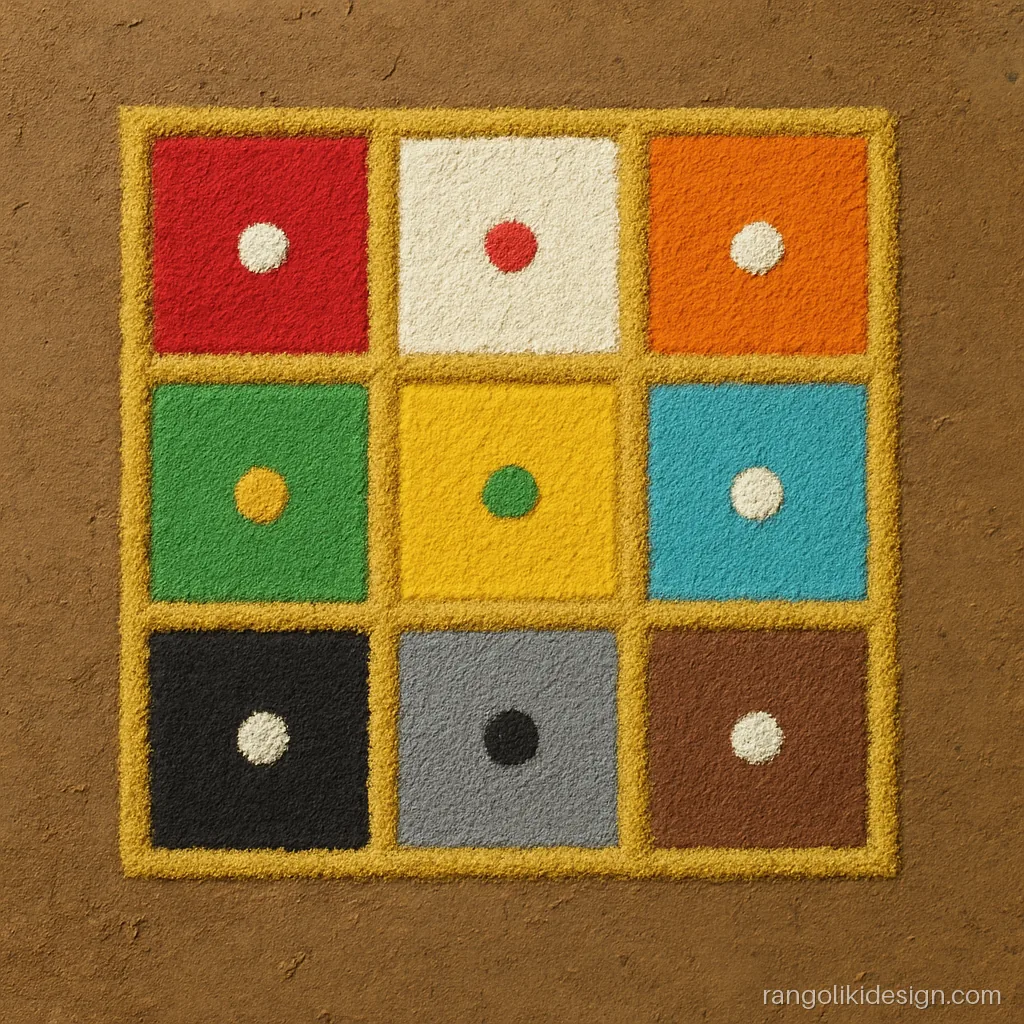
9. Navgraha Chowk Rangoli of Nine Squares
Nine squares for the nine planets, used in havan and griha pooja. Medium, 40 minutes.Ayudha Pooja and Thali Rangoli Designs
Rangoli designs for Ayudha pooja are drawn before tools and machines. Thali rangoli and aipan designs decorate the pooja plate and floor in a smaller style.
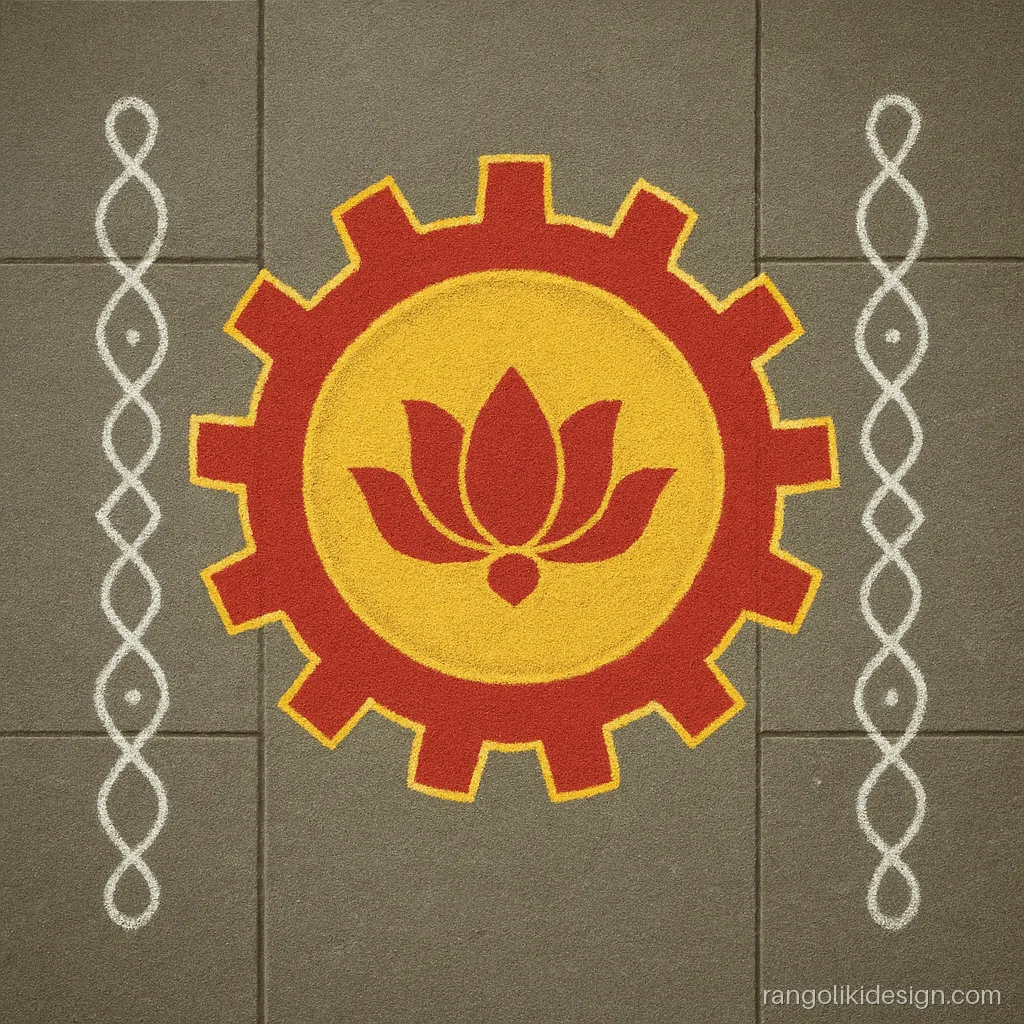
10. Ayudha Pooja Gear Wheel on Dots
Ayudha pooja rangoli designs with dots: a gear wheel on a dot grid. Twenty minutes.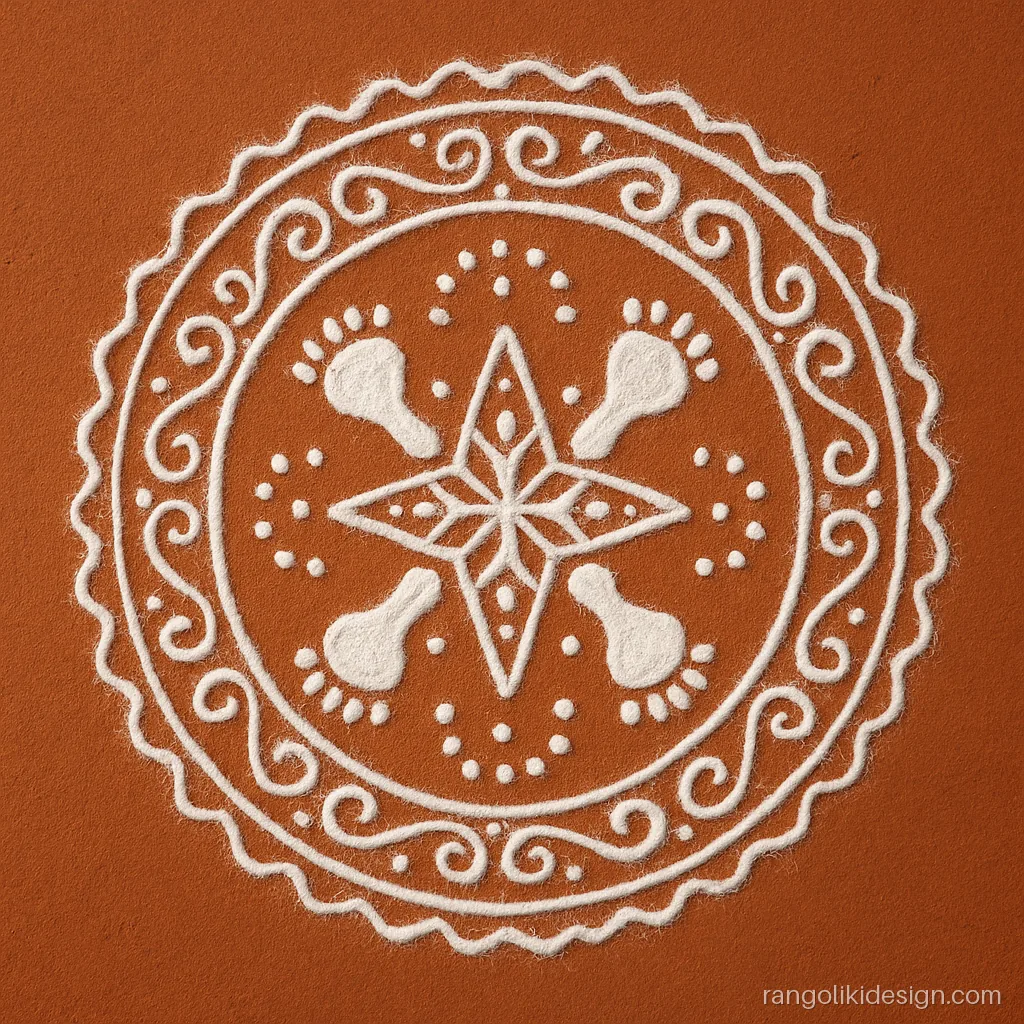
11. Aipan Style Thali Rangoli on Red Geru
Uttarakhand aipan style: white rice paste lines on red geru. Medium, 30 minutes.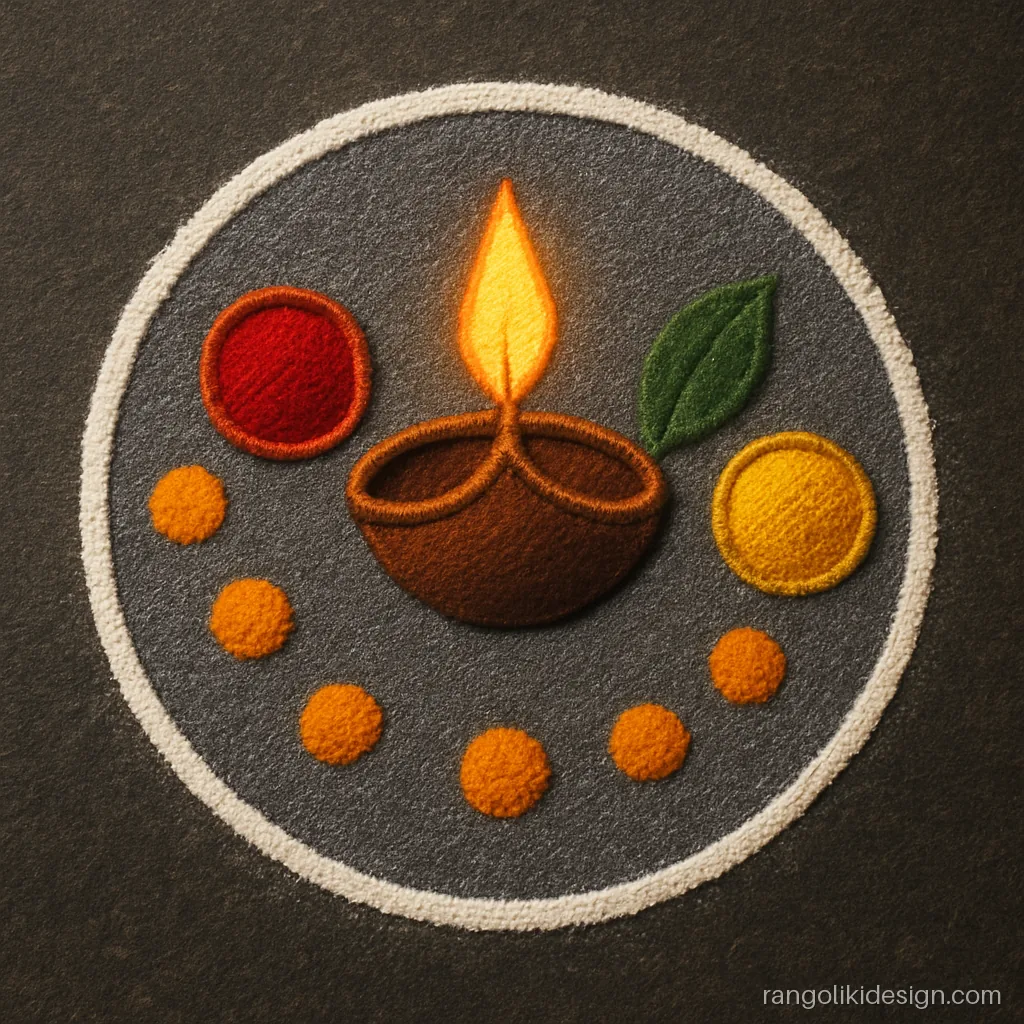
12. Pooja Thali Rangoli with Diya and Kumkum
A pooja thali drawn in powder: diya, kumkum bowl and flowers. Children enjoy this one during Diwali holidays. Fifteen minutes, 40 cm.How to Make a Pooja Chowk
- Clean the spot and wipe with a damp cloth.
- Mark a square slightly bigger than the wooden pat with chalk.
- Fill with rice, haldi rice or white powder.
- Draw a swastik or lotus at the centre.
- Add a kalash or banana leaves at the corners if the pooja needs them.
A 50 cm chowk needs about 250 g of rice or 200 g of powder.
Placing the Kalash on Your Rangoli
The kalash stands for a full and happy home. Draw the rangoli first and let it settle for a few minutes. Then place a small plate of rice in the centre, so the kalash sits steady and does not smudge the colour. Fill the kalash with water, a coin and a betel nut, set five mango leaves around the neck and a coconut on top. Keep the design a little bigger than the plate, about 15 cm on every side, so the pattern still shows. For Diwali, place diyas at four points around the edge, not on the powder itself, so the oil does not stain.
Materials for Pooja Rangoli
| Material | Best for | Note |
|---|---|---|
| Haldi and kumkum | Swastik, dots, footprints | Sacred and natural |
| Rice grains or flour | Chowk, kolam | Feeds birds and ants |
| Rice paste | Aipan, alpona | Dries bright white |
| Flower petals | Kalash ring, borders | Fresh for one day |
| Rangoli powder | Shading, temple designs | Lasts longer |
Pooja Rangoli Designs for Diwali and Daily Use
For daily pooja, a 25 to 30 cm lotus or swastik is enough, and takes five minutes. For Diwali, make a bigger kalash or chowk at the Laxmi pooja spot, with Laxmi charan pointing in. Use a bangle for the kalash belly and a spoon for petals. A paper cone gives thin, neat lines around small shapes. Keep pooja rangoli away from shoes and do not step on it. For small daily patterns, see small rangoli designs.
Common questions
What is an easy rangoli for satyanarayan pooja or daily pooja?
A simple swastik, a small lotus or a dot grid kalash. Each takes 5 to 15 minutes and fits in front of a home mandir or the Satyanarayan pat.
What is the right satyanarayan puja rangoli?
A square chowk with nine parts, a swastik in the centre and banana leaves at the corners. The wooden pat with the pooja items is placed on it.
How do I draw a rangoli design kalash?
Draw a round belly with a bangle, a short neck, then a rim. Add mango leaves and a coconut on top, a swastik on the belly, and a lotus base. Fill in copper, gold or yellow.
What is drawn for Ayudha pooja rangoli?
Gear wheels, tools, books and vehicles in simple shapes, with turmeric and kumkum dots. It is drawn in front of the tools that are worshipped.
Can I use rice for pooja rangoli designs?
Yes. Rice grains and rice flour are the most traditional materials. They are pure and feed birds and ants afterwards.
How big should a temple rangoli be?
In front of a home mandir, 40 to 60 cm is enough. For a temple courtyard or competition, 1 to 1.5 metres works well. See competition rangoli designs for contest tips.