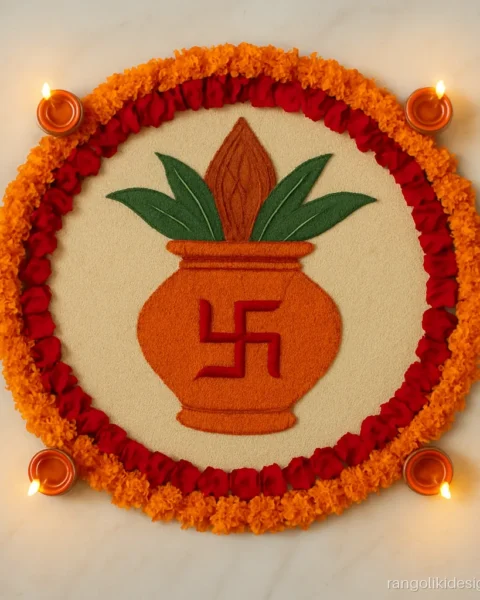
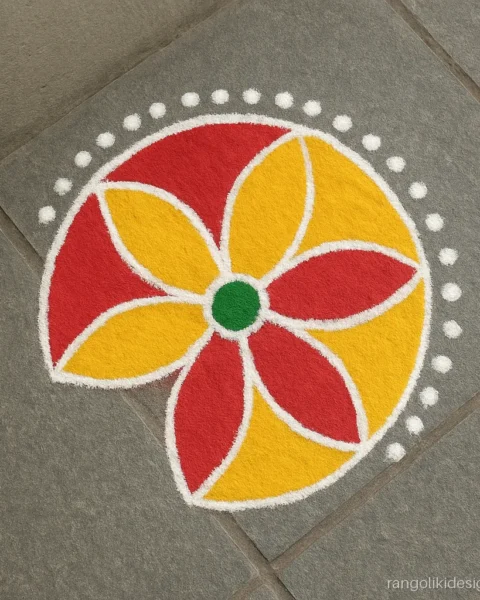
Paint rangoli designs are permanent, so you draw them once and enjoy them for months. Many homes now have a painted rangoli at the entrance or in the pooja room, made with oil or acrylic paint on tiles, marble or the wall.
This page has 12 painting rangoli designs: floor designs, wall art, and boards you can move. We also explain which paint to use, how to prepare the surface and how to keep the design looking fresh.
For powder ideas you can copy in paint, see mandala rangoli designs, peacock rangoli designs and door rangoli designs.
Floor Painting Rangoli Designs with Oil Paint
A floor painting rangoli design stays for months at the entrance or in the pooja room, so it works as a permanent rangoli with paint. Use enamel or floor paint, which grips tiles and takes foot traffic.
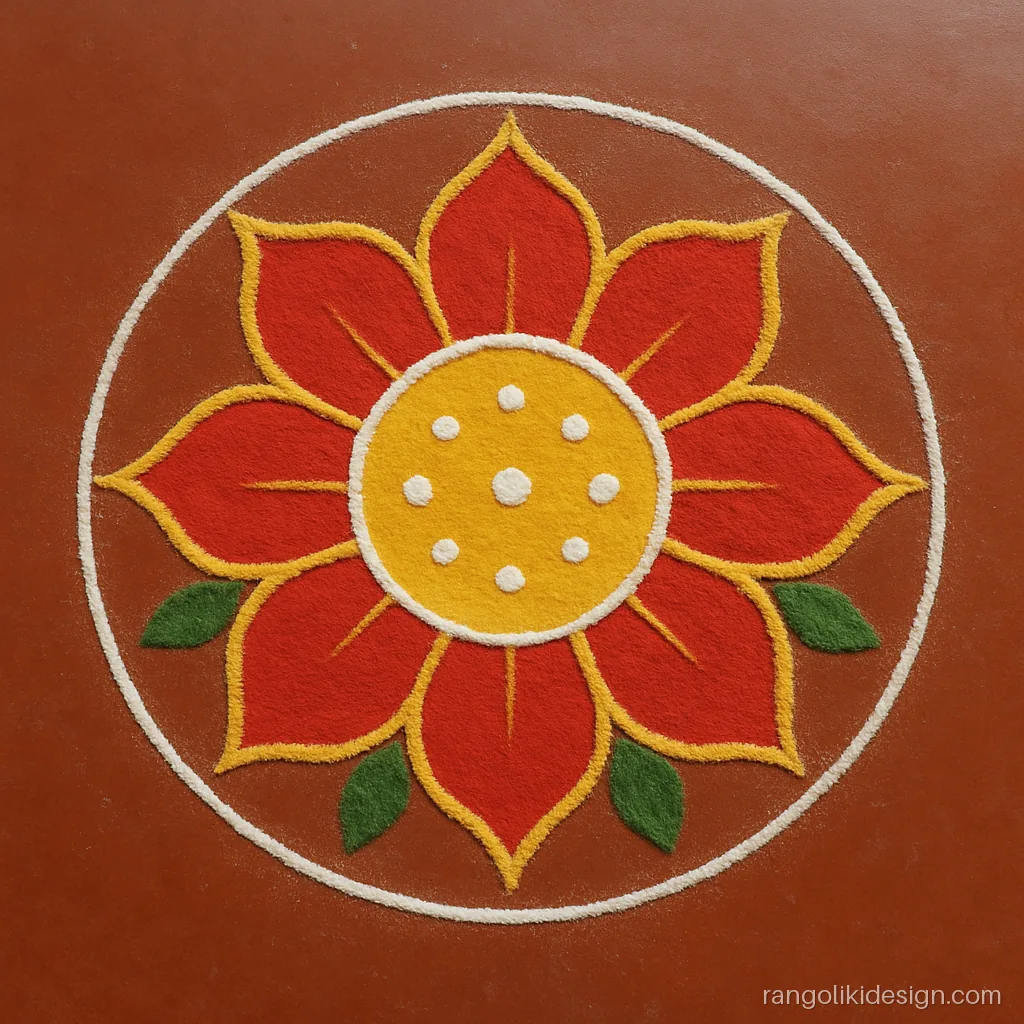
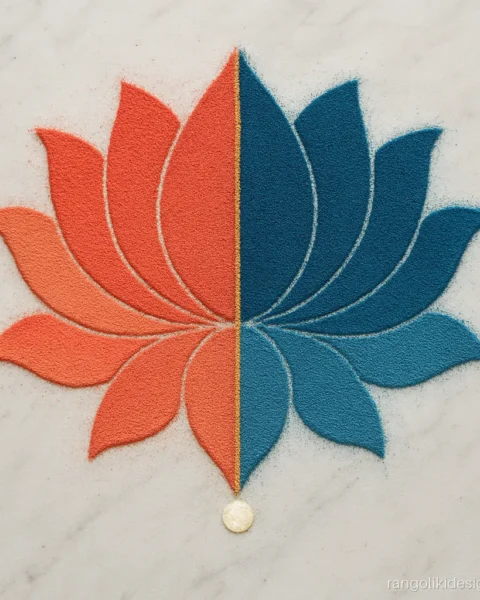
1. Red and Gold Oil Paint Lotus Rangoli
A red and gold lotus painted with oil paint at the main door. About 60 cm, it takes two hours plus a day to dry, and lasts many months.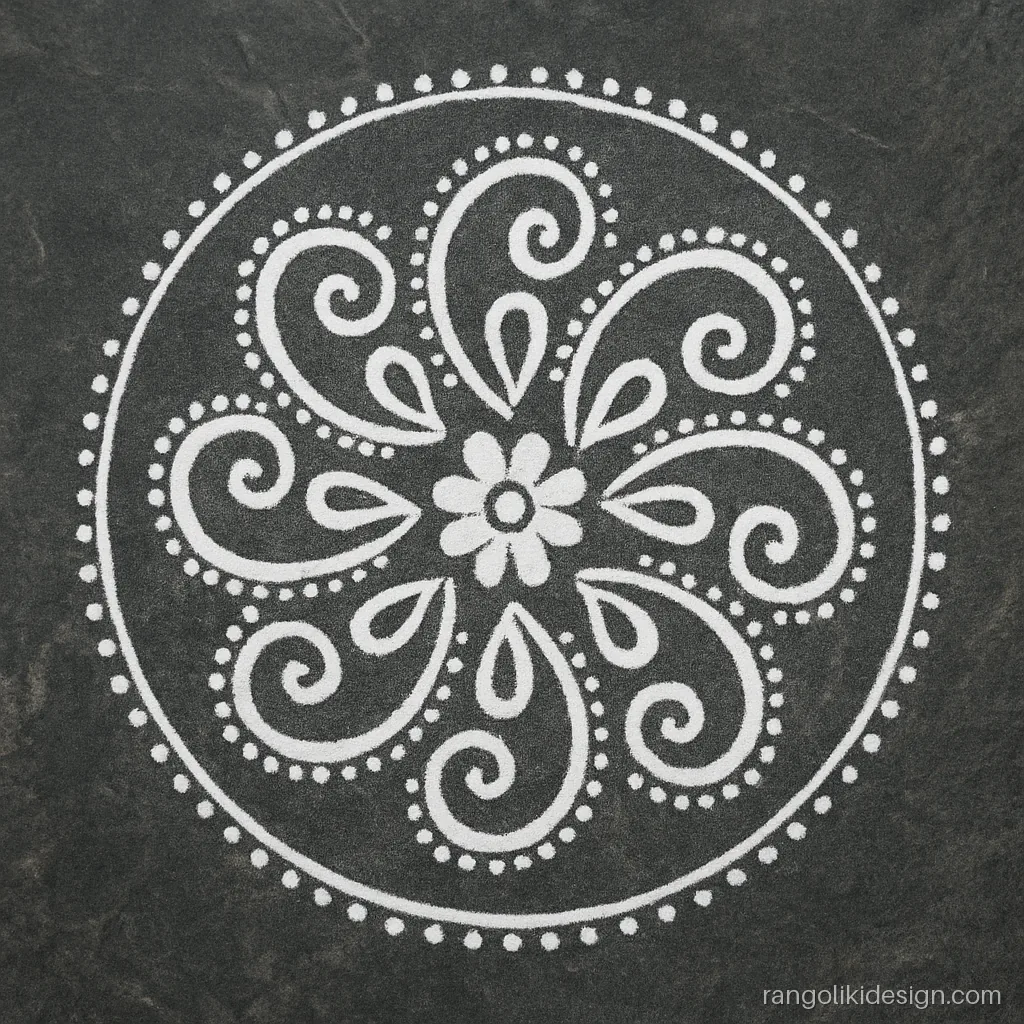
2. White Paint Rangoli Swirls on Marble
White paint swirls on grey marble look elegant all year. A simple rangoli painting on floor like this suits a modern home.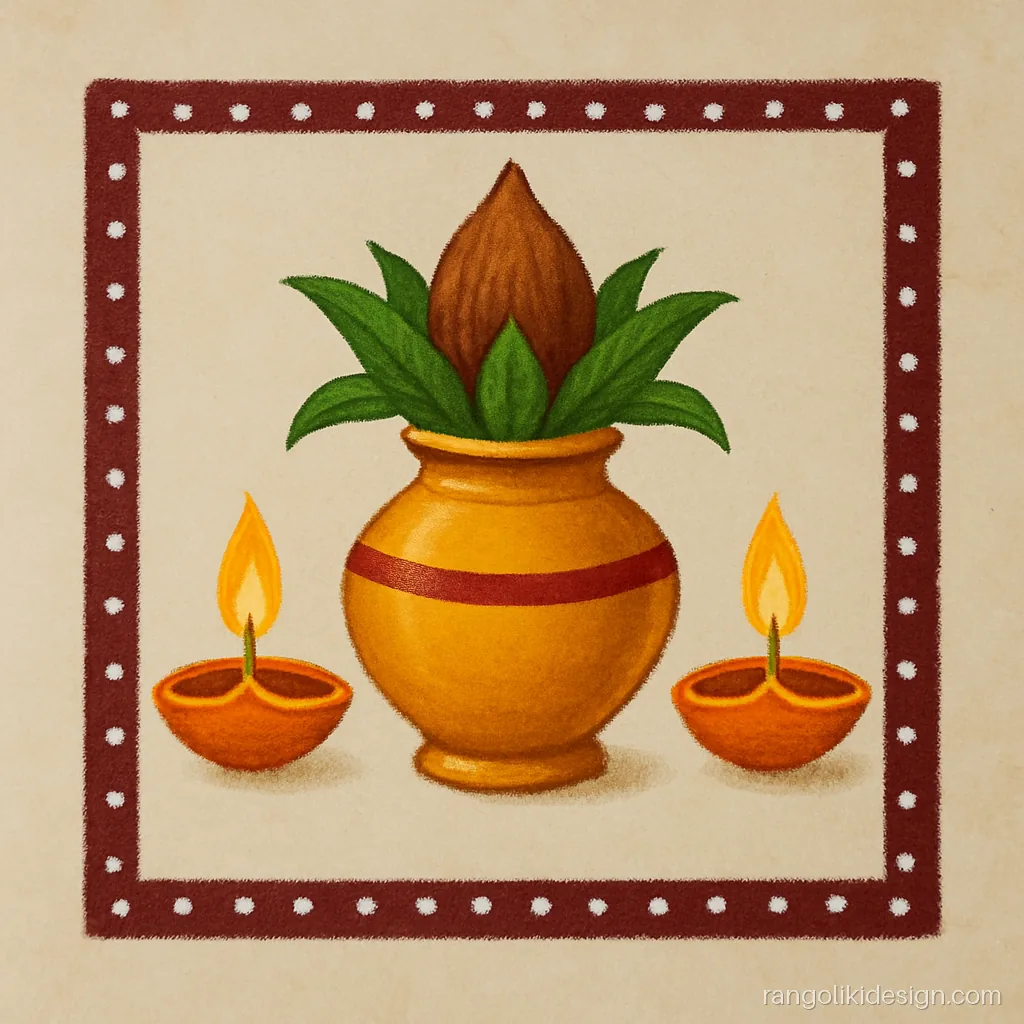
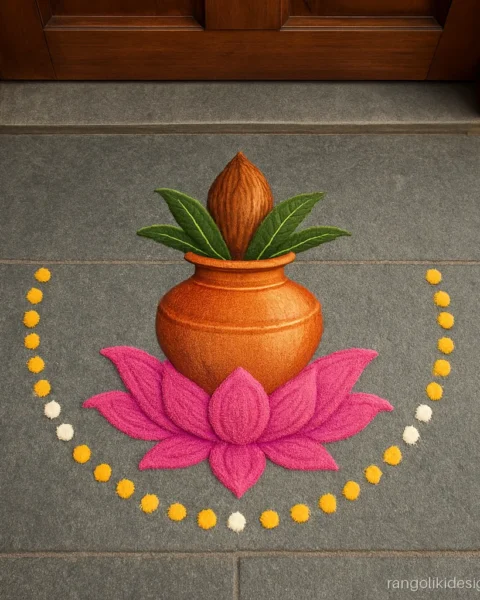
3. Painted Kalash and Diyas on Pooja Room Tiles
A kalash and two diyas painted on the pooja room tile. Mark the design with a pencil before painting.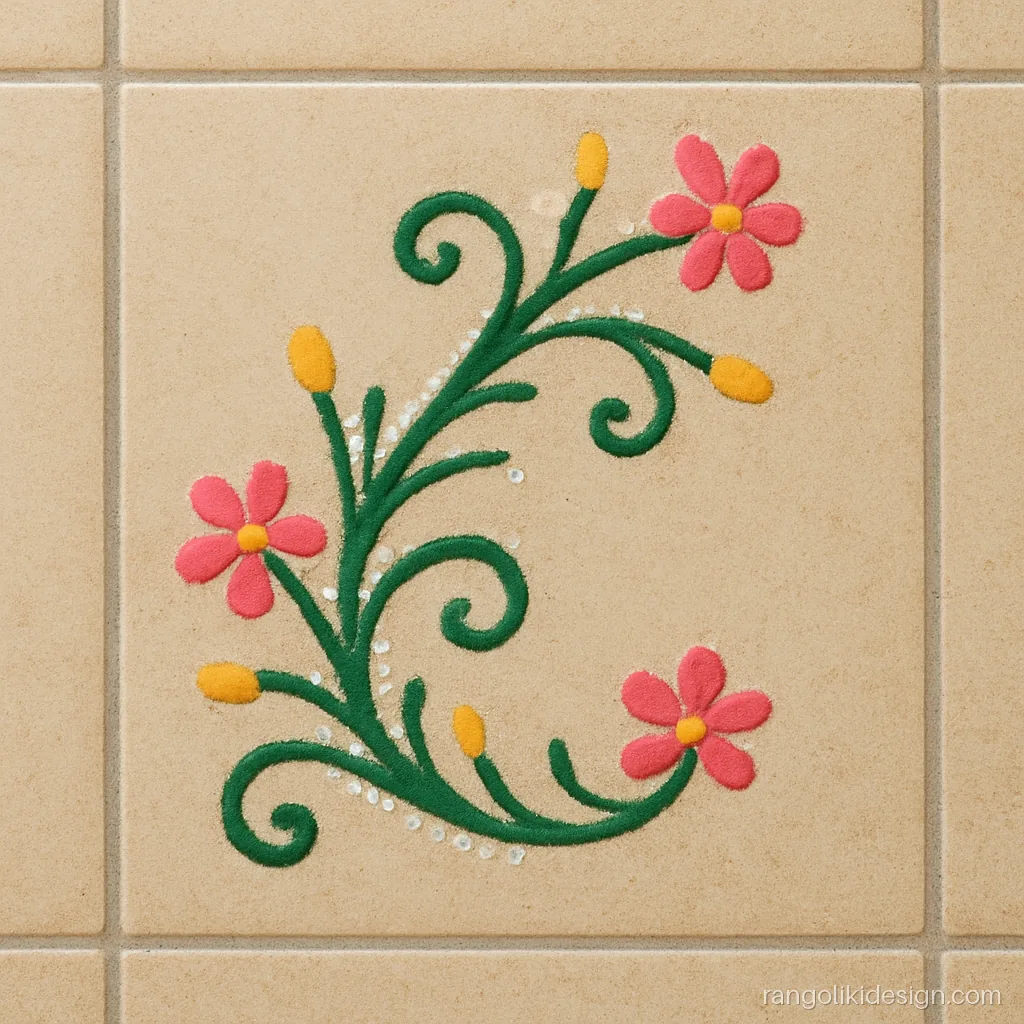
4. Corner Vine Floor Painting Rangoli
Flowering vines in a floor corner. Easy to paint because you only need one leaf and one flower shape repeated.Wall Painting Rangoli Designs
Wall rangoli designs decorate the space above the pooja shelf, beside the door or in the hall. Use acrylic paint, which is easy to work with and dries in an hour.
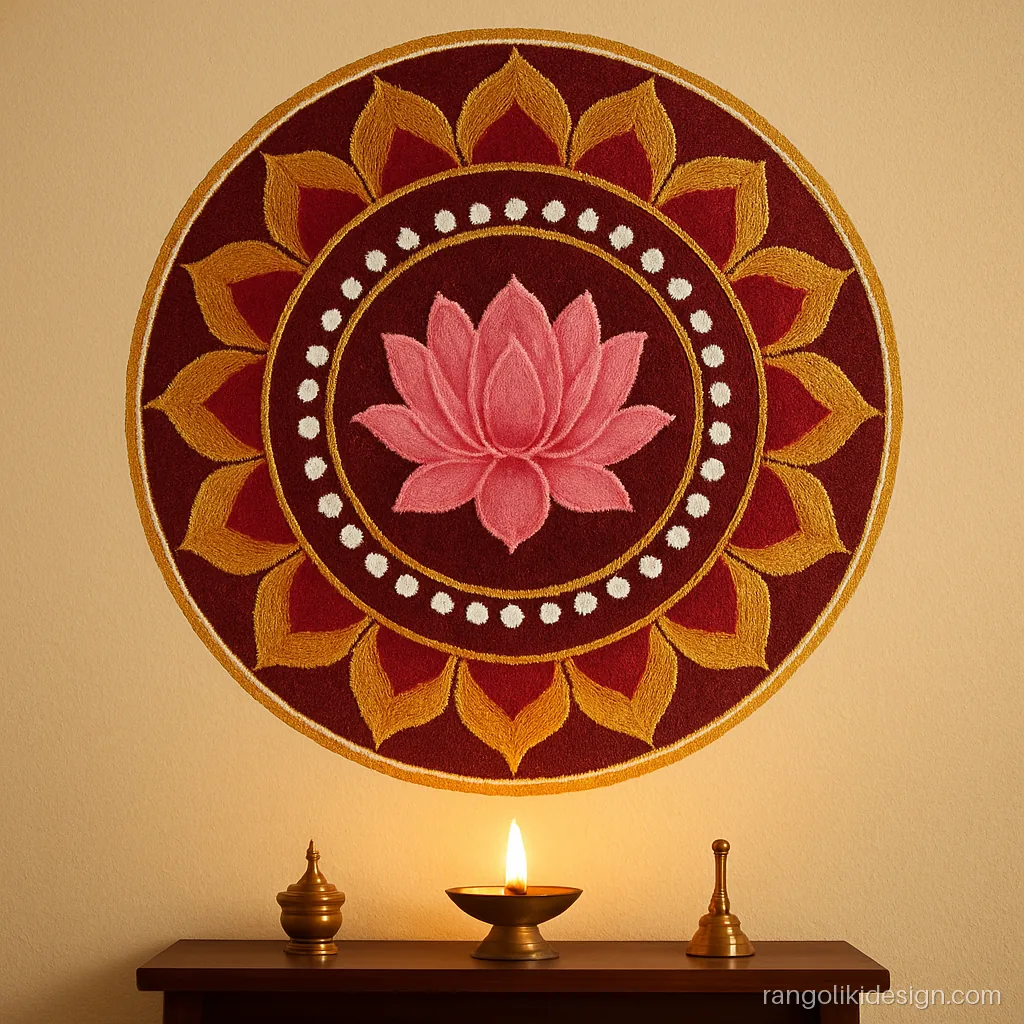
5. Gold Mandala Wall Rangoli Behind a Pooja Shelf
A gold and maroon mandala on the wall above the pooja shelf. Paint the circles with a pencil tied to a string.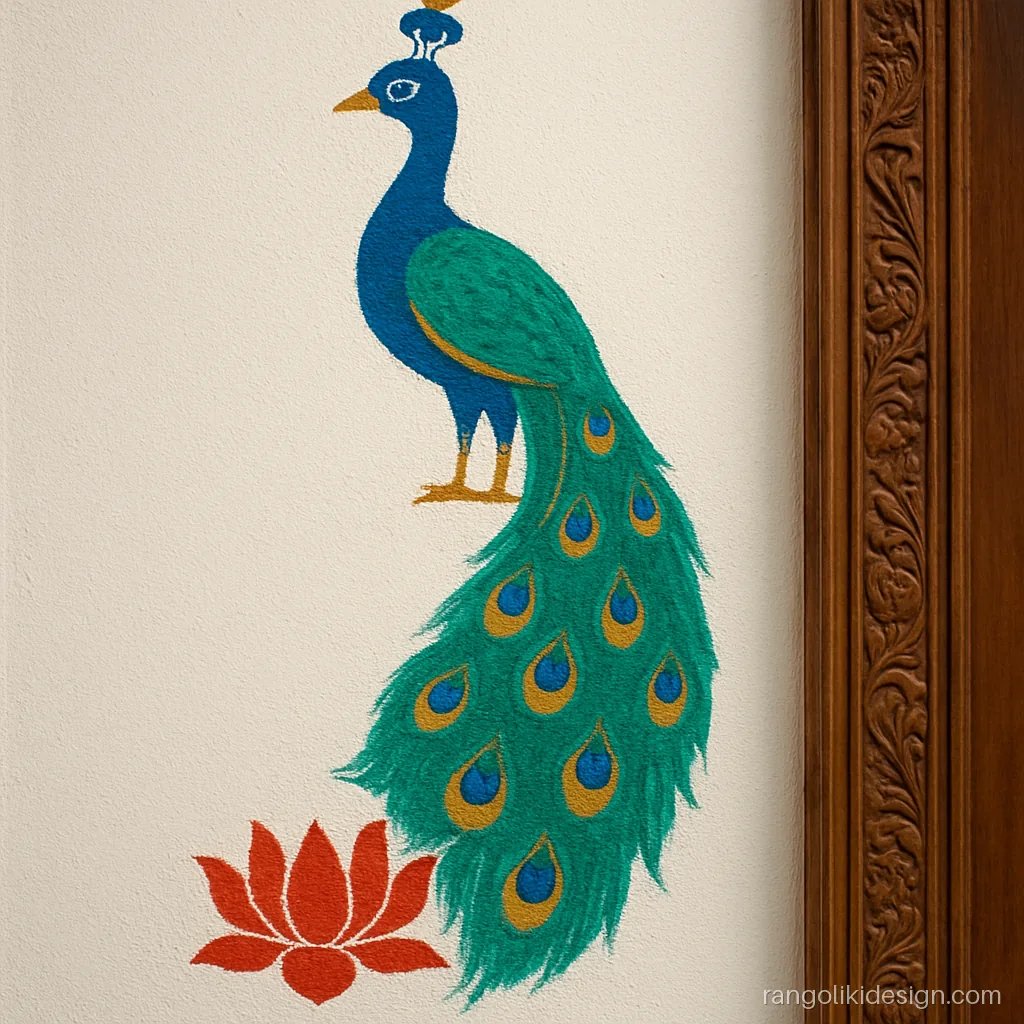
6. Painted Peacock Wall Rangoli by the Door
A peacock with a tall tail painted beside the door frame. A good wall art piece that welcomes guests.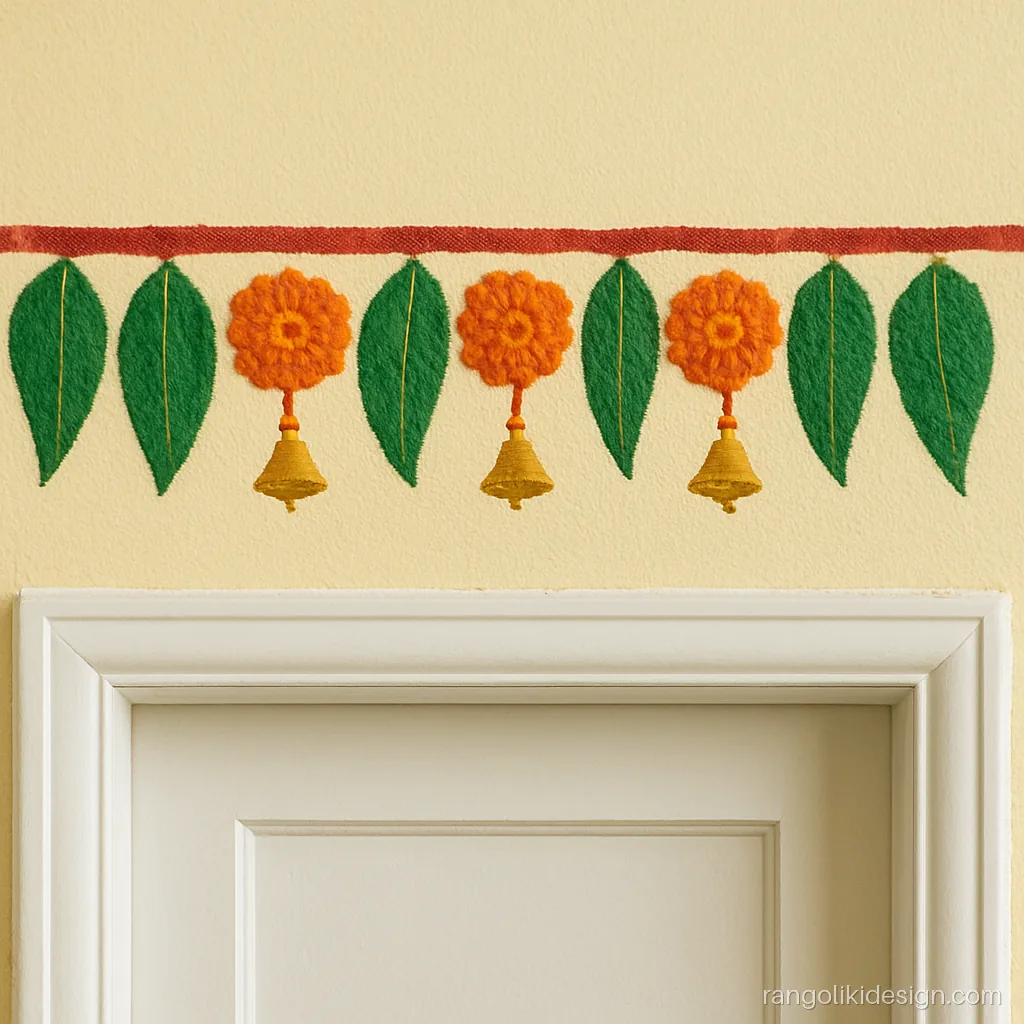
7. Mango Leaf Toran Painted Above a Door
A painted toran of mango leaves and marigolds along the top of a door. Easy and stays up all year.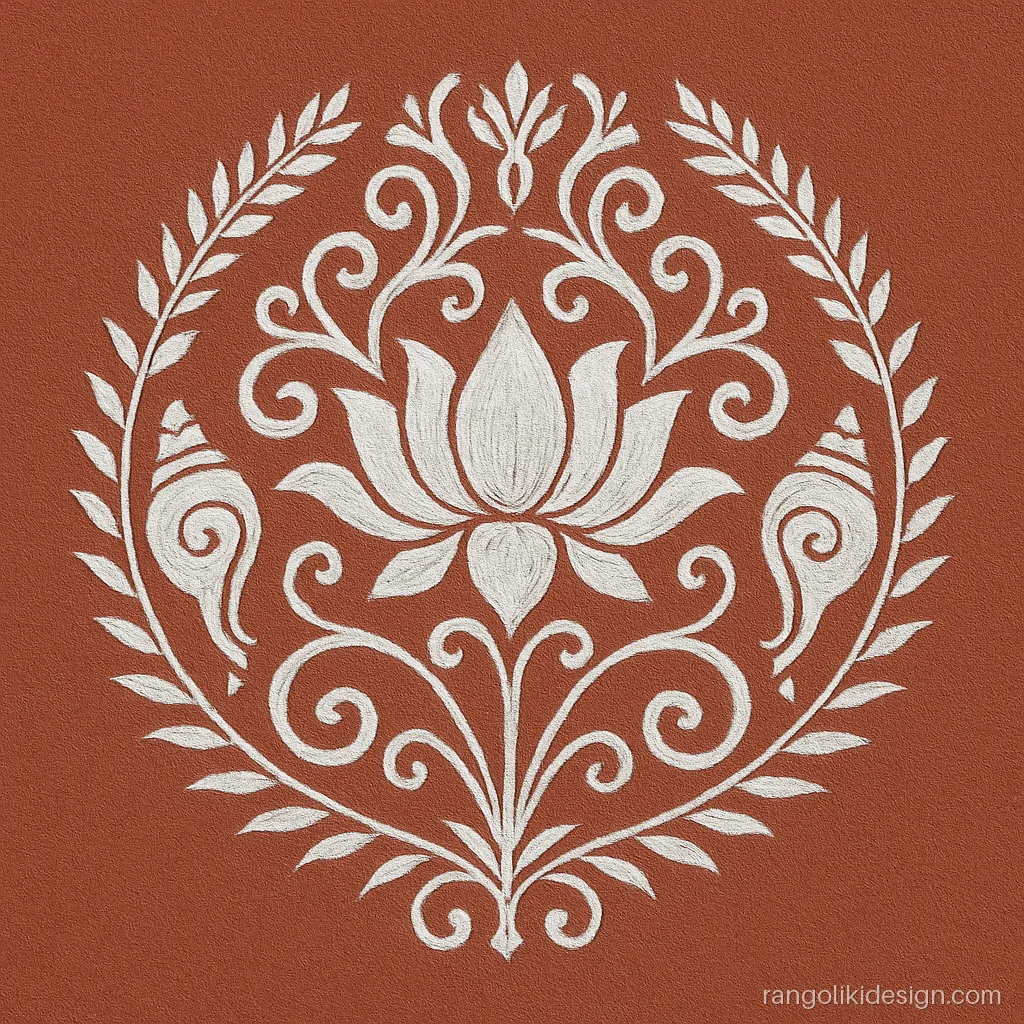
8. White Alpona Wall Rangoli with Lotus and Conch
A white alpona-style design with a lotus and conch on a red wall. Bengal alpona is made in rice paste, and white paint keeps the same look.Paint Rangoli Designs on Boards and Tiles
Painting rangoli designs on an MDF board, a wooden plank or a spare tile lets you move them. Lay them at the door for festivals and store them after. See rangoli stencil designs for another reusable option.
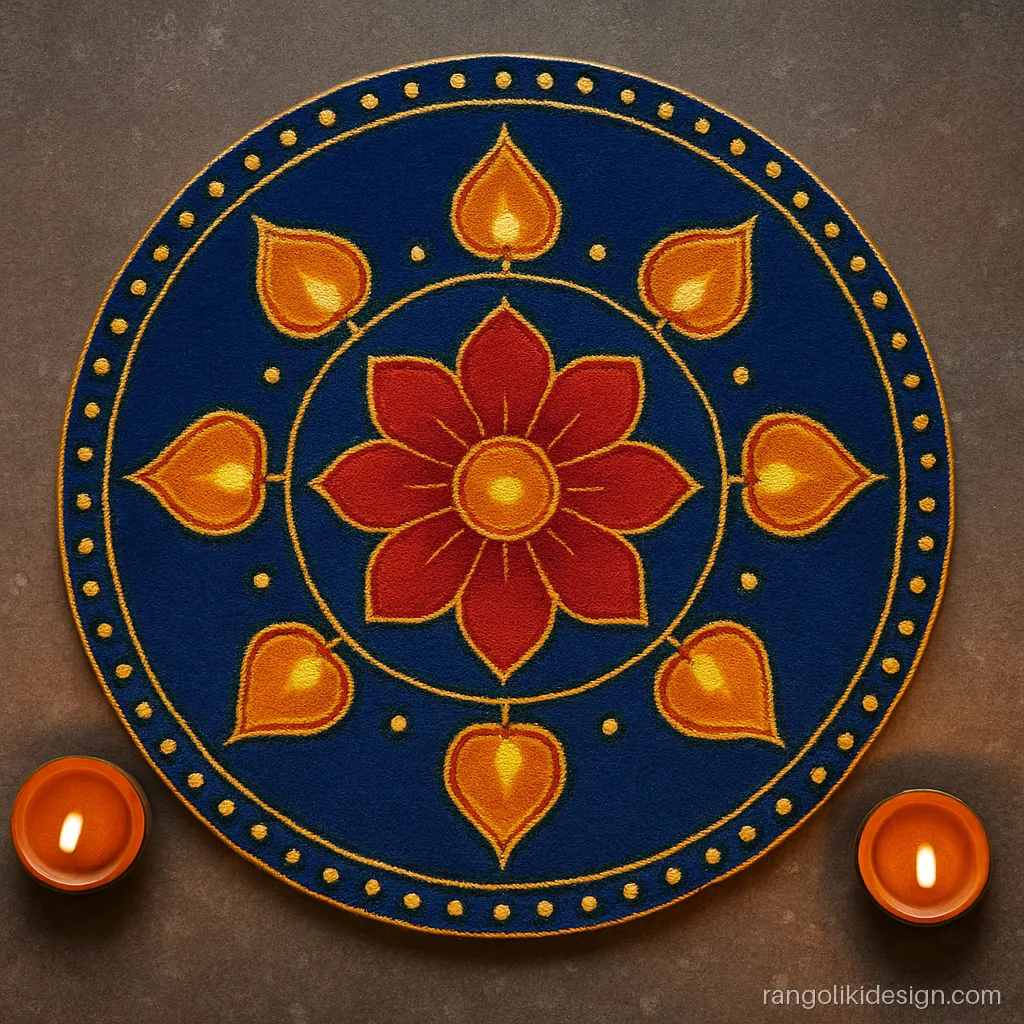
9. Diwali Paint Rangoli on a Round MDF Board
A circle rangoli design with paint on a round MDF board, with diyas and a flower centre. Reuse it at the door every Diwali.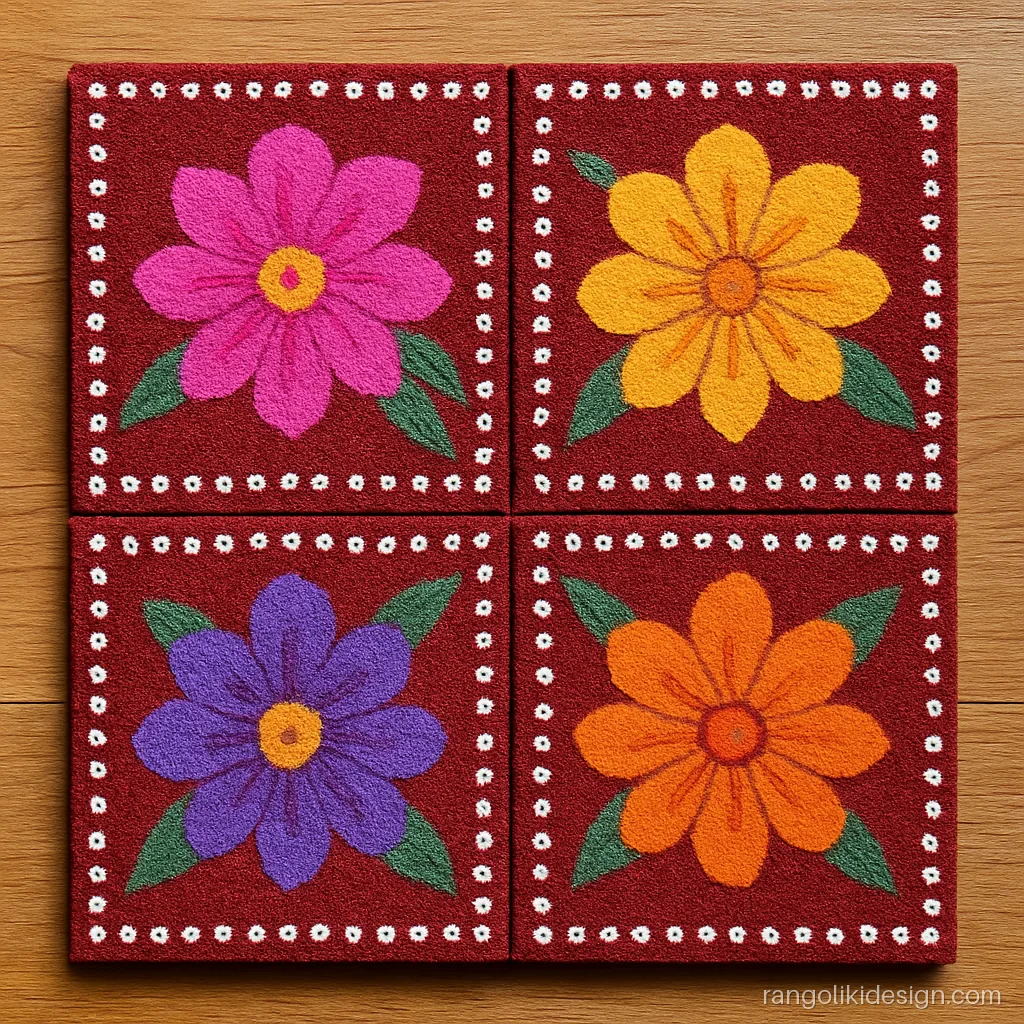
10. Four Painted Tiles with Matching Flowers
Four small tiles painted with matching flowers. Put them together at the door or apart in each room.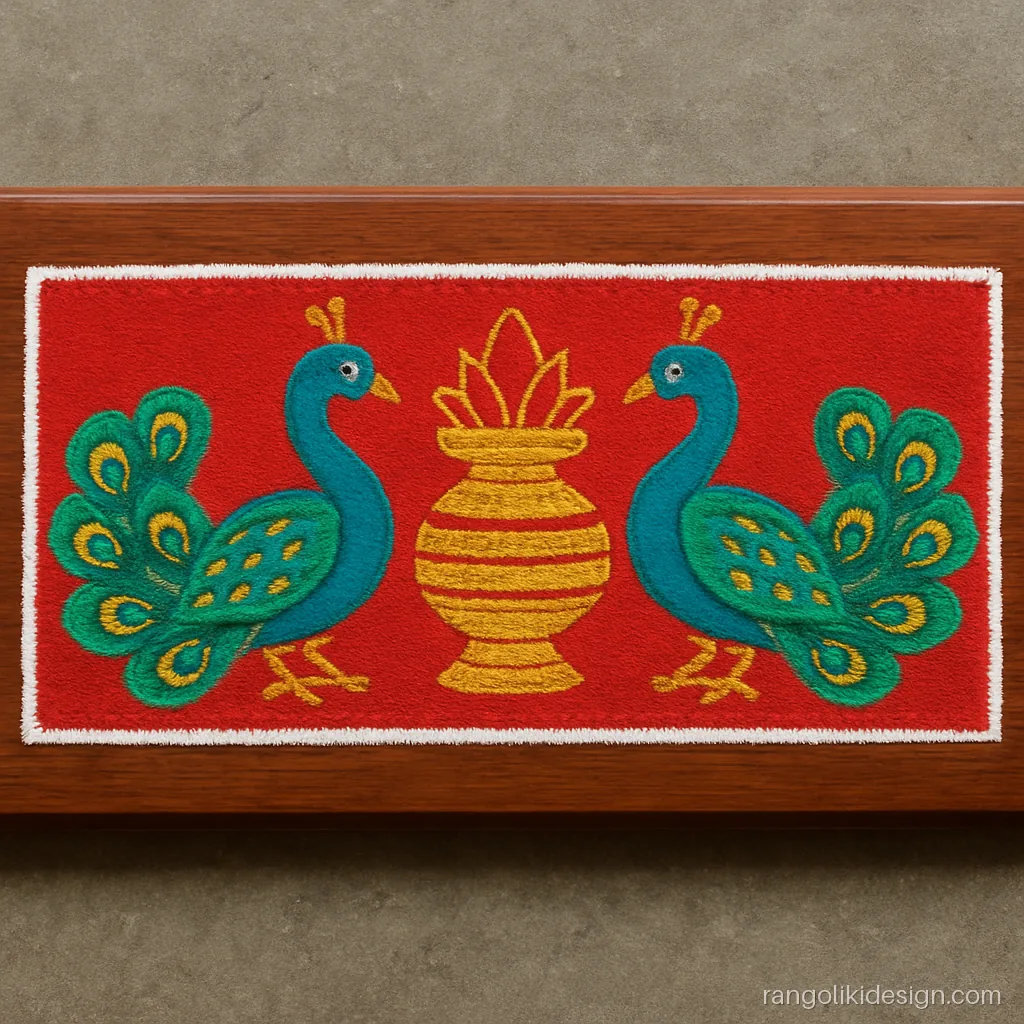
11. Peacock Pair Painted on a Wooden Plank
Two peacocks painted on a long plank for a doorstep. Seal with clear varnish so feet do not wear the colour.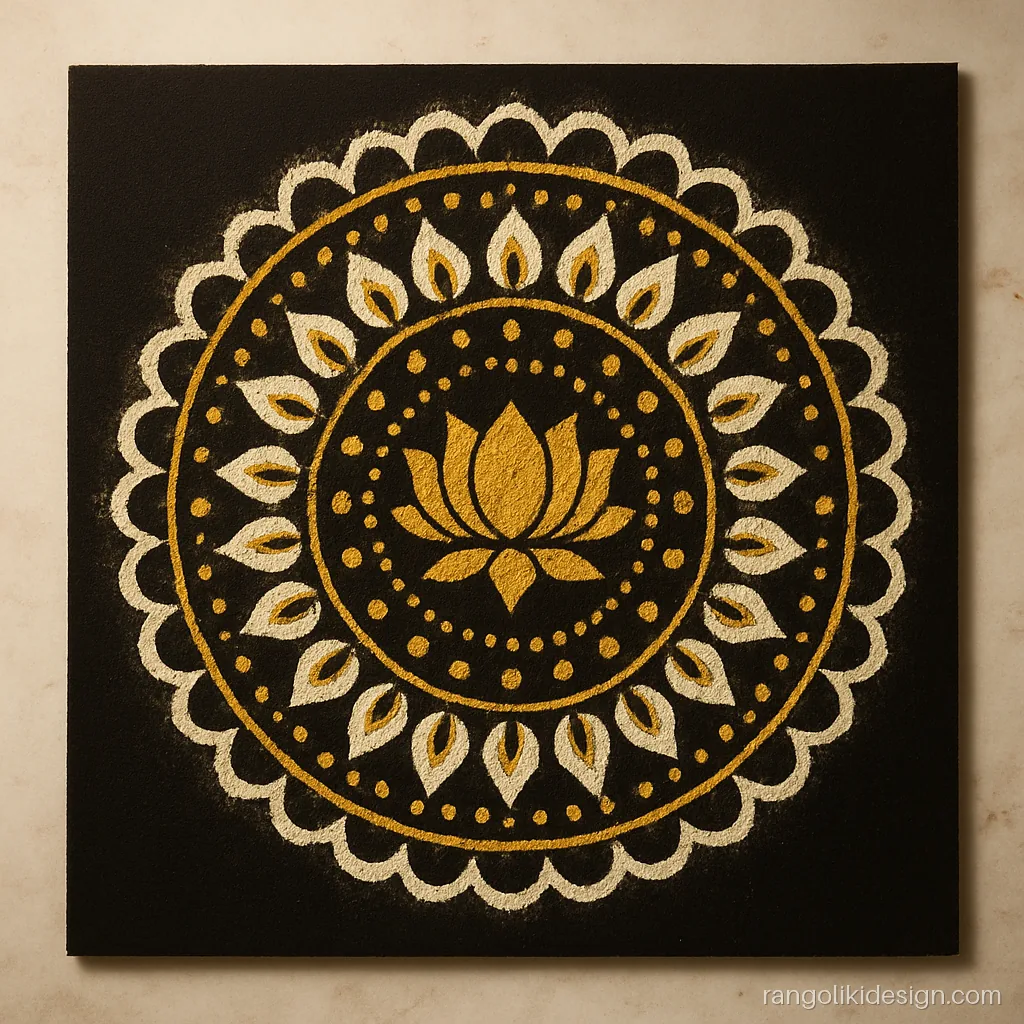
12. Black Canvas Mandala Rangoli in Gold and White
Canvas paintings rangoli designs like this black and gold mandala make lovely gifts. Hang it on the wall or lay it out for festivals.Which Paint to Use for Rangoli Designs with Paint
| Paint | Best for | Dry time | Lasts |
|---|---|---|---|
| Oil-based enamel | Floor tiles, marble, entrance | 8 to 24 hours | 1 to 2 years |
| Acrylic paint | Walls, boards, canvas, pooja room floor | 1 to 2 hours | Months, longer with varnish |
| Floor or epoxy paint | Busy entrances, outdoor steps | 24 hours | Several years |
For rangoli designs painting on floors that people walk on, use oil paint or seal acrylic with two coats of clear varnish.
How to Prepare the Surface and Paint
- Wash the floor or wall and let it dry fully.
- On shiny tiles or marble, rub lightly with fine sandpaper so paint grips.
- Draw the design with a pencil or chalk. Use a string compass for circles.
- Fill large areas with a flat brush first, then do details with a thin round brush.
- Add white or gold outlines last with a liner brush or an outliner tube.
- Keep people off the area until the paint is fully dry.
Paint Safety and Cleaning
- Oil paint smells strong. Keep windows open and keep kids and pets away while it dries.
- Clean oil paint brushes with thinner and acrylic brushes with soap and water.
- To remove a painted rangoli from tiles later, use paint remover or thinner and scrub gently.
- Wipe painted floors with a damp mop, not harsh cleaners, to keep the shine.
If you rent your home, choose a board or tile you can lift, or use rangoli stencil designs with powder.
Common questions
How do I paint rangoli on floor tiles?
Wash and dry the tile, rub it lightly with fine sandpaper, and sketch the design in pencil. Fill big areas with oil-based enamel using a flat brush, then add outlines with a thin brush. Oil enamel is tough and glossy; acrylic also works if you seal it with two coats of clear varnish.
How long do floor oil paint rangoli designs last?
With good surface prep, an oil paint rangoli lasts one to two years at a busy entrance and longer in a pooja room. Touch up the worn parts once a year before Diwali.
What are easy rangoli designs with paint for beginners?
Start with a white swirl design, a flowering vine in a corner or a small flower on one tile. These need only two or three colours and simple brush strokes.
Can I make wall rangoli designs with acrylic paint?
Yes. Acrylic paint is the easiest choice for walls. It dries in about an hour and has many colours. Draw the design in pencil first and use a string tied to a pencil for circles.
How do I remove a painted rangoli from tiles?
Use paint thinner for oil paint or a paint remover for acrylic. Apply it, wait a few minutes and scrub with a soft brush. Test on a small corner first on marble.
Can I use paint for Diwali rangoli instead of powder?
Yes. Painted designs on an MDF board or tile can be placed at the door each Diwali. You can add real diyas and petals around them for a fresh festive look.